Languages
Tuesday, October 20, 2026



News and Views from the Global South
Afghanistan’s Stolen Peace: The Women Who Refuse to Be Silenced
When the Taliban took control of Afghanistan in August 2021, Zahra Nader was pursuing a doctorate in Women and Gender studies at York University in Canada. Nader had planned to return to Afghanistan to continue her research, possibly teach at Kabul University, and continue exploring Afghan women's role in political history.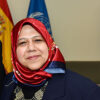
Women Peacebuilders: The Missing Voices at the Negotiating Table
 For most individuals, the process of peace starts with the signing of a ceasefire or an agreement among politicians. However, those who live in regions experiencing violence understand that peace is made long before politicians meet at the negotiating table. Peace is created among communities by people who work everyday to ensure that no violence takes place, and that disputes are sorted out.

Feminist Governance and Democratic Change in Armenia
The period after Armenia's 2018 "Velvet Revolution" maintains a fragile status which presents both substantial democratic and feminist achievements and rising internal and external international pressures.
Sudan: World’s Worst Humanitarian Crisis
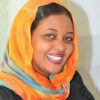
The ordinary sounds of Nahid Ali's home in Khartoum were completely drowned out by the sound of war which began on April 15 2023. Her baby was just 21 days old. The morning started as any typical day for a mother who had just given birth to her baby and needed to nurse her newborn while she took care of her other children. The gunfire began to erupt. The fighting began when two groups started to battle each other in the streets. The fighting which began in her area developed into a destructive countrywide war in Sudan which spread to her street within moments.

Why Collective Healing is Central to Peacebuilding
Wars and oppression leave behind not just rubble and graves. They leave behind invisible wounds, profound trauma carried by survivors. And most often, women carry the largest burden. They are targeted not only because of their gender, but because surviving and leading threaten structures based on patriarchy and domination.

50 Years On: Lebanon’s Civil War, Feminist Peacebuilding, and the Fight Against Silence
This year marks half a century since the start of Lebanon’s civil war in 1975 - a conflict that lasted 15 years, killed over 150,000 lives, and resulted in as many as 17,000 missing. Decades later, the legacy of that war is still everywhere: in the silence of classrooms without history books, in families who never knew what happened to their missing loved ones, and in violence made mundane in all parts of society.

Why Peacebuilding Needs a New Global Agenda
It has been 33 years since peacebuilding was formally recognized within the United Nations system, by the then UN Secretary-General Boutros-Ghali, who defined it as a long-term structural work aimed at preventing the recurrence of violence, setting the stage for the UN’s ongoing efforts to address the root cause of conflict and not just its consequences. “Post-conflict peacebuilding is the action to identify and support structures which will tend to strengthen and solidify peace in order to avoid a relapse into conflict,” Boutros-Ghali said.

World’s Deadliest Earthquake Leaves over 33,000 Dead
Almost over 33,000 people have been killed and thousands injured by the 7.8 earthquake which struck south-eastern Turkey and Syria in the early hours on Monday, February 6th. The first images that came out were of collapsed buildings, rubble strewn across streets, people trapped under rubbles, screaming for help. What followed was the unusually strong aftershock - including one quake which was almost as large as the first.
Europe and the Refugee Crisis: It’s all About Tackling Racism & Discrimination
In 2019, when the President-elect of the European Union (EU) Ursula von der Leyen had presented a list for her soon-to-be European Commission, and on that list was a portfolio called “Protecting the European way of life”, a lot of noise was made questioning what that meant. “Protection” was later changed to the “Promotion” of the European Way of Life. It’s been over three years since this very controversial, much debated and widely criticised portfolio as many continue to question what uniquely is the ‘European way of life’?

Make Art, Not War: Ukrainian Artists Tell the Ukraine Story Through their Art
“I must say that I had a premonition of a war with Russia in 2014 when Russian troops had started to occupy Crimea,” said Mykola Zhuravel, a contemporary painter and sculptor, in an interview with IPS. Zhuravel, with his partner, Daria Tishchenko-Zhuravel, have used art to communicate and express the horrors of the war since 2014.
The World Owes the Rohingyas their Right to Human Dignity
It has been five years since the forced exodus of the Rohingyas from Myanmar, and their plea for justice and accountability continues.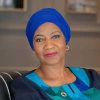
‘When it Comes to Gender Equality, Our Best is Not Good Enough’: says Dr Phumzile Mlambo-Ngcuka
The Covid-19 pandemic has impacted lives all over the world. According to this report, gender is emerging as a significant factor in the social, economic and health effects of Covid-19. Women have been hit much harder socially and economically than men. The greatest and most persistent gender gap was seen in employment and uncompensated labour, with 26% of women reporting loss of work compared with 20% of men globally in September 2021.

Taliban: The Return of Misogynistic Gynophobes in Afghanistan
Gynophobia is defined as an intense and irrational fear of women or hatred of women, it may be characterized as a form of specific phobias, which involves a fear that is centered on a specific trigger or situation, which in the case of gynophobia is women.

War & Peace 2.0: Ukraine Showing the World How to Fight Back
It has been over 100 days since Russia first invaded Ukraine on 24 February 2022, turning the country into a slaughterhouse. The United Nations (UN) in this report says that, as of 1 June, 2022, more than 6.9 million refugees have left Ukraine and 2.1 million have returned, while eight million people are displaced inside Ukraine itself. War in Ukraine has caused the fastest growing refugee crisis since World War II.

Those Who Dare: Feminist Movements in Sudan, Lebanon & Syria
The year 2019 was not just a time before the world saw the global pandemic, but also a time when the world saw mass political uprisings with women at the forefront. The MENA region in a way led this force, in Sudan women played as drivers of the revolution, protesting decades of corruption, socioeconomic grievances and gendered violence. Nubian queen became the symbol of the revolution in Sudan which finally saw the overthrow of the dictatorship in 2019.
Alarm Bells for Africa, Child Labour in Agriculture Requires Urgent Action
The Global Estimate on Child Labour estimates 160 million children are in child labour worldwide – an increase of 8.4 million children in the last four years – with millions more at risk due to the impacts of COVID-19.
Those Who Dare: Voices of Women in the MENA Region
When it comes to gender equality and development, the Middle East, North Africa (MENA) and the Arab States region continues to be in a paradoxical situation. While within the region, several laws, policies and programming focused on gender equality are growing, women’s representation in government jobs, corporate roles, and national programming seem to be dismissed. Healthcare, education have seen improvement, most countries have become tech inclusive as well, but access to hospitals and educational institutions –at times due to social programming or gender-related policies continues to prevent women from accessing them and using them.

War, Displacement & A Global Refugee Crisis: A Wake-Up Call to Increase Refugee Participation
It has been a month since Russia’s invasion of Ukraine, which has now created one of the biggest refugee crises of modern times. More than 3.7 million people have left the country, in what has become the fastest exodus globally since World War II.
Addressing Global Food Security with Optimism and Resilience
In an exclusive interview with IPS, Ambassador Cindy Hensley McCain, Permanent Representative of the US Mission to the food and agriculture organizations of the United Nations in Rome, Italy, shares her thoughts on food security, sustainable food systems, the impact of climate change on food production, conflicts and the ongoing crisis in Ukraine, and her plans while working with the Food Agricultural Organization of the United Nations (FAO), International Fund for Agricultural Development (IFAD) and World Food Programme (WFP) with Farhana Haque Rahman and Sania Farooqui.
Bangladeshi Lawyer Rizwana Hasan Awarded International Women of Courage Award
In an exclusive interview to IPS UN Bureau, journalist Sania Farooqui is in conversation with Bangladeshi lawyer, Rizwana Hasan who was recently awarded the 16th Annual International Women of Courage Awards by the U.S Department of State. Hasan works primarily to protect the environment and defend the dignity and rights of marginalized Bangladeshis. Through landmark legal cases over the past 20 years, Hasan has changed the dynamics of development in Bangladesh to include a people-centered focus on environmental justice.

Power of Connection & Collaborations to Fight Modern-day Slavery
The Covid-19 pandemic affected countries and people globally, at the same time exacerbated vulnerabilities such as modern-day slavery. There are over 40.3 million people estimated to be in modern-day slavery, and certain population groups, sectors and geographies such as children, migrant workers, women and girls that were already vulnerable, became more vulnerable to recruitment and exploitation during the pandemic. The United Nations has called the pandemic more than a health crisis, “it is an economic crisis, a humanitarian crisis, and a human rights crisis.”Next Page »





The Week with IPS

NEXT STOP - SDGs
Tracking global progress towards a sustainable world
Tracking global progress towards a sustainable world
