Tuesday, September 1, 2026



News and Views from the Global South
RIGHTS: Cuba Assails Latin America’s Betrayal on UN Commission
Patricia Grogg
- Cuba lashed out Friday against the governments of Latin America that have taken part in international condemnations of this Caribbean island’s government for its human rights record.
Foreign Minister Felipe Pérez Roque told a press conference that the United States has been exerting “frenetic” pressure on Latin American countries in its search for someone to sponsor a motion to censure Cuba at the United Nations Commission on Human Rights.
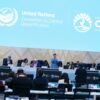
Pérez Roque chastised Argentina, Uruguay and Costa Rica, countries that, he said, had pledged to vote in favour of a condemnation of Cuba even when such a motion has not been presented in the this year’s sessions of the Geneva-based Commission, which began Mar 18 and end Apr 26.
The Cuban official commented that the three countries are subjecting themselves to “a test of virtual subservience,” because they are “willing to bow down when no one has asked them to do so.”
Costa Rica’s foreign minister, Roberto Rojas, stated Monday that his country would vote in favour of an eventual motion on the Commission to condemn Cuba.
Argentina, meanwhile, said there was “no reason to change the vote” it has emitted against Cuba in Geneva in previous years, said Diego Guelar, Argentine ambassador to the United States, in March.
Didier Opertti, foreign minister for Uruguay, said Thursday that his government has not taken a decision on the matter, though “does not see any evolution in Cuba” as far as improving respect for human rights.
“Some Latin American countries are engaged in consultations to determine whether it would be possible to draft a joint document,” he said.
As far as Mexico, Pérez Roque recalled that President Vicente Fox assured that his country would not sponsor, co-sponsor or present any resolution before the UN Commission about the human rights situation in Cuba, and would take a position on texts promoted by others.
“I have no reason to think that (Mexico’s) public position has changed,” said Pérez Roque. Any abstention in Geneva on a vote to censure Cuba will be seen by Havana as a courageous, firm and decorous act, added the official.
He accused Washington of “colossal fraud” for manoevring to make it look like Peru had drafted resolution of censure, which supposedly was to be kept “secret”, but that “friendly hands” had brought to the attention of the Cuban government.
The document, distributed at the end of the press conference, is unsigned and lacks any indication that would indicate authorship. The Cuban foreign minister asserted that it had been written by the U.S. State Department.
The text he attributed to Washington expresses appreciation for Peru’s “draft resolution on the human rights situation in Cuba for presentation before the Commission on Human Rights,” and proposes the inclusion of a clause clarifying that Cuba has shown no improvement.
“I can categorically refute that the author of the document was Peruvian, because the government (Alejandro Toledo) has assured” that it had no role in the matter and expressed disgust with Washington’s manipulative action, said Pérez Roque.
Cuba is attempting to prevent at all costs another censure from Geneva, after the motion presented last year by the Czech Republic was passed with 22 votes in favour, 20 against, 10 abstentions and one absence.
Czech Prime Minister Milos Zeman, on a visit to Mexico, announced Thursday that his country would not present a motion against Cuba during this year’s sessions of the Commission on Human Rights.
For the first time since the UN Commission was created 56 years ago, the United States does not hold a seat in the 53-member body.
Pérez Roque said the United States is attempting to have the issue taken up at the Rio Group Summit, a meeting of Latin American heads of state to take place in the Costa Rican capital Apr 11-12.
However, the Rio Group, a leading political forum involving 19 Latin American and Caribbean countries, announced that it has a proposal to standardise the UN system’s mechanisms for evaluating the human rights situations of its member states.
The Costa Rican initiative, approved by the Rio Group’s foreign ministers in February, aims to depoliticise the system and create a report that describes each country’s human rights status with an index based on factors that are not of an ideological slant, similiar to the Human Development Index of the UN Development Programme.
In spite of the prior statements from the Rio Group, Pérez Roque said the United States wants “to use the forum to put together a new conspiracy against Cuba when there are just a few days left before the deadline for presenting the resolution.”
“We are opposed to even the word ‘Cuba’ being mentioned in any meeting on the issue, and we hope the countries in the Rio Group do not bend to the pressure that is on them at this time,” said the foreign minister.
He added that Cuba does not need “Latin American or any other countries to be concerned about, concern themselves with, express interest in, or try to help” when it comes to human rights.
The Rio Group consists of Argentina, Bolivia, Brazil, Chile, Colombia, Costa Rica, Dominican Republic, Ecuador, El Salvador, Guyana, Guatemala, Honduras, Mexico, Nicaragua, Panama, Paraguay, Peru, Uruguay and Venezuela.
Of the group, 11 are members of the Commission on Human Rights this year, four of which (Argentina, Costa Rica, Guatemala and Uruguay) voted in favour of censuring Cuba last year in Geneva.
Brazil, Colombia (which this year has been replaced by Chile), Ecuador, Mexico and Peru, abstained, while Venezuela and Cuba voted against the resolution.
Cuba has been condemned every year by the Commission since 1990, with the exception of 1998.
The motions approved in the past accuse the Fidel Castro government of banning political opposition and imprisoning dissidents, maintaining state control over the media and failing to hold presidential elections.
Havana responds saying that in Cuba, unlike any other country in Latin America and the Caribbean, “the most elemental rights are guaranteed,” such as life, health, food, education and employment.
In that sense, the Castro government believes that what is attacked in Geneva is this country’s right to maintain “its own system,” one with a socialist slant.
 Print
|
Print
|