
Saturday, October 17, 2026



News and Views from the Global South

Forest Corruption Budding Again in Honduras
- The Honduran forests, the country's most valuable natural resource, are being irredeemably lost as a result of the corrupt timber business.
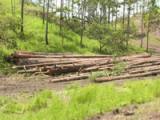
Illegal logging continues unchecked in Honduras - Courtesy of Democracy without Borders Foundation
Eighty percent of Honduran territory is considered appropriate for forest, and 50 percent remains covered by trees.
Government reports indicate that forests are the most valuable natural resource for development of this Central American country. They could generate more than 25 percent of gross domestic product (GDP), estimated at 12.7 billion dollars following the crisis that followed the government coup on Jun. 28, 2009.
However, currently the forest sector contributes just five percent of the GDP.
The deterioration of the forest has four main causes: changes in land use, consumption of firewood, fires and illegal logging, according to a report from the Independent Forest Monitor of the governmental Office of the National Human Rights Commissioner (ombudsman).
Although there is little data about the illegal trade in timber, it is estimated that 80 to 100 “rastras,” containers pulled by trucks, move through national territory each day. The concentration of such activity is highest in the northeastern department of Olancho, one of the most deforested areas in Honduras.
Annual consumption of firewood reaches 6 million cubic meters, 70 percent of which comes from broad-leaf, hardwood forests. The firewood is an essential source of energy in Honduras, and the only option for much of the rural population.
According to ombudsman Ramón Custodio, there is a sort of “forestry whitewashing” in which the legal and illegal activities are “the extremes of a spectrum in which the lumber is legalized using different mechanisms.”
These mechanisms, Custodio told Tierramérica, can be brought to bear by the criminals at the point of cutting, transport, sale, industrialization or illegal traffic of forest products or byproducts, or appropriation of public lands through deforestation or farming activities, among others.
Illegal logging “enriches the corrupt person and impoverishes the community,” in addition to fomenting destruction of forests, which has repercussions beyond the forestry sector, said the commissioner.
The Honduran government each year loses 6 to 8 million dollars, and the municipalities around 1.6 million dollars in lack of payment of taxes, resulting from the illegal timber trade.
Rigoberto Sandoval, an expert on forest issues, told Tierramérica that the forest mass and rich diversity that existed two decades ago in this country “are substantially reduced due to the lack of clear policies.”
“It's urgent that the government take responsibility for failing to study and inventory the nation's natural resources. As long as the attitude continues that research funds are an expense and not an investment, we will continue our blind steps on matters of the environment, without stopping to consider that we are losing the country's natural wealth,” he said.
“Illegal logging means genetic and environmental losses for some species, especially those in danger of extinction,” as well as “the loss of biodiversity resulting from the shrinking forest cover,” said Sandoval.
The Independent Forest Monitor states that illegal logging brings with it more environmental vulnerability, social conflicts and threatens the country's governability.
The illegal timber traffickers often fail to comply with technical standards for logging and measures intended to preserve the soil, and usually fell more timber than authorized for legal extraction.
Logging in protected areas, such as near water sources, logging beyond authorized areas and taking more than authorized, and irregularities in preparation and approval of timber sales are among the practices through which the illicit business becomes “legal”.
Fausto Mejía head of the Independent Forest Monitor, pointed to cases of fraud in invoicing lumber used by industries – a national tax fraud.
There are also many companies that have used illicit documents to misappropriate land titles, in conspiracy with forest cooperatives and public officials, to take timber from areas beyond their original permits, committing crimes like falsification.
Of the 86 reports made in the last three years by the Independent Forest Monitor, only 19 did not involve irregularities. The rest document abuse of power, violation of the law, adulterated technical reports, pressuring local groups in order to obtain logging permits, logging in protected areas, tax fraud, and complicity.
The regions where most of these crimes are committed are Olancho, the Atlantic region, the northern department of Yoro, the central departments of Francisco Morazán and Comayagua, and, to a lesser degree, El Paraíso and the rest of the southern region of Honduras.
In Olancho, the city of Juticalpa and the Río Plátano Biosphere Reserve are the zones with the most forestry corruption.
Monitoring by officials has led to the identification of abuses and implementation of sanctions, especially fines, said Mejía.
But at the 15th Conference of Parties to the United Nations Convention on Climate Change, held in Copenhagen in December, Honduras stood out for the ineffectiveness of its government in halting the crimes.
 Print
|
Print
|




