
Tuesday, November 10, 2026



News and Views from the Global South

Peyote
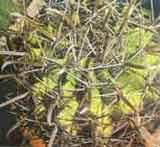
- Peyote, a bitter plant containing some 60 different alkaloids, has been revered as sacred by many indigenous Mexican cultures throughout the centuries. Today, however, the plant is far better known for the hallucinogenic effects it produces once ingested.
-
There are more than 100 species of plants with psychoactive properties, says a study by Mexico’s National Commission for the Knowledge and Use of Biodiversity (CONABIO), and the ancient cultures of the Americas have a long history of using these hallucinogenic plants.
“These plants contain chemicals – alkaloids – capable of promoting abnormal states of awareness, altering the senses of sight, sound, touch, smell and taste. For this reason some cultures see them as bringers of knowledge, as divine instruments, sources of a profound and mysterious wisdom, of beauty and inspiration, as well as a means of maintaining cultural integrity,” the study says.
Through rituals using hallucinogenic plants, ancient civilizations sought “to induce initiation into certain mysteries and to cure illnesses of the body and soul.” Some types of mushrooms and plants are consumed by traditional healers, priests or shamans, says CONABIO.
The Tarahumaras, Tepehuanes, Coras and Huicholes are some of Mexico’s indigenous groups that have preserved their ancient rituals and whose legends and history are associated with the use of plants like peyote.
An Internet site for the Imaginaria magazine shows the work of Frenchmen Antonin Artaud and Gerard Tournebize, authors of the two-volume “A Trip to Tarahumara Country”. According to that work, the religious ceremonies of the Tarahumara encapsulate all the knowledge that this group possesses of the world. All the elements in these rituals, like peyote, are symbolic, it adds.
For the Tarahumara, peyote is a being that has the ability to teach humankind how to walk the righteous path. The peyote ceremony represents the curing of the soul.
Peyote has been a controversial plant since the time of the Spanish colonizers, according to the magazine El Mercurio. The Spanish chroniclers said that “those natives who ate peyote were possessed by a terrifying demonic vision.” The consumption of peyote was outlawed by the Holy Inquisition after 1617.
“On the basis of several historical events recorded in Indian chronology, Fray Bernardino de Sahagun estimated that peyote was known to the Chichimeca and Toltec at least 1,890 years before the arrival of the Europeans. This calculation would give Mexico’s ‘divine plant’ a history of some 2,000 years,” the magazine said.
There are at least 30 species of cacti known as peyote, but not all have a recorded history of having been used as hallucinogens, says one article on psychoactive plants of the New World.
Much of what is known about peyote came from the chronicles of Francisco Hernandez, physician to King Phillip II of Spain, who traveled several times to Mexico to study the sacred use of peyote in indigenous cultures.
Regarding its toxicity, the botanical site states that there are no known cases of death from ingesting peyote. The site also notes that the peyote has hallucinogenic and psychoactive properties that influence perception, in particular the sense of sight.
German pharmacologist Arthur Heffter extracted mescaline from peyote in 1896, the first known hallucinogenic compound isolated by humankind.
Consuming mescaline alters the sense of consciousness. This substance is toxic in doses higher than 0.5 grams and produces symptoms such as severe nausea, vomiting, rapid heart rate, anxiety and hypertension. Some people develop psychosis after consuming mescaline.
Tradition has it that peyote possesses medicinal properties, and it is used to treat influenza, arthritis, diabetes, intestinal problems, the effects of snake bites, scorpion stings and other types of poisonings
 Print
|




