
Tuesday, November 10, 2026



News and Views from the Global South

A Setback for Food Research and Security
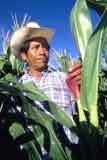
- An estimated 345,000 hectares in Central American are planted with varieties or hybrids created by the International Maize and Wheat Improvement Center, which recently closed its regional office.
-
The Swiss Agency for Development and Cooperation (COSUDE) in April withdrew the financing it had provided for more than two decades to regional agricultural institutions, Mike Listman, expert at the Mexico-based International Maize and Wheat Improvement Center (CIMMYT for its Spanish initials), told Tierramérica.
CIMMYT was forced to shut down its Central American regional office in Guatemala.
Together with CIMMYT, the International Center for Tropical Agriculture and the International Potato Center participated in the network.
This cutback will mean “less collaboration and effectiveness” among governments and institutions that have been providing assistance to poor farmers in Central America who rely on crops of basic grains, and will lead to “lesser development”, said CIMMYT maize program director Shivaji Pandey.
The programs aimed at improving food security are crucial for Central America, where daily per capita calorie intake fell from 2,500 in the 1980s to 2,300 in the 1990s.
“A new arrangement is being sought so that the countries of the region constitute a network coordinated by Nicaragua's National Agricultural Research Institute,” Listman said.
Central America's small farmers produce a third of the food consumed by the more than 32 million people in the isthmus, but they hold just 15 percent of the region's farmland, according to CIMMYT figures.
Some 345,000 hectares in Central America are cultivated with varieties or hybrids produced by CIMMYT research. From seven to 45 percent of corn growers in Central America, varying by country, and 40 percent of bean growers, use improved seeds.
The exchange of pest-resistant plant varieties through cooperation networks has contributed to a 50-percent reduction in the application of agro-toxins. But no government or organization alone can carry forward the work in crop improvement or promote farm practices that improve productivity and conserve natural resources, says the Center.
Crop improvement processes are “an endless chain” because renewal of genetic material must be ongoing to prevent a decline in yields, says Wotzbeli Méndez, manager of the governmental Agricultural Sciences and Technology Institute (ICTA) of Guatemala.
Improvement of plant varieties through conventional cross-hybridization methods, not genetic modification, is a means of fighting crop pests and diseases, building tolerance to lack of water, deficient soils and extreme temperatures, and producing greater quantities of food or enhancing its nutritional values.
Food improvement programs are vital in Guatemala, where drought and the plummeting of international prices for coffee — a crop that provides a livelihood for thousands of families — have contributed to the growing problem of malnutrition.
In some parts of the country, two of five residents suffer a major food deficit, according to a study by UNICEF (United Nations Children's Fund) conducted between 1997 and 2000. Sixty percent of the 11.2 million Guatemalans live in poverty and 22 percent are indigent.
More than 25,000 children depend on World Food Program (WFP) assistance for survival. The agency has distributed more than 6,000 tons of food — corn, beans, soy, and cooking oil — since 2002, spokesman Pablo Medina told Tierramérica.
According to CIMMYT, the path to food security in Central America entails broader development of more effective and productive varieties of corn, beans and potato.
 Print
|




