
Tuesday, November 10, 2026



News and Views from the Global South

Human Cloning
- The InterAcademy Panel, comprising 60 international scientific organizations, has called on all countries to ban human cloning experiments. The appeal reflects the viewpoint of a broad swath of the scientific community, warning that the cloning process — which has been conducted with animals — deteriorates genetic mechanisms and would cause human suffering.
-
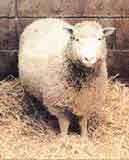
Dolly the sheep, the world's first cloned animal, in April 2003 became part of the Royal Scotland Museum in Edinburgh, two months after having been euthanized because she suffered a progressive pulmonary disease.
Several countries have proved able to clone mammals. In 2001, Brazil became the first developing country to clone a live animal, with the birth of Victoria, a calf, in an experiment conducted by the Brazilian agro-research enterprise EMBRAPA.
The InterAcademy Panel, however, does not oppose the use of cloning techniques for purposes of scientific research.
With no global consensus on the issue, the use of embryonic cells, or mother cells, for medical purposes has been gaining ground in many countries. These cells have the capacity to create any type of tissue in the body.
Researchers at the Roslin Institute, near Edinburgh, Scotland, plan to experiment with special cells, extracted from embryos left over from the artificial fertilization process that couples may opt for when they cannot conceive through natural means.
The International Bioethics Committee of UNESCO (United Nations Educational, Scientific and Cultural Organization) says it is up to each country to decide on whether to permit or ban studies using embryonic cells.
The conclusions of the InterAcademy Panel were covered in a recent edition of Science magazine, which suggests that it may never be possible to copy human beings using cloning methods
 Print
|



