
Wednesday, November 11, 2026



News and Views from the Global South

The War against Malaria
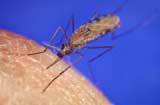
- The war to wipe out malaria has made enormous steps since the announcement that the genomes of the most dangerous of the parasites causing the disease and of the mosquito that transmits it had been decoded.
-
The genomes decoded where those of the mosquito Anopheles gambiae and of the parasite Plasmodium falciparum, which in combination produce the strongest strains of malaria.
Science magazine hailed the results of the study, as the search for weapons against the disease is important. At least 40 percent of the world's population lives in areas where malaria is endemic.
The World Health Organization (WHO), which has a section of its website dedicated to information about this disease, reports that more than 300 million people are infected with malaria each year, and more than a million die — mostly children under age five in poor countries.
With the passage of time, the medications used in fighting malaria lose effectiveness, as the parasite develops resistance.
The search for ways to prevent the disease has also been complicated. Throughout much of the 20th century, the strategy was to eradicate the mosquito vector, but in spite of limited success in some countries, it was impossible to keep the mosquito population under control for very long.
Nor has the search for a vaccine been easy. One of the farthest-reaching initiatives in this area has been that of Colombian doctor Manuel Patarroyo, but no definitive solution has been reached.
The magnitude of the malaria problem is reflected in the abundance of websites related to the disease, with some dedicated to its characteristics, its transmission vector, or places on the planet where it is most common. Malaria OnLine points out that malaria has been around since ancient times, and in the past also affected Europe.
And it is a major problem for the Americas, because in several countries of this hemisphere malaria is endemic. The Pan-American Health Organization (PAHO) provides numerous documents on its website that cover the impact of malaria on the region
 Print
|




