
Monday, September 28, 2026



News and Views from the Global South

Dengue Spreading and Increasingly Lethal
- The mosquito-borne disease dengue is becoming more virulent and lethal in South America.
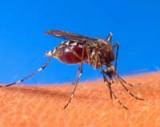
The Aedes aegypti mosquito feeding on human blood. - Public domain
Dengue is a single illness, but it manifests itself in different ways for each person, and can be much more severe for some than others, depending on risk factors. The main threat, agree specialists, is being infected with dengue a second time.
According to the Pan-American Health Organization (PAHO), the total cases of infection reported in the Americas fell 5.5 percent last year with respect to 2007, from 900,754 to 850,769, with most of the cases occurring in Brazil and Bolivia.
However, in the same period, the proportion of serious cases jumped 46 percent, and the number of deaths increased 84 percent – 317 to 584 -, revealing a greater presence of severe manifestations of the fever caused by one of dengue's four virus strains.
The trend continues in 2009. From January to early April, PAHO is reporting more than 215,000 cases in the Americas, with a high contribution from South America – in Argentina, the epidemic is in full force -, and a new hike in deaths, from 1.2 percent of those infected in 2007 to 2.2 percent so far in 2009.
People become infected with dengue through bites by a virus-carrying Aedes aegypti mosquito, which reproduce in clean, stagnant water in tropical and subtropical regions around the world.
It is thought that after recovering from an initial infection of dengue, the individual is immune to that strain for life. However, that person remains vulnerable to the other dengue virus strains.
An estimated 20 to 50 percent of infected people do not present symptoms of the disease, or they are confused with flu symptoms. The most clear cases present with fever, headache, and muscle and joint pain.
The patients may develop slight hemorrhaging, such as red spots on the skin or bleeding gums. The most severe, dengue hemorrhagic fever and dengue shock syndrome, are more frequent among those who are suffering a second infection.
In Brazil, the Ministry of Health reported that in the first 10 weeks of this year, there were 114,355 cases, of which 603 were severe and 23 ended in death.
In Bolivia, Juan Carlos Arraya, head of the Health Ministry's vector-transmitted diseases, confirmed for Tierramérica that there were 56,530 cases, the most recorded in the last 20 years in that country. “Likely dengue hemorrhagic fever” affected 174 people and 25 people died.
PAHO reported 2,277 infections in Paraguay, five of them severe, although not reaching the point of a dengue hemorrhagic fever (DHF) diagnosis. Paraguay has suffered severe epidemics in recent years. In 2007 there were 28,000 people infected, of which 17 died.
Paraguay's Ministry of Health says that because those who have already overcome a first infection are vulnerable, there are 600,000 people (10 percent of the population) in danger of contracting DHF.
Health authorities in Argentina had recorded more than 12,500 cases by mid-April, although provincial governments and hospital staff believe the real total is three times that.
This year's is the most widespread epidemic since the disease reappeared in Argentina in 1998. There are five confirmed deaths, while complaints are proliferating of health officials' resistance against releasing information, which occurs with great delay.
The general panorama has put epidemiologists and virologists on alert. But experts in Argentina and Brazil consulted by Tierramérica disagree on the vulnerability factors for the most serious type of dengue.
The main concern in Argentina is the threat of second infection, because of the higher risk of contracting DHF, which is difficult to control in children ages two to 14, the elderly, or the chronically ill, especially if they do not receive immediate treatment.
But Brazil's Oswaldo Cruz Foundation (Fiocruz) warns that the most serious cases can also manifest in an individual's first dengue infection.
In serious cases, the infected individual requires hospitalization due to increased vascular permeability, loss of plasma and reduced platelets, which are needed to help blood to coagulate.
Although PAHO underscores that there are convincing studies that sequential infection heightens the risk of DHF, infectious disease expert, Dr. Rogério Valls de Souza, of Fiocruz, says “there is no definitive data” about how many people are vulnerable to a severe case of dengue for having suffered a first case.
“Dengue is related to the type of virus that is circulating. For example, in the Rio de Janeiro epidemic – in the 2008 austral summer – the virus that circulated most was type 3, and the most serious cases, not necessarily hemorrhagic, were manifest in the first infection,” he noted in a Tierramérica interview.
He maintained that even in the framework of PAHO they are analyzing how to avoid differentiation between “classic” and “hemorrhagic” for being a strict categorization that does not always include the most serious manifestations of the disease.
In Argentina, however, the experts maintain that differentiation.
“In the Americas we have four strains of dengue. Once a person has been infected, in the other occurrence, no matter how much time has passed, if he or she is infected by another strain there is the full chance of developing the hemorrhagic type,” Dr. Jorge Gorodner told Tierramérica. Mortality in that case is 15 to 35 percent, he said.
Gorodner is a professor of infectious medicine at the National University of the Northeast, and lead researcher at the Institute of Regional Medicine, but he admits that he has never seen an epidemic of hemorrhagic cases. This is the first time it has appeared in Argentina.
“Almost 100 percent of the infected are susceptible. But the seriousness depends on each person. That is the core of the true dimension of the harm generated by the lack of epidemiological oversight,” he said.
Dr. Alfredo Seijo, head of the dengue unit at the Hospital Muñiz of Buenos Aires, explained to Tierramérica that “the outbreak in Argentina is important due to the number of people who are left vulnerable to DHF.”
According to Seijo, the number of hemorrhagic dengue cases is on the rise in all countries where dengue has spread.
Experts say the only effective weapon is to reduce the presence of the transmitting mosquito, especially by eliminating sites and containers where water collects, which are ideal for larvae to develop. In parallel, community prevention campaigns are essential.
Controlling the disease-spreading vector is the key, as long as no vaccine exists. PAHO and the experts consulted agree that despite advances in developing a vaccine, it is difficult to find a formula that is effective against the four strains of the dengue virus.
Partial immunity could be dangerous, because infection with another strain in a vaccinated individual could manifest in the most severe way, causing greater risks.
 Print
|
Print
|




