
Wednesday, September 30, 2026



News and Views from the Global South

New Maritime Rules Target Oil Spills in Antarctica
- A new international regulation aims to prevent oil spills in Antarctic waters from causing environmental disasters.
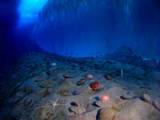
Bivalves, sea urchins and sponges next to a wall of ice in the frigid depths of New Harbor, Antarctica. - Public domain
The International Maritime Organization's (IMO) Marine Environment Protection Committee proposed a change to an annex of the 1973 International Convention for the Prevention of Pollution from Ships that would ban the transport and use of petroleum above a certain density, bitumen, and tar by sea craft in Antarctic waters.
The Committee approved the proposal at its last meeting, held in London, Jul. 13-17. But its adoption, which could include further modifications, will be decided at the next session, in March 2010.
In any case, the ships that travel to Antarctica will be subject to stricter rules beginning in 2011, to use only light fuel, which is more costly but less polluting.
Light fuel evaporates more easily, so the risks of environmental damage are less if there is a ship accident or oil spill. In the Antarctic, this can happen if a ship runs into a giant iceberg.
In the last 16 years, Antarctic tourist traffic has increased more than seven-fold. In the 1992-1993 season, 35 cruise ships reached the frozen continent's coasts. By the 2008-2009 southern summer season, the total jumped to 258. In the 2007-2009 period, five accidents were reported.
In 2007, the cruise ship Explorer ran into an iceberg less than 100 kilometers from the Antarctic Peninsula. Its passengers were rescued in lifeboats, but the ship sank. It carried 185,000 liters of marine diesel, a lighter fuel, which prevented it from being a worse environmental disaster, according to experts.
The Antarctic Treaty Secretariat, based in Buenos Aires, for years has been pushing tighter regulation of cruise ships. The 1959 treaty has 28 consultative members, who conduct “important scientific research” on the continent, and another 18 non-consultative members, who attend meetings but do not have voting powers.
“In 2005, the Treaty's consultative parties proposed to the IMO that it should ban the use of heavy fuels in the Antarctic, and in July of this year the organization made an even more demanding proposal,” Rodolfo Sánchez, environmental management director at Argentina's National Directorate of the Antarctic, told Tierramérica.
The Argentine agency uses only light fuel, said Sánchez, but many tourism ships use heavy fuel until they reach Antarctica, when they switch to a lighter fuel. But the ban would extend also to fuel supplies on board.
The only boats that would be exempt from the standards are those that carry out search and rescue or safety operations, according to the amended proposal, to which Tierramérica had access.
Sánchez disclosed that the IMO recommended that its member countries study the potential effects of the new rules so that they can make suggestions for further changes.
“We want better protection of Antarctica and regulated tourism, but the tourism industry and some countries with national programs in the area, like the United States, have some reservations about the regulations, and I think we should listen to them,” he said.
The Argentine official believes the final decision should be made “by consensus” and suggested, for example, a longer grace period for the Antarctic cruise lines to adapt their equipment to the new requirements.
However, Javier Figueroa, the Argentine Foreign Ministry's alternate commissioner to the International Whaling Commission and responsible for IMO affairs, interprets the resolution as a ban on the use and transport of heavy fuel in Antarctic waters, with no room for modifications.
“The trans-Atlantic ships carry heavy fuel, which is highly polluting, and we accept that if tourists continue to travel to Antarctica we should restrict the traffic to those boats that utilize light fuel,” Figueroa told Tierramérica.
The commissioner noted that at the London meeting the shipping organizations opposed the new regulations and requested more time, but the Committee of the IMO – an entity of the United Nations – stood firm on the 2011 timeframe for the rules to take effect.
In Figueroa's opinion, the new regulation will benefit the preservation of Antarctica and will not jeopardize tourism.
“Tourism in Antarctica has come to stay. The new standards might affect the price of the trip, which now range from 5,000 to 6,000 dollars, but the tourist who wants to visit that destination will pay the difference,” he said.
From the Antarctica Bureau of the southern Argentine province of Tierra del Fuego, Guadalupe Ocampo told Tierramérica that some 40,000 visitors reached Antarctica last season, and a similar volume is expected for the next.
The visitors will travel on 37 ships of different sizes to the continent to see its unique scenery and fauna. “Not all have permits to allow the passengers to disembark,” explained Ocampo. Those carrying up to 500 people are limited to spending just one hour on land.
The cruise ships with larger numbers of passengers can only navigate near the coast, among the islands of floating ice, without disembarking.
Like Figueroa, Ocampo believes the new regulations will have little effect on the tourism industry. “Because of the destination and the cost, it is a very selective type of tourism. These tourists won't stop coming if the cost of the ticket goes up,” she said.
Meanwhile, environmental organizations are welcoming the changes in regulations.
“The measures that benefit the preservation of the Antarctic waters and ecosystems also put the brakes on the whaling ships that hunt for presumably scientific ends,” Roxana Steimberg, with the Argentine branch of the Whale Conservation Institute, told Tierramérica.
According to reports from the International Whaling Commission, each year Japan kills approximately 1,000 whales. In 2007, its notorious whaling ship Nisshin Maru, which uses heavy fuel, suffered an explosion and fire on board while in Antarctic waters.
 Print
|
Print
|




