
Thursday, September 17, 2026



News and Views from the Global South

Biological Remedy for Sickened Soil
- Biological remediation costs 80 to 150 dollars per cubic meter of soil in Mexico, where such methods are increasingly studied and applied to clean up contaminated land.
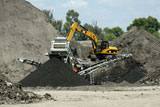
Bioremediation efforts at Pemex sites in Mexico - Courtesy of Pemex
Known as bioremediation, it involves a process in which bacteria or mold “degrade hazardous chemicals into less toxic or nontoxic substances,” according to the U.S. Environmental Protection Agency. The chemicals are food to certain microorganisms.
In 1933, El Águila fuel refinery began operating its 18 de Marzo plant in Azcapotzalco, northwest of Mexico City, and was nationalized in 1938 by President Lázaro Cárdenas (1934-1940) along with the rest of the petroleum industry.
Since 1976, the company processed 105,000 barrels of oil per day, and reached a total of 14 refineries, three petrochemical units, 218 storage tanks and loading and distribution terminals.
The government ordered its closing in March 1991 because it was located in an urban area. What remains is a fuel storage and distribution terminal, which still needs to be razed.
The federal government decided to turn the former industrial site, property of the government-run Petróleos Mexicanos (Pemex), into the Bicentennial Ecological Park, covering 55 hectares. It is to be inaugurated in 2010 as part of the celebrations of 200 years of Mexico's Independence from Spain.
But the first step is to eliminate the residues inherited from the oil operations, contamination which has gradually diminished on its own over time. One of the techniques used to speed up the process is biological remediation, using a variety of approaches.
One is to dig out portions of the contaminated soil and then treat it with microorganisms. Another is to aerate sections to stimulate biological activity and, if needed, add nutrients like nitrogen, phosphorous or potassium.
“The increase in petroleum and natural gas activity brings with it a great deal of waste, from drilling the wells and from spills of the fuel itself, which is why soil treatment has intensified,” researcher Patricio Rivera told Tierramérica. He works at the public Autonomous University of Tamaulipas, in the eastern state of the same name, where the Madero refinery is located.
Rivera works on a bioremediation project around former well drilling operations in the natural gas zone of the Burgos oil fields. The work centers on eliminating mixtures of petroleum-based substances in the soil using native bacteria. The research is slated to conclude in December.
Although these techniques are being applied in many places around the world, local studies are needed in order to find the most appropriate native microorganisms. In Mexico, scientists have identified at least 22 native bacteria and 26 native molds that would be effective in this type of clean-up effort.
“The biodiversity we have gives us great potential. We are still only working with a small number of microorganisms; more research is needed,” said expert Katiushka Arévalo, of the public Autonomous University of Nuevo León, in the eastern state of the same name, where the Cadereyta refinery operates.
The growing popularity of this approach lies in its simplicity, effectiveness, environmental sustainability and relatively low price, which runs 80 to 150 dollars per cubic meter of soil – cheaper than other decontamination methods, like incineration or washing.
In Mexico there are vast areas contaminated with petroleum derivatives, which tend to accumulate in marine ecosystems and in soils.
More than half of the country's oil drilling industry is situated in the southeastern states of Tabasco and Veracruz, where spills are frequent.
In 2003, the Environmental Projects and Services Group was created, made up of researchers from the Autonomous Metropolitan University, to provide remediation services, especially with microorganisms, in areas contaminated by fossil fuels.
So far, the entity has signed more than 200 contracts with Pemex to clean up contaminated areas.
Furthermore, there are at least 15 companies whose services include bioremediation. This technique is also used in other Latin American countries, such as Cuba and Argentina.
The decontamination of the former Azcapotzalco refinery, which will conclude in December at a cost of about 80 million dollars, is entrusted to seven university institutions from across Mexico.
Observers believe bioremediation will keep expanding over the next few years as successful techniques continue to be developed.
In February, Mexico hosted the 14th Symposium of the Latin American Biological Sciences Network, which emerged in 1975 to promote these disciplines throughout the region. The central theme of this year's meet was bioremediation.
“The country faces a serious situation. In some places there are oil spills in mangroves and in bodies of water. That is why these methods are so necessary,” said Rivera.
“The application of bioremediation is going to increase; it is a science that is increasingly important. Today there is more knowledge and I predict a long future for it,” said Arévalo, who works with molds that produce enzymes for eliminating dyes or derivatives of aromatic substances.
In October 2006, the Secretariat (ministry) of Environment and Natural Resources and the Mexican Institute of Petroleum and the National Institute of Ecology published a technical manual for soil analysis to be applied in remediation of contaminated sites.
 Print
|
Print
|




