
Monday, September 21, 2026



News and Views from the Global South
Opinion
A Determined Path to the SDGs in 2030 Despite the COVID-19 Pandemic
- As lockdowns ease in countries across Asia and the Pacific in the wake of the COVID-19 pandemic, one thing is clear—a return to business as usual is unimaginable in a region that was already off track to meet the Sustainable Development Goals (SDGs). The virtual High-Level Political Forum on Sustainable Development recently convened governments and stakeholders across the globe to focus on the imperative to build back better while keeping an eye on the Global Goals.
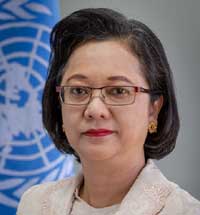
Armida Salsiah Alisjahbana
Mission orientation and mobilizing fiscal and social support that realize the SDGs
As attention shifts from the immediate health and human effects of the pandemic to addressing its social and economic effects, governments and societies face unprecedented policy, regulatory and fiscal choices. The SDGs— a commitment to eradicate poverty and achieve sustainable development, globally, by 2030—can serve as a beacon in these turbulent times.
Our new joint report Fast-tracking the SDGs: Driving Asia Pacific Transformations, highlights six entry points for achieving the SDGs in the face of the pandemic. These include strengthening human well-being and capabilities, shifting towards sustainable and just economies, building sustainable food systems, achieving energy decarbonization and universal access to energy, promoting sustainable urban and peri-urban development, and securing the global environmental commons.
Each of these entry points has been disrupted by the pandemic. Yet, these disruptions may create opportunities for new approaches to deliver on SDG targets that reflect the ambitions of the 2030 Agenda.
What will it take to align systems and institutions with the SDGs as they build forward?

Kanni Wignaraja
Policy revolutions to manage complexity
Responses to the COVID-19 crisis must be centered on the well-being of people, empowering them and advancing equality. Driving change in the people-environment nexus to protect the health of people and natural resources is key to a future that does not repeat the crisis we are in today.
We need a revolution in policy mind-set and practice. Inclusive and accountable governance systems, adaptive institutions with resilience to future shocks, universal social protection and health insurance and stronger digital infrastructure are part of the transformations needed. All are driven by a low carbon and environmentally sustainable infrastructure and energy transition.

Bambang Susantono
Institutions such as the United Nations and ADB have mobilized to support a shared response to the crisis. Now it is vital that we enable countries to secure the support they need to go beyond, to achieve the SDGs.
Armida Salsiah Alisjahbana, United Nations Under-Secretary-General and Executive Secretary of the Economic and Social Commission for Asia and the Pacific (ESCAP)
Kanni Wignaraja, United Nations Assistant Secretary-General and Director of the Regional Bureau for Asia and the Pacific, United Nations Development Programme (UNDP)
Bambang Susantono, Vice-President for Knowledge Management and Sustainable Development, Asian Development Bank (ADB)
 Print
|
Print
|




