Languages
Saturday, October 24, 2026



News and Views from the Global South
Opinion
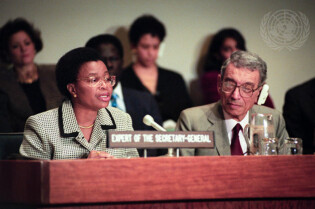
Peace Needs Children’s Voices
WE THE PEOPLES OF THE UNITED NATIONS DETERMINED to save succeeding generations from the scourge of war, which twice in our lifetime has brought untold sorrow to mankind. The United Nations was established with this commitment.
Were Half of Venezuela’s Oil Revenues Really Stolen? — Part II
Money chase So, if Venezuela claims to be importing from the rest of the world roughly as much as it was exporting during those years, and the rest of the world confirms Venezuela’s story, then where could those additional $11 billion that presumably ended up in the bank accounts of Maduro’s cronies be?

Bangladesh’s Hidden Climate Bill: How Much Are We Losing Without Counting It?
Bangladesh has earned global recognition for reducing deaths from cyclones and floods. Early warning systems, cyclone shelters, embankments and community preparedness have transformed the country’s disaster response. Yet another climate crisis is receiving far less attention: the economic damage climate change is quietly inflicting on households, farmers, workers, businesses and public finances.
Were Half of Venezuela’s Oil Revenues Really Stolen? — Part I
If you’ve been around Venezuelans for long enough, you know that we tend to speak in superlatives. We have the best baseball players, the most beautiful beaches, the tastiest arepas, and the wickedest dictators. But even being used to the scale of our superlatives didn’t quite prepare me for what I read in the May 5 edition of The New York Times, in a story called “In Venezuela, Trump Vowed to Show Accountability. Oil Deals Linger.” The story tells us that a network of shell companies controlled by Carlos Malpica (who is widely believed to be Maduro’s bagman) embezzled $11 billion of the country’s oil wealth in 2021 and 2022. In the Times’ words: “for every two dollars that Venezuela earned selling oil earlier this decade, one dollar was stolen, internal documents and official statistics show.”
From Small Islands to Antalya: COP31 Must Move Climate Promises from Paper to People
When you grow up on a small island, the ocean is not scenery. It is your neighbour, your livelihood, and the measure of time itself. For decades, as I walked the beaches of Seychelles, I watched the subtle shifts that scientists were warning the world about. The tide crept a little higher up the sand each year. After a warm season, vibrant coral gardens turned ghost-white. Storms that once belonged to rare memory began arriving with unsettling regularity.
Food Insecurity and Child Malnutrition Worsen in Afghanistan Despite Strong Agricultural Season
Nearly 40 percent of the population of Afghanistan is projected to face high levels of acute food insecurity this winter, and cases of acute malnutrition are expected to soar during 2027, the Food and Agriculture Organization of the United Nations (FAO) and the United Nations World Food Programme (WFP) warned.
People Who Choose to End Their Lives
People who choose to end their lives through voluntary assisted dying typically face terminal, incurable, or debilitating conditions that cause severe physical or psychological suffering.
Two Summits in Bangkok: IMF/World Bank and Finance Ministers Inside, the People’s Assembly Outside
Bangkok hosted two summits last week. Inside the Queen Sirikit Convention Center, more than 15,000 finance ministers, central bank governors and CEOs of the world’s largest banks and corporations attended the Annual Meetings of the International Monetary Fund (IMF) and the World Bank. They flew in business class and slept in five-star hotels to talk about growth, inflation and public spending, and thus to decide the destiny of billions of people they will never meet. Outside, hundreds of social movements and civil society organizations held the People’s Assembly, for the 99% whose voice would not be heard. They flew economy and often shared modest rooms. The first was the summit of money and power. The second, the summit of the rest of us.
If the UN COP17 Is Serious About Biodiversity, It Needs to Follow the Money
On Monday, governments from across the world will gather in Armenia for COP17, the UN biodiversity summit, to assess progress on the global agreement to halt and reverse biodiversity loss. For anyone who cares about the livability of our planet for future generations, and the richness of life on earth, the stakes could hardly be higher. Policy makers will debate targets, implementation, and the lack of money to protect nature, in particular the failure of developed countries to fulfil their obligations. But there is a more basic question that should put at the center of those discussions: what happens when the financial system governments are counting on to fund nature protection is also financing its destruction?
30 Years of War, 30 Years of Impunity in DR Congo
It has been 30 years since Rwanda-backed rebel forces attacked Lemera hospital in what was then eastern Zaire, killing 37 patients and medical staff. This was one of the first major atrocities during what became known as the First Congo War, helping to unleash decades of foreign-backed rebellions and grave abuses against civilians by all sides, including ethnic-based massacres, widespread rape and sexual violence, forced recruitment of children, abductions, torture, mutilation, and forced displacement.
Crisis and Opportunity at the UN
At this year’s highest-profile UN event, Donald Trump publicly mused over his ‘big decision’ about whether to ‘annihilate’ Iran. Israeli Prime Minister Benjamin Netanyahu, as dozens of delegates walked out, branded those who condemn genocide in Gaza ‘moral cowards’.
When Medicine Becomes a Tool for Torture: The Hidden Role of Medical Personnel in Russian Captivity
Medicine is supposed to protect human life and dignity. Yet testimonies from Ukrainians released from Russian captivity reveal a disturbing reality: medical personnel in places of detention have not only denied prisoners necessary treatment but, in documented cases, participated in torture and ill-treatment.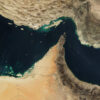
Middle East Escalation Could Leave 11.7 Million More Women and Girls Facing Food Insecurity by End-2026
An additional 11.7 million women and girls could face food insecurity by the end of 2026, as the escalation in the Middle East and disruption to the Strait of Hormuz drive up food prices and strain livelihoods and household resources, according to a new UN Women analysis published today.
Dollar System Eroding Slowly, but Still Dominant
The protracted demise of dollar-gold convertibility and associated fixed exchange rates did not end dollar hegemony. With crucial and timely help from political allies, confidence in the dollar system has persisted, albeit much diminished.
Navi Pillay’s Nobel Peace Prize Is a Vote of Confidence in a Global Legal Order under Fire
The awarding of the 2026 Nobel Peace Prize to distinguished South African jurist and international judge Navanethem “Navi” Pillay is about more than just the recognition of an exceptional individual in the global fight for justice.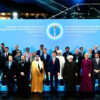
Kazakhstan Has Spent 23 Years Bringing Faiths Together. Now Comes the Harder Part.
In a world increasingly divided by war, political distrust and competing ideologies, Kazakhstan has spent more than two decades pursuing an unusual diplomatic undertaking: keeping representatives of different religions in conversation.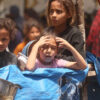
Nearly 50,000 Women and Girls Killed or Severely Injured in Gaza in Three Years of War – One in 21 Gazan Women and Girls
Since October 2023, 50,000 women and girls in Gaza have been killed or seriously injured.- • UN Women estimates that nearly 50,000 women and girls in Gaza have been killed or severely injured since the onset of war in October 2023 [1], amounting to one in 21 Gazan women and girls losing their life or living with lifelong disabilities [2].
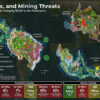
Protection That Holds: Keeping Nature Safe From Extraction
When governments gather in Yerevan this month for the 17th UN Convention on Biological Diversity, they will weigh a promise nearly 200 countries adopted six years ago: to effectively conserve at least 30 percent of land, inland waters, and sea by 2030. Achieving the ambitious 30x30 target is essential to sustaining the systems humanity relies on for survival—including crop pollination, purification of water and air, and climate regulation—as well as the biodiversity that underpins food production, fisheries, and tourism.
Nigeria’s School Kidnapping Threat Is Changing: Four Lessons from the 56 Day Oyo Attack
Following the mass abduction of 46 pupils and teachers in Oyo State, south-west Nigeria in 2026, the authorities attributed the attack to the Ansaru terrorist group. Key suspects were prosecuted and handed prison terms. But this was not the first time terrorist groups had engaged in mass abduction of school pupils in Nigeria. Peace and security researcher Saheed Babajide Owonikoko explains what factors could have motivated the Ansaru terror group to stage that attack and what lessons Nigeria should take away from the incident, which lasted 56 days.
Dementia: A Rapidly Rising Global Challenge
Dementia is a rapidly growing global health challenge that affects many millions of people worldwide and places significant economic, healthcare, and social strains on societies, particularly as populations age.
The Late Arrivals
One night, many years ago now, on a remote beach in the outer islands of Seychelles, I sat in the darkness and watched a green turtle come ashore. She had waited for the heat of the day to leave the sand. Under a sky crowded with stars, she hauled herself slowly above the tideline, dug with a patience no human hand could match, and laid her eggs. Then, in the small hours, she turned back toward the water. She did not hurry. She paused once, as though listening, and then made her slow, unhesitating way down the sand, back to a home older than any I could imagine.Next Page »





The views expressed in these articles are those of the authors and do not necessarily represent the views of, and should not be attributed to, IPS-Inter Press Service

The Week with IPS

NEXT STOP - SDGs
Tracking global progress towards a sustainable world
Tracking global progress towards a sustainable world
