
Sunday, October 11, 2026



News and Views from the Global South
Q&A: ''We Need to Be Living in a De-Carbonised Economy in Four Decades''
Interview with Tim Flannery, Australian scientist
- With the ‘Synthesis Report’ of the Intergovernmental Panel on Climate Change (IPCC) to be released this weekend, scientist, environmental activist and 2007 ‘Australian of the Year’, Prof. Tim Flannery, warns that action must be taken to avoid the worst of global warming.
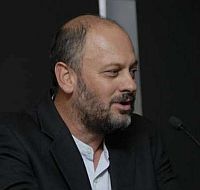
Prof. Tim Flannery Credit: Mark Coulson
IPS: A report released this week by the Climate Institute, titled ‘Evidence of Accelerated Climate Change’, indicates that pollution and temperature levels are rising faster and Arctic ice is melting quicker than in the worst-case scenarios forecast by the United Nations last year. We’re in a fairly dire position, aren’t we?
Tim Flannery: Yeah, we are. We are. Things are changing far more quickly than any of us would like. You know, we’re seeing a very rapid accumulation of carbon dioxide in the atmosphere, rapid sea-level rise which is beyond the worst-case scenario projected by the IPCC and this collapse of the Arctic ice pack. We keep on hoping things will turn around. With the Arctic ice I keep hoping that the next year will bring a bit of relief, but so far we’ve had three years in a row of what you’d call catastrophic decline.
IPS: The ‘Climate Change in Australia’ report, produced jointly by the Commonwealth Scientific and Industrial Research Organisation (CSIRO) and the Bureau of Meteorology and released last month, says that warming in Australia is inevitable. It predicts a rise in temperature of between 2.2 and 5 degrees Celsius for Australia by 2070 under a high emissions scenario. To limit this warming we need to introduce some radical changes, don’t we?
TF: Yes, it means if that is actually realised it’s the end of our global civilisation, in my view. I don’t think our civilisation could survive a change as large-scale and abrupt as that.
IPS: What do we need to do?
TF: We need to get on a trajectory for reducing emissions by 80 percent plus in the next four decades. So, basically we need to be living in a de-carbonised economy four decades from now and if we do that we’ll see CO2 equivalent levels in the atmosphere below the dangerous threshold. That’s what’s required.
IPS: Are we doing enough at the moment?
TF: No, we aren’t remotely near it.
IPS: Where do you lay the blame for that? Is it due to the policies of governments?
TF: Look, I feel like I’m in the middle of a war at the moment. It’s way beyond the point of laying the blame. What we’ve all got to be focused on now is the future and what is required. So, you know, it’s going to be bloody difficult to achieve that but we must do it. As old Churchill said, sometimes it’s not good enough just to do your best. You’ve got to do what’s required and that’s the situation I think we’re in at the moment.
IPS: The Climate Institute says that there have been many observations on climate change published since mid-2006, which is when the data used in the IPCC synthesis report, to be released shortly, ends.
TF: Yeah, basically most of the IPCC data terminates in the middle of 2005. So, the CO2 equivalent data (that) you’ll read about in the report when it comes out on Sunday, Australian time, will be about the middle of 2005.
IPS: Does this mean that there might be too much attention being placed on the IPCC report which could possibly undermine efforts to combat climate change given that the data is not the most recent?
TF: The data’s terrifying, nevertheless, and people will be shocked when they see it. What it says is that the CO2 equivalent in the atmosphere as of mid-2005 was at 455 parts per million, which is above the dangerous threshold already. Now, the report also makes the point that some of the warming that could be caused by that gas is being masked by other pollution. But that, for a whole lot of reasons, is very little comfort.
IPS: In Australia, do you think that there is a growing awareness of the importance of fighting climate change?
TF: Yeah, that’s what the (Nov. 24) election is about in large part, yeah? You see it in the U.S., the change occurring there. You see the Europeans are now gearing up to take advantage of the new energy revolution, and in China, of course, you can’t open China Daily news without seeing another article on pollution or global warming or some major thing. So, there you see there’s a global shift.
IPS: Is this reason enough to be optimistic about our ability to tackle global warming?
TF: I’m not thinking about either optimism or pessimism. I’m just very grimly determined to make a difference. I don’t have time, quite frankly, to think about optimism or pessimism. We simply have to focus on the job at hand at the moment.
 Print
|
Print
|




