Languages
Sunday, November 8, 2026



News and Views from the Global South
Opinion

The Abraham Accord: Will it Bring Peace or Perpetuate Pain in Palestine?
There is not much good news for President Donald Trump of the United States these days. If electoral polls have any credibility, he is staring at the face of almost certain defeat in the elections come November. So, when the so-called Abraham Accord between Israel and the United Arab Emirates (UAE) was sealed in a telephone call between him and the leaders of Israel and the UAE, signalling a sliver of silver lining in the otherwise hovering dark clouds over him, Trump was ecstatic. A Trump twitter called it a “HUGE breakthrough among “three GREAT friends!”.
Transforming the Global Economy or Parachuting Cats into Borneo?
The COVID 19 Pandemic continues relentlessly. Deaths approaching a million globally, 22 million infected and growing. Brazil, India, the US and Russia accounting for almost 50% of the total cases in the world.
To Understand the ”Other”: How Disabilities Define Us
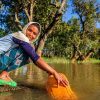
How Women & Girls are Forced to Trade Sex for Water
There is an intimate connection between corruption and COVID-19. This pandemic is making everyday life more desperate, especially in poorer communities, and that means more opportunities for those preying on vulnerable people.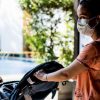
Put Gender Equality at the Heart of the Post-COVID-19 Economic Recovery
The pandemic is disproportionately affecting women workers. Governments should prioritize policies that offset the effects the COVID-19 crisis is having on their jobs.
I Came to Work in Qatar to Pursue My Dreams, But My Life is a Nightmare
Like thousands of migrant workers from Africa and Asia, I am finally in the land of my dreams, Qatar. I knew working here would be tough, but I thought I would be able to regularly send money home to my family and live decently.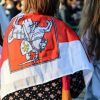
How to Help Belarus
President Aliaksandr Lukashenka’s government is teetering after he declared victory in a rigged 9 August vote. Protests have exploded. Moscow, Brussels and other stakeholders should avoid transforming the Belarus crisis into a European one, cooperate to warn against repression and insist on new, fair elections.
More Was Lost in Lisbon
The Barcelona Football Club disaster in the quarterfinals of the Champions League, which was once more appropriately called the European Cup, is indeed a cataclysmic event, unprecedented, with predicted drastic and hurtful consequences.
Future of Education Is Here
There are moments when the world has no choice but to come together. Those moments become historic turning points. This is one of them. We are now faced with the greatest education emergency of our time. Over one billion children are out of school. The COVID-19 pandemic has created an unprecedented crisis of such magnitude and depth that the next generation might neither have the capacity and tools, nor the will, to rebuild - let alone build back better.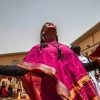
Sudan May Have Banned FGM, but the Harsh Practice Continues
Just four months ago, Sudan took the monumental step to ban female genital mutilation, a painful, unnecessary and dangerous procedure that leaves lasting scars. Generally carried out on girls before they reach puberty, genital mutilation is now punishable in Sudan by up to three years in prison and subject to a fine.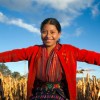
Lack of Human Capital is Holding Back Latin America’s Growth
In 1990, Latin America’s average GDP per capita was a little over a quarter of the United States’ income level, while emerging and developing Asian countries’ GDP per capita was only 5 percent. In 2019, Asian countries had grown fourfold, but Latin America was still at the same level.
ISDS Enables Making More Money from Losses
With the Covid-19 contagion from late 2019 spreading internationally this year, governments have responded, often in desperation. Meanwhile, predatory international law firms are encouraging multimillion-dollar investor-state dispute settlement (ISDS) lawsuits citing Covid-19 containment, relief and recovery measures.
We Must Prioritize Local Solutions to Global Problems
World Humanitarian Day is the perfect time to refresh our push to localize humanitarian aid for COVID-19 and all the challenges we face. Celebrating #RealLifeHeroes!
Beating Anger into Empathy: the Need of the Hour in Ethiopia
The murder of Haacaaluu Hundeessaa, an icon of the Oromo people in Ethiopia was a tragic loss for all who struggle for rights in systems that fail to accommodate them.
The Battle over Barriers for People with Disabilities
According to the World Health Organization (WHO) at-least 15% of the population globally has some form or other of a disability- considered the world’s largest minority population and one that any of us can join at any point in our lives. It therefore makes so much sense for each one of us to invest towards inclusion, so everyone has the right to live their life to their full potential and contribute meaningfully to society. This article seeks to highlight the updates from the disability world in the past four months, particularly the last month, both globally and in India.
Leading in Time of COVID: A True Test of Leadership
In 1918, the Spanish Flu, a deadly influenza caused by the H1N1 virus, decimated the world. Over the course of four successive waves, it infected 500 million people, about a third of the world’s population at the time, resulting in 50 million deaths.
Enough Is Not Enough – Call for Urgent Change in Mexican Economic Policy
A group composed by women and men, called Nuevo Curso de Desarrollo (New Course for Development) based at the National University of Mexico recently published a document to propose a set of measures to change the current economic policy in Mexico. This proposal responds to a diagnosis of the current situation: at this point of the year, the serious social damage inflicted by the health and economic crisis can already be observed. As we know, in Mexico as in many other countries, there was a great economic disruption caused by COVID. Millions of people ceased to receive income from their work. However, the Mexican government has not carried out sufficient support measures to compensate for these losses. The result is easy to guess: many households have been rapidly impoverished. It is estimated that between 10 and 16 million people in April earned much less to the point of not being able to acquire the basic food basket , a situation that has continued for many of them during May, June and July. And while it is true that more and more workers are returning to their jobs, the losses caused have not been repaired.
Getting India’s Construction Workers Their Entitlements
Basant Lal Chaudhary migrated from his village of 1,200 people in Madhya Pradesh, to a city of 90,000 people in Jammu and Kashmir in 2016. He last worked as a construction worker, before the COVID-19 lockdown forced him out of employment.“I used to earn a daily wage of INR 350. That was my only source of income,” he shares. During the lockdown, he along with others who worked with him, are finding it difficult to make the ends meet.”I don’t know whether I will be able to find work here anytime soon.”
The Beirut Blast: An Accident in Name Only
The catastrophic explosion in Beirut’s port is a manifestation of the Lebanese political elite’s predation and dysfunction. Among the country’s long-suffering citizens, shock is quickly yielding to fury. It may be the last chance for those in power to effect long-overdue structural reforms.
Debt Hawks Detract from Urgently Needed Fiscal Recovery Efforts
Developing country debt has continued to grow rapidly since the 2008-2009 global financial crisis (GFC). Warnings against debt have been reiterated by familiar prophets of debt doom such as new World Bank chief economist, Carmen Reinhart, once dubbed the ‘godmother of austerity’.
Crisis Management 101: Treating the Climate Crisis Like a Pandemic
On 23 February 2020, the South Korean government raised the national Crisis Alert Level to the highest tier in response to the Covid-19 pandemic. Since then, we have witnessed what our society is capable of when faced with a crisis.« Previous Page — Next Page »





The views expressed in these articles are those of the authors and do not necessarily represent the views of, and should not be attributed to, IPS-Inter Press Service

The Week with IPS

NEXT STOP - SDGs
Tracking global progress towards a sustainable world
Tracking global progress towards a sustainable world
