Languages
Thursday, October 22, 2026



News and Views from the Global South
SRI LANKA: Single Women Begin to Rebuild
For Magei Kasai the battle against hardships did not end when the guns fell silent two years ago in the Sri Lankan civil war. New battles began for survival, for herself and for what was left of her family.SRI LANKA: Catching Itself Young
When Sri Lanka extended the age of retirement for government workers from 55 to 57 years it defied criticism that the island’s public sector was overstaffed and needed serious downsizing.SRI LANKA: Less Guns Mean More Food
As paddy cultivation revives in Sri Lanka’s former war zones, prospects for the island’s food security have improved dramatically.Sri Lanka Ducks International Probe
Although the Sri Lankan government has evaded calls for an international probe into alleged excesses while militarily defeating Tamil separatism in 2009, it may yet be called to account at the September session of the United Nations Human Rights Council (UNHRC).
RIGHTS-SRI LANKA: Recovery of Disappeared’s Body Raises Hopes
The details would have done credit to the plot of a spy thriller, except they are chillingly real.
In Sri Lanka Democracy Rides on Wheels
If voters in this remote village, deep inside Sri Lanka’s former war zone, turned out in strength for the historical Jul. 23 local body elections, it had to do with the availability of buses to ferry them to the nearest polling station 20 km away.
‘Participatory Map Vital for Indonesia’s Environment Plans’
Indonesia's ambitious forest conservation and emission reduction plans depend crucially on how soon it can develop a 'participatory map' in which all stakeholders figure.
ENVIRONMENT: Indonesians Await Forest Tenure Reform
Barbecue fires along the winding trail through the Sesaot forest reserve act as guides for delegates walking to an international forestry conference at a nearby beach resort.
ASIA: Activists Press for Gender Equality in Forest Tenure Reforms
A 1993 forest act gave back Nepal its green hills, many believe. Activists say the law was also a catalyst for positive change in an area not readily linked with it – women’s rights in rural Nepal.INDONESIA: Expanding Land Rights to Boost Growth, Cut Emissions
Indonesia has assumed a target to cut greenhouse gas emission rates by half and achieve an economic growth rate of seven percent by changing the way it manages its vast forest land, and giving greater control over land to local communities.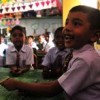
SRI LANKA: No Cricket for This Tendulkar
His father named him after the famous Indian cricket star Sachin Tendulkar, one of the best sportsmen of his generation. But little Sachin Tendulkar from the northern Sri Lankan town of Vavuniya harbours no ambition of following in the footsteps of his illustrious namesake.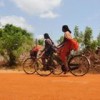
SRI LANKA: Conflict Gives Way to Hardship
Like many Sri Lankans, Kandiah Selvadurai measures the improvement in his life by the amount of money he spends on essentials. When basic goods were scarce more than two years ago, he paid dearly for them. These days, he buys them for a tiny fraction of what they used to cost.
SRI LANKA: Onset of Rains Tests Anti-Dengue Campaign
With the monsoon season upon it, Sri Lanka’s war against the deadly dengue- carrying mosquito faces its toughest test yet, but early signs show that the mosquitoes are not quite ready to give up.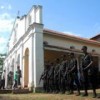
SRI LANKA: A Life Lost in Protest Against Pension Bill
Even before 22-year-old Sri Lankan worker Roshen Chanaka was pronounced dead at the Colombo North Hospital on Jun. 1, a large contingent of military personnel had moved in to secure the building. And to the small undertaker’s premises to which his body was later brought, the soldiers followed.
SRI LANKA: Water Washes Away Some Conflict
It was the second anniversary of Sri Lanka’s bloody war that ended on May 19, 2009, but for 23-year-old Fathima Imsana, there were more pressing things to do than celebrate two years of peace.SRI LANKA: Peace Dividend Skips Remote Villages
The road to Unnichchai in eastern Sri Lanka makes for a nerve-wracking journey trying to avoid large crater-like potholes, squeezing across narrow bridges, and passing by a patchwork landscape of paddy fields - both abandoned and cultivated - with not a building in sight.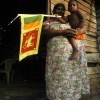
SRI LANKA: Wounds of War Healing Slowly
Suresh Sundaram and Wilfred Wickremasinghe live 350 kilometres apart, and have never met each other. But their lives ran parallel for over a quarter of a century, as war ravaged their tear-shaped country Sri Lanka and changed their destinies forever.SRI LANKA: For Women, War for Survival Continues in Peacetime
The civil war ended two years ago this month, but for war-affected women—widows, mothers, daughters, and former rebels— the struggle to survive rages on.
SRI LANKA: War Long Over, Media Still Muzzled
It has been two years since the end of Sri Lanka’s decades long war, and life in general has begun to slowly edge back towards normalcy here. Not so for the country’s besieged media community, according to observers and journalists alike - reporting still feels hemmed in and muzzled, they say.SRI LANKA: Government Adopts Time-Tested Strategy to Thwart U.N. Report
These are trying times for the Mahinda Rajapaksa government here. Faced with renewed international scrutiny over alleged abuses during the last phase of the island’s bloody civil war, the government has once again readied itself to face off global giants, yet another test of will and skill on the global stage.
SRI LANKA: Finally Dengue Takes a Beating
Dengue infections and deaths here have declined significantly this year.« Previous Page — Next Page »





The Week with IPS

NEXT STOP - SDGs
Tracking global progress towards a sustainable world
Tracking global progress towards a sustainable world
