Languages
Monday, October 19, 2026



News and Views from the Global South
Ecobreves – BRAZIL: University of São Paulo Creates Climate Study Center
The University of São Paulo has created the Interdisciplinary Climate Investigation Center (INCLINE) to integrate all of university’s studies in this field.Ecobreves – VENEZUELA: University Team Designing Used Battery Treatment Plant
A team of scientists at Simón Bolívar University in Venezuela is designing a plant for the processing of used household batteries, in order to prevent their incorrect disposal and to extract the toxic materials they contain in the form of reusable chemical compounds.Ecobreves – HONDURAS: School Kids Learn How to React to Floods and Landslides
More than 600 students from two schools located in areas at high risk for flooding and landslides in the Honduran capital are receiving training on what to do when these disasters occur.Ecobreves – CUBA: Crocodile to be “Repatriated” During Pope’s Visit
A young Cuban crocodile (Crocodylus rhombifer), a highly endangered species found only in a very limited area of Cuba, will be returned to its country of origin from Rome in late March, coinciding with the visit by Pope Benedict XVI.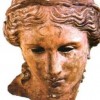
Could a Goddess Influence Armenia’s Election Campaign?
To the British Museum, she is "probably Aphrodite", the Greek goddess of love and beauty. To most Armenians, she is Anahit, an ancient Armenian goddess of fertility.
PODCAST: Lessons in Democracy on South Sudan’s Airwaves
 South Sudan is using radio to disseminate information on legislation and educate the public on civil topics. Charlton Doki reports that the community-based civic education programme, Let’s Talk, targets communities to help promote dialogue on South Sudan’s political transition to an independent and democratic country.

World Wind Power Climbs to New Record In 2011
Wind energy developers installed a record 41,000 megawatts of electricity-generating capacity in 2011, bringing the world total to 238,000 megawatts.
SA wants to educate citizens on flood warnings
The Department of Water Affairs in South Africa wants its early warning system on flooding to work in rural areas and says education is the way to go. Zukiswa Zimela reports
[podcast]http://traffic.libsyn.com/ipsaudio/20120312_weatherwarning_zimela.mp3[/podcast] 
PODCAST: The Sound of Peace in Kenya’s Kibera Slum
Pamoja (Swahili for ‘Together’) community radio serves the Kibera community, the biggest slum in the country. Most of the programmes are geared towards peace making at the community and family levels
Questionable Wisdom of Ban Ki-moon’s Visit to Lumbini
Reports of United Nations Secretary-General Ban Ki-moon’s planned visit to Lumbini, the birth place of Lord Gautam Buddha, and a UNESCO World Heritage site in Nepal in April 2012, have caused a mixture of excitement and apprehension in Kathmandu.Fresh Warning of Water Wars
As non-governmental organisations question the relevance of the World Water Forum being held here this week and slam its "corporate" nature, the United Nations says that a coordinated approach to managing and allocating water is critical.Ecobreves – MEXICO: Scientists Call for Regulation of Nanotechnology
Nanotechnology, which is currently unregulated in Mexico, could pose serious threats to human health and the environment, cautions a new study.Ecobreves – HONDURAS: Fires Destroy 127,000 Hectares of Forests
In the last two years alone, Honduras has lost 127,000 hectares of forests in 2,400 fires, reports the Independent Forest Monitoring Committee of the National Human Rights Commission.Ecobreves – ARGENTINA: NGOs Demand Protection for Glaciers
Environmental organizations in Argentina have called on the country’s Supreme Court of Justice to order a halt to the activities of a mining company operating in a glacier area.Ecobreves – BRAZIL: Research to Monitor São Paulo Aquifers
The State University of São Paulo (UNESP) and the Environmental Company of the State of São Paulo, a government agency, have signed an agreement for the monitoring of underground water resources in this southern Brazilian state.
PODCAST: Campus Radio Turns Grassroots Voice
Kodao’s director, Raymund Villanueva, says it is still very difficult to overcome red tape and start a community radio station.

Palestinian Children Inherit Political Separation
For Taiseer Khatib and his wife Lana, the most difficult aspect of Israel’s policy of forced family separation is the impact it is having on their children. "Our children are paying the price psychologically. We are trying to protect them, but they have a good sense of what’s going on and they understand that there’s something wrong," Khatib, who has two children under the age of five, Adnan and Yosra, tells IPS.RIGHTS-DR CONGO: Disabled Left to Fend for Themselves
The outlook for people living with disabilities in the Democratic Republic of Congo remains bleak, despite a variety of efforts to improve their lot and bring them in from the margins of society.
PODCAST: Papua New Guinea’s New Dawn With Community Radio
Podcast by Catherine Wilson on Bougainville’s New Dawn community radio station which broadcasts to to nearly 50,000 listeners in Papua New Guinea.
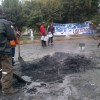
Protesters Lift Roadblocks in Southern Chile
Leaders of the protests in Aysén decided to end the roadblocks that had paralysed this southern region of Chile for more than three weeks, and the government promised to "immediately" resume talks to defuse the conflict.
Money for Cleaning Toilets in Haiti Down the Drain? – Part 1
The drawdown of hundreds of non-governmental organisations which have been in Haiti since the disastrous 2010 earthquake was inevitable. But with their departure, so too goes their purse and the millions earmarked for cleaning latrines.« Previous Page — Next Page »





The Week with IPS

NEXT STOP - SDGs
Tracking global progress towards a sustainable world
Tracking global progress towards a sustainable world
