Languages
Monday, October 19, 2026



News and Views from the Global South
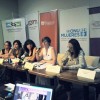
Campaign in Chile Fights “Disgraceful” Under-representation of Women in Power
The More Women in Power campaign in Chile, carried out by a group of social organisations, is seeking to increase the number of women in public decision-making positions, to move towards "parity democracy".
PODCAST: FM Radio Spells Change, Success for Mideast Women
 Nisaa FM is an almost entirely female-run Palestinian radio station based in Ramallah, West Bank and the only radio station in the Middle East devoted solely to women’s issues. Jillian Kestler-D'Amours asks director Maysoun Odeh Gangat what the radio station aims to achieve.
Ecobreves – HONDURAS: Flood Prevention Works Begin
Japanese technicians have initiated works aimed at reducing the risk of flooding in four areas of the Honduran capital which are home to 8,000 people.Ecobreves – VENEZUELA: New Environmental Journalism Manual
A new digital publication, “Environmental Communications and Best Practices”, has just been published in Venezuela, aimed at journalists, students and environmentalists.Ecobreves – BRAZIL: Genetic Alternations Detected in Amazon River Dolphin
A study undertaken in Brazil has detected genetic alterations in the Amazon river dolphin (Inia geoffrensis), an endangered aquatic mammal found only in the Amazon and Orinoco river basins of South America.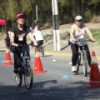
Promoting Women’s Empowerment on Two Wheels
Riding a bike requires balance, self-confidence and self-control, qualities that women need to claim their place in public spaces, says a group of feminist cyclists in the Chilean capital.
PODCAST: JAMAICA – New Technologies Extend Life and “Mobility” of Radio
Radio remains Jamaica’s most effective and fastest growing communications medium. From four stations in the late 1990s, Jamaicans today are able to access more than 70 stations – 30 of them are owned and operated on the island.

CENTRAL AFRICA: Tentative Steps Towards Adaptation
Governments and civil society organisations in Central Africa are slowly developing strategies in response to global warming. But specialists say the steps being taken seem hesitant in the face of emerging realities.
Rapid urbanisation in South Africa is affecting the water quality of the river systems.
Rapid urbanisation in South Africa is affecting the water quality of the river systems.

Rural Women Are Leading the Way – Will the World Follow – Part 2
The United Nations’ 56th session of the Commission on the Status of Women (CSW) opened Monday in New York, with the empowerment of rural women high on a list of priorities for this year.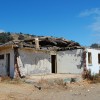
Chile’s Earthquake Reconstruction Hindered by Delays and Profiteering
Two years after the earthquake and tsunami in south-central Chile, the worst natural disaster to hit the country in half a century, thousands of families who saw their homes destroyed are still waiting for a solution.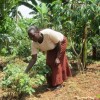
Rural Women Are Leading the Way – Will the World Follow? – Part 2
The United Nations’ 56th session of the Commission on the Status of Women (CSW) begins today in New York, with the empowerment of rural women high on a list of priorities for this year.
Social Unrest on the Rise in Southern Chile
The police have cracked down hard on demonstrators in the southern Chilean region of Aysén, who have been protesting the area's isolation and high local prices of fuel and food for the past two weeks.Ecobreves – ARGENTINA: Caravan Against Open-Pit Mining Planned
Artists and residents of the southern Argentine province of Chubut are preparing for a 400-kilometer march to protest open-pit mining projects that involve the use of cyanide.Ecobreves – BRAZIL: Plastic Bottles Transformed into Varnish
) A technique developed by the Federal University of Rio de Janeiro makes it possible to recycle plastic bottles made from polyethylene terephthalate (PET) to produce varnish.Ecobreves – HONDURAS: The Struggle to Enforce the Forest Law
The Law on Forests, Protected Areas and Wildlife of Honduras, adopted in 2008, is not effectively implemented and has not stopped illegal logging. Representatives of the justice system, activists and local governments are working together on strategies to ensure that it is genuinely enforced.
Rural Women Are Leading the Way – Will the World Follow? – Part 1
Agriculture currently provides a livelihood for roughly 1.3 billion smallholder farmers and landless workers, of which nearly half – close to 560 million – are women.PODCAST: INDONESIA – Community Radio Helps Revive Forests
Radio Ruyuk hosts a talk show on various environmental issues. Kanis Dursin reports on how farmers and small traders use community radio to save Indonesian forests.
PODCAST: CHINA – Radio Keeps Tibetans Tuned In
MCRS, a government-approved community station, is one of a handful of localised radio stations providing China’s minorities with news and entertainment in their native languages. Presently, local state-run stations serve five out of 46 ethnic minorities and all programming is approved by the state.
Ecobreves – VENEZUELA: Transforming Garbage Into Art
Fundación La Tortuga, an environmental organization based in the northern Venezuelan city of Barcelona, is hosting an exhibition by visionary artist Leopoldo Cardozo, who integrates plastic bags, used phone cards, bottles and other waste into his works.Ecobreves – BRAZIL: Nitrogen in Soil Increases Carbon Absorption
The presence of nitrogen in soil speeds up plant growth, reducing the amount of carbohydrates in the leaves of plants and allowing them to live longer and absorb more carbon dioxide, a greenhouse gas, concludes a recent study by the Biosciences Institute at the University of São Paulo.« Previous Page — Next Page »





The Week with IPS

NEXT STOP - SDGs
Tracking global progress towards a sustainable world
Tracking global progress towards a sustainable world
