Languages
Tuesday, October 20, 2026



News and Views from the Global South

PODCAST: Radio Static for Ghana’s Community Stations
 Sandra Ferrari reports on the battle to find frequencies for community radio in Ghana to enable marginalized to take part in development

Rooibos tea has become a popular drink around the globe. But climate change is putting a strain on the plant, which only grows in a very small part of South Africa.
Rooibos tea has become a popular drink around the globe. But climate change is putting a strain on the plant, which only grows in a very small part of South Africa.
Ecobreves – BRAZIL: Analyzing the Impacts of Plastic Bags
A study undertaken by the Technological Research Institute of São Paulo (IPT) will assess the impacts of plastic bags on a typically Brazilian environment. The statistics currently used in the country to measure these impacts come from foreign research.Ecobreves – MEXICO: Future of Cities Depends on Sustainability
Sustainability is decisive for the future of Mexican cities, concludes a new book on conditions in the country’s urban areas.Ecobreves – ARGENTINA: First Energy Efficient Neighborhood
A multi-stakeholder forum made up by civil society organizations, private companies, academic researchers and the government plans to create a neighborhood in Argentina with 100 solar-powered homes.Ecobreves – HONDURAS: Local Communities Lead Up Mitigation Efforts
The residents of Costa de los Amates, a region of Honduras near the border with El Salvador, are gearing up for community work aimed at preventing the flooding of the Goascorán River during the winter season.
After Durban, Latin America Looks Towards Rio+20
The upcoming summit in Rio de Janeiro presents an opportunity to reach agreements that can prevent the world from passing the point of no return in the unsustainable use of natural resources.THEMATIC SOCIAL FORUM: Working Towards a Never-Ending Democracy
For five centuries, Europe has taken it upon itself to enlighten the world, teaching it ways to address and overcome crises, from ideas and wars to missionary work and genocides.Ecobreves – CUBA: Therapeutic Cancer Vaccine Available in Clinics
Some 500 lung cancer patients at 65 polyclinics in Cuba have begun to receive treatment with the CimaVax-EGF therapeutic vaccine, developed by the Center for Molecular Immunology (CIM) on the western outskirts of the country’s capital.Ecobreves – HONDURAS: Regional Loan for Wastewater Treatment
The Central American Bank for Economic Integration (CABEI) has approved a one-million-dollar loan to finance a wastewater management project in the Honduran capital, aimed at combating pollution in the Guacerique River basin, one of the city’s main sources of water.Ecobreves – BRAZIL: New Website on Endangered Animals
The Chico Mendes Institute for the Conservation of Biodiversity (ICMBio), a Brazilian national government agency, has launched a new website with information on endangered species found in the various conservation units for which the institute is responsible.Ecobreves – VENEZUELA: Victory Over Yellowtail Moths
Significant advances were made last year in the battle against yellowtail moths (Hylesia metabus) in towns along the northeastern Venezuelan peninsula of Paria. The moths inhabit the mangrove swamps of the Gulf of Paria which separates Venezuela from the islands of Trinidad and Tobago.Ecobreves – MEXICO: Air Pollution Standards Demanded
The poor air quality in the Mexican capital points to the urgent need for regulations on the use of clean fuel and the control of motor vehicle emissions, warned a non-governmental organization.Ecobreves – BRAZIL: Sea Level Rising More Rapidly Near São Paulo
The sea level of the Atlantic Ocean is rising increasingly rapidly on the northern coast of the southern Brazilian state of São Paulo, according to a new university research study.Ecobreves – HONDURAS: New Earthquake Shelter Opened
The Japan International Cooperation Agency (JICA) has joined forces with the local beneficiary population to build the first earthquake shelter in Honduras.
Women and gender recognised by UNFCCC
 Days before the start of COP17 in Durban, the UNFCCC has formally recognised the Women and Gender Constituency, giving them full constituency status when the talks start in Durban at the end of November. Tinus de Jager reports that there will be a strong push for a gender-specific focus at the climate-change talks in South Africa
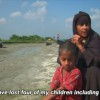
Climate Change – A silent killer in coastal Bangladesh
Bangladesh, a deltaic country that drains major Asian rivers like the Ganges and the Brahamputra, is highly vulnerable to climate change and the effects are already being felt in the coastal regions in the shape of salinity, frequent floods and land erosion. Farmers and fisherman are already turning into climate refugees and, in a buiness as usual scenario, the next decades could see millions of people displaced according to projections by the United Nations Framework Convention for Climate Change. Ecobreves – BRAZIL: Cyanobacteria Could Be Used for Biofuel Production
The use of cyanobacteria as an alternative source of biofuel production is being studied by a team of researchers at the Center for Nuclear Energy in Agriculture (CENA) at the University of São Paulo.Ecobreves – VENEZUELA: First Wind Power Project to Debut in Indigenous Region
Twelve wind power turbines are really to be installed in Alta Guajira, a region in northwestern Venezuela bordering on Colombia, in what will be the first phase of a wind park that will supply electricity to some 10,000 families. Most of the project beneficiaries belong to the Wayúu indigenous ethnic group, whose members live on both sides of the border.Ecobreves – HONDURAS: Solar Power for Coffee Drying
Small-scale coffee growers in the northern Honduran region of Subirana are promoting the use of solar power to dry coffee beans in order to mitigate the pollution caused by other processes. Similar initiatives are also underway in Costa Rica and Nicaragua.DEVELOPMENT: When a Quick Fix Gets the Deep Six
Figuring out how to change the world for the better is a daunting challenge, but throngs of passionate people are willing to take on the task.« Previous Page — Next Page »





The Week with IPS

NEXT STOP - SDGs
Tracking global progress towards a sustainable world
Tracking global progress towards a sustainable world
