Languages
Wednesday, October 21, 2026



News and Views from the Global South
ISRAEL: Exercising the Right to Torture
In a case that has highlighted Israel’s abuse of Palestinian detainees, an Israeli military court recently acquitted a Palestinian man after it became clear that Israeli interrogators used excessive physical and psychological abuse as a way to coerce a confession from him.Ecobreves – HONDURAS: Joining Forces to Save the Zambuco Lagoon
Idyllic Zambuco Lagoon in the northern Honduran community of Esparta is being restored through a joint wetlands conservation project involving the government, civil society and local residents.Ecobreves – BRAZIL: Overlooked Waste Recycled into Plastic Products
A technique developed by the Lorena School of Engineering at the University of São Paulo takes advantage of plastic wastes that are rarely recycled to produce plastic panels for automobiles, furniture and other uses.Ecobreves – ARGENTINA: Serious Flaws in Forest Mapping Denounced
Environmental organizations in Argentina have raised the alarm over the destruction of the forests of El Espinal in the northeastern province of Corrientes, due to serious flaws in the mapping of the region.SOMALIA: Taking Schools Back From Militants
Schools are beginning to re-open slowly in areas of capital Mogadishu that were until recently controlled by the militant Islamic group al-Shabaab. But an estimated 80 percent of students have not yet returned.COOPERATION AND SOLIDARITY KEY TO MILLENNIUM DEVELOPMENT GOALS
Experience shows that South-South and triangular cooperation, backed by adequate funding, are key tools for tackling the development challenges of our time. But South-South cooperation only complements and does not replace North-South cooperation. All such partnerships are particularly pertinent given the challenges facing our global economy and sustainable development.Ecobreves – VENEZUELA: Beaches Disappearing Due to Hotel Construction
El Yaque, one of the largest beaches on the south coast of Venezuela’s Margarita Island, is no longer able to replace the sand carried off by the sea because hotels and other buildings have cut off the circulation of the air currents that used to feed them, environmental activists warn.Ecobreves – HONDURAS: Coastal Community Generates Renewable Energy
The residents of the community of Plan Grande, on the Atlantic coast of Honduras, have built an 11-kilowatt mini hydroelectric dam which they now manage through a use and consumption agreement.Ecobreves – BRAZIL: Companies Violate Rules on Waste Tires
Tire manufacturers and importers in Brazil have been failing to fulfill their obligation to ensure the proper disposal of used and waste tires since 2002, according to a study by engineer Carlos Lagarinhos from the Polytechnic School of the University of São Paulo.Ecobreves – CARIBBEAN: Building a Common Natural Disaster Strategy
Academic institutions and cooperation agencies from Spain and Cuba are organizing a forum in Havana on natural disaster risks in the Caribbean, with the aim of contributing to the design of integrated regional response strategies.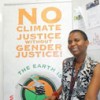
Civil Society organisations are sticking to their guns: Women will be hardest hit by the climate change.
 Civil Society organisations are sticking to their guns: Women will be hardest hit by the climate change. Zuki Zimela reports from COP 17 in Durban.
The Green Climate Fund
 The Green Climate Fund is meant to help developing countries with 100 billion dollars a year by 2020 to adapt to the effects of climate change. The creation of the GCF was approved during the COP16 in Cancun. Civil society and some developing nations noted that governments have made trillions of dollars available for the bank and financial sector and that the world's military budget is more than 10 times what is needed for the GFC. Up until now, countries have not been able to agree on a single mechanism to draw public funds.

Durban Platform
After two weeks and an additional 29 hours of intense and even bitter negotiations, the 193 nations participating in the United Nations climate talks agreed to a complex and technical set of documents called the "Durban Platform." The biggest development reached at dawn Sunday is an agreement to negotiate a new global treaty to reduce emissions by 2015. 
Global emissions from burning fossil fuels
Documents under negotiation in Durban, South Africa acknowledge the science-based emissions reduction target of 25 to 40 percent by 2020. Those reductions and that timeline are what is needed to stay below two degrees Celsius. The draft text says this would be the target to be agreed on at COP 18. The science shows that global emissions need to fall to 44 Gt by 2020 and continue to decline by two percent per year.
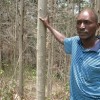
AUDIO – KENYA: Thirsty Eucalyptus Good for Absorbing Carbon
Eucalyptus trees are helping Kenyans to earn an income, but they are also playing a role in mitigating carbon emissions. However, the Kenyan government is of the opinion that the trees might be putting a strain on water resources.
[podcast]http://traffic.libsyn.com/ipsaudio/20120313_eucalyptus_esipisu.mp3[/podcast] Ecobreves – MEXICO: Growing Opposition to Urban Freeway
Non-governmental organizations have called on the left-leaning government of Mexico City to halt construction of the Supervía freeway in the southeast of the capital, after a court revoked the environmental permit for the project.Ecobreves – ARGENTINA: Fundraising Drive for the Creation of a National Park
A campaign was launched at the beginning of December in Buenos Aires to raise the funds needed to expropriate a private landholding in northeastern Argentina and turn it into a national park.Ecobreves – BRAZIL: Record Increase in Transgenic Crops
The land area planted with genetically modified seeds in Brazil has increased 20.9 percent over the last year, reaching 31.8 million hectares, according to a study by the consulting firm Céleres.Ecobreves – HONDURAS: Landslide Risk Areas to be Stabilized
The city government of Tegucigalpa will allocate 12 million dollars to the stabilization of areas prone to landslides in the neighborhoods of El Berrinche and El Reparto.
Thousands march to protest against climate change
Thousands of protesters marched in Durban on Saturday in an effort to make the need for the fight against climate change known to the world. Zukiswa Zimela of IPS followed the protest and compiled this sound-slide.
Ecobreves – BRAZIL: Air Pollution Causes Nervous System Damage
Excessive exposure to air pollution can harm the embryonic development of the nervous system, reveals a new study conducted by the University of São Paulo, Brazil.« Previous Page — Next Page »





The Week with IPS

NEXT STOP - SDGs
Tracking global progress towards a sustainable world
Tracking global progress towards a sustainable world
