Languages
Friday, September 18, 2026



News and Views from the Global South
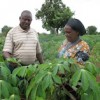
KENYA: Cassava Offers Food Security in Drought
After substituting her maize crop with cassava, Jemima Mueni has enough money to pay school fees for her children and enough food to last until the end of the year, despite the current drought.
HEALTH: A Phone Call Could Provide HIV/AIDS Treatment
Soon chatting to ones friends or family over a mobile phone could mean that an HIV positive person will receive sustainable antiretroviral treatment (ART) that could prolong their life. That is if civil society in Kenya has its way.
Sorghum Proving Popular with Kenyan Farmers
Gadam sorghum was introduced to semi-arid regions of eastern Kenya as a way for farmers to improve their food security and earn some income from marginal land. The hardy, high-yielding sorghum variety has not only thrived in harsh conditions, it has won a place in the hearts - and plates - of local farmers.
KENYA: Small Profit Margin Hinders Access to Subsidised Anti-malarial Drugs
On the streets of Nairobi James Odhiambo goes from one pharmacy to the next in search of anti-malarial drugs marked with the Global Fund’s logo of a green leaf. He is looking for this specific brand because he understands that it is more than ten times cheaper than the same drug produced by different manufacturers.
Kenyan Women Pulling Together Against Poverty
When it works, it's spectacular: Esther Ngonyo Njuguna's dairy project stands as testimony to the potential of microcredit schemes to boost rural incomes.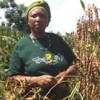
KENYA: Women Hold the Key to Rural Prosperity
John Kyalo Mulwa couldn't support his family from his six hectare farm, so he quit farming to open a bar. But he turned the land - and decision-making on it - over to his wife. Turns out she's a better farmer than he ever was.
Integrating HIV Care with Broader Maternal and Child Health
From the outside, little has changed at the Maternal and Child Healthcare Clinic: pregnant women and breastfeeding mothers wait patiently on wooden benches. A chorus of infant call-and-response betrays the less long-suffering approach of their children to the wait.
KENYA: Profiting From Better Sanitation
She contributed towards building toilets for her community; in return Teresia Wasuka is getting a home to call her own.
Kenyan Pastoralists Look Back to Secure Their Future
David Lenamira, watching as usual from a seat outside his compound, has no trouble picking out his sheep as the herd boys drive them home every evening. The red-brown animals are smaller than those in his neighbours' herds, but he's proud of them just the same.
KENYA: More Men Preventing HIV Transmission to their Unborn Children
Pastor Joseph Muhembeli and his wife, Beatrice, queue at the Vihiga health centre with their six-month-old daughter for their prevention of mother-to-child treatment (PMTCT). But before long, as per the clinic’s policy, the couple are whisked to the front of the line – all because Muhembeli has accompanied his wife for the treatment.KENYA: Room to Improve on Governance
Kimani Wanyama*, a homosexual man living in Nairobi, knows what human rights violations are all about. His attempts over three years to receive treatment for reoccurring rectal gonorrhoea had resulted in verbal abuse and intense stigmatisation from the very people who were meant to help him.
AFRICA: In Search of Lasting Farming Solutions to Climate Change
In the semi-arid Laikipia district of Kenya’s Rift Valley province, research scientist Sarah Ogalleh Ayeri travels from one village to another, documenting methods used by peasant farmers as they attempt to adapt to changing climatic conditions.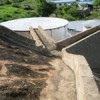
Harvesting Water to Save Crops and Lives
Peter Kivuti, a 51-year-old farmer from Eastern Kenya, never relied on meteorological weather predictions all his life - until three years ago. It was then that rainfall in the region become less predictable.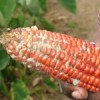
AFRICA: Woman Researcher Tackles Aflatoxin Poisoning*
Despite a bumper harvest of maize just a few months ago, many residents in the eastern part of Kenya are facing hunger and starvation. While granaries in the region may be full, the grain cannot be freely sold, let alone eaten.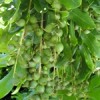
KENYA: A Bid to Save Macadamia Crops
Joseph Ndirangu Muriithi is a worried man. After watching the fall of coffee farming in Kenya a decade ago, he now fears that his other cash crop will also go into decline as a new disease preys on his macadamia trees.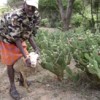
EAST AFRICA: Deadly Cactus Good for Animal Feed
Joseph Ole Morijo is baffled by research findings that cactus plants can be used as animal fodder during drought. Not after he lost his entire herd of 152 goats and sheep to the said plant.
AFRICA: Lack of City Planning to Hurt More Citizens
Thousands of Kenyan urban dwellers, rich and poor, live in fear that their homes or building investments could soon be demolished as the country struggles to keep up with the rapid urbanisation of cities.
Developing More Top African Women Research Scientists
In a tiny village near Kisumu city in Kenya, scientific researcher Mary Anyango Oyunga spends most of her time educating women about something they have always done – grow sweet potatoes.
KENYA: HIV Strain Among Gays Same as Strain in Heterosexuals
Because of societal pressure and the criminality associated with men who have sex with men (MSM) in Kenya, Omondi Maina* married a woman. This is despite being involved in a homosexual relationship for the last 10 years.
KENYA: Tradition an Obstacle to Maternal Health
Their kangas and heavy bead necklaces are the only colour in an arid landscape. The weary women waiting outside the Kangatotha dispensary have walked up to 50 kilometres to receive food aid; now they will walk home carrying their share.
KENYA: Rural Parents Prevent HIV Transmission to their Children
When Samuel Mwangi’s one-year-old HIV-positive son died five years ago, he thought the death of his child also meant the death of his family’s legacy. "I wept. And to the bottom of my heart, I knew that that was the end of my generation," said HIV-positive Mwangi.« Previous Page — Next Page »


The Week with IPS

NEXT STOP - SDGs
Tracking global progress towards a sustainable world
Tracking global progress towards a sustainable world
