Languages
Tuesday, October 27, 2026



News and Views from the Global South
ARGENTINA: Frustration Over Veto of Glacier Protection Law
The decision by the administration of Cristina Fernández to veto a law to protect Argentina's glaciers - important reserves of freshwater - has caused deep concern among scientists and environmentalists who participated in writing the legislation.
LATIN AMERICA: Future of Private Pension Funds in Doubt
Pension funds in Latin America have suffered sometimes drastic losses as a result of the global financial crisis. Argentina decided to nationalise its private pension funds, and in Chile, Colombia and Mexico there are voices urgently calling for reforms.
RIGHTS-ARGENTINA: Children of the ‘Disappeared’ Tell Their Stories
For the first time, the life stories of children of people forcibly disappeared by Argentina’s 1976-1983 dictatorship have been compiled in a book that sheds light on their experiences.
Frustration Over Veto to Protect Argentina's Glaciers
The Argentine government's total veto of a law aimed at protecting protect the country's glaciers has frustrated the scientists who helped draft the policy.ENVIRONMENT-ARGENTINA: Still Felling Forests, Despite Law
One year after a law was passed to preserve native forests in Argentina, environmentalists say that deforestation has continued, although at a slower pace. They blame the situation on the government’s delay in creating a compensation fund for provinces that take action against the clearing of forests.
ARGENTINA: Companies Pocketing Gas Subsidy for the Poor
Companies that produce and distribute liquefied petroleum gas (LPG) in Argentina are benefiting from large government subsidies aimed at bringing down the price of the fuel, which 40 percent of the population depends on for cooking and heating.LABOUR-ARGENTINA: Major Blow to Union Monopoly
A Supreme Court ruling has thrown a spanner in the works of the monopolistic model of union representation in Argentina that has prevailed for over 60 years, by upholding the right of a workers' union that lacks legal recognition to elect its own delegates.ARGENTINA: Newspaper Brings to Light Abuses against Poor Farmers
Small farmers in the northern Argentine province of Santiago del Estero are publishing their own newspaper in an attempt to raise awareness about the constant abuses they suffer at the hands of wealthy landowners, who are encroaching on their small plots of land.RIGHTS-ARGENTINA: Adolescents in No Man’s Land
The recent murder of a man allegedly at the hands of teenagers has sparked a heated debate in Argentina between advocates of lowering the age of criminal responsibility and those in favour of a juvenile justice system in line with the United Nations Convention on the Rights of the Child.
ARGENTINA: Illegal Embankment Continues to Harm Wetlands
The government of the northeastern Argentine province of Corrientes has been unable to enforce the ruling of the district's highest court, which nearly a year ago ordered the removal of a 30-kilometre embankment that is damaging the valuable wetlands ecosystem known as the Esteros del Iberá.
Illegal Embankment Continues to Harm Argentine Wetland
An unprecedented ruling in Argentina's environmental jurisprudence has seen almost one year pass while awaiting compliance.
ARGENTINA: Caution and Enthusiasm for Fish Farming
Fish farming is expanding in Latin America, fuelled by the demands of a global market that is facing the stagnation of commercial fishing. But some people are warning about the limits of industrial production of fish and the environmental and social risks.ARGENTINA: New Movement to Combat Poverty
A new movement formed by a host of political, social, labour and cultural organisations of Argentina launched an action plan Friday to reduce poverty and child mortality and to promote more equal distribution of wealth.ARGENTINA: Govt Announces End of Private Pension Funds
Against the backdrop of the current global financial turmoil, Argentine President Cristina Fernández on Tuesday proposed the elimination of the privately administered retirement accounts created 14 years ago.
Caution and Enthusiasm for Fish Farming
Industrial production of fish and shellfish is growing more than eight percent a year worldwide. But not all countries with extensive coastlines can take advantage of this boom, which is not without its ecological risks.ARGENTINA: Menem on Trial for Weapons Smuggling
Although he did not show up at court, former Argentina president Carlos Menem began to be tried Thursday in Argentina for his alleged involvement in smuggling arms to Ecuador and Croatia, the biggest corruption scandal during his years in office (1989-1999).ARGENTINA: Rewakening the Ghosts of the 1970s Violence
Thirty-five years after the murder of prominent Argentine trade unionist José Ignacio Rucci, a book by an investigative journalist concludes that he was killed by the Montoneros guerrillas, as many already believed, rather than a right-wing death squad, as others argued.TRADE-LATAM: Saved by Diversification
South America’s tendency towards trade diversification over the past few years may spare the region the worst repercussions from the U.S. financial crisis, unlike Mexico, which will definitely feel the effects, as its northern neighbour absorbs a majority of its exports, say experts.
ARGENTINA: Guardians of the River
"There is no water...there are no fish," says Olga Ledesma, her skin weathered from 40 years of small-scale fishing, as the boat slowly winds its way along a branch of the Paraná river, South America’s second-longest river.
ARGENTINA: Women Create Food and Jobs in Wetlands
Wearing a cap and a white apron, Melina Lucero cuts the heads and tails off fish caught in the Paraná River, before skilfully filleting them. Her co-workers will process and package the fish to sell as traditional, small-scale fish preserves at food fairs along the banks of the river in Argentina.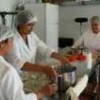
Women Create Food and Jobs in Argentine Wetlands
Tierramérica explored the effort behind preparing artisanal dishes made from a declining catch of fish, an effort towards sustainability taken up by the women of river communities in northeast Argentina.« Previous Page — Next Page »





The Week with IPS

NEXT STOP - SDGs
Tracking global progress towards a sustainable world
Tracking global progress towards a sustainable world
