Languages
Wednesday, October 7, 2026



News and Views from the Global South
PERU: Miners Call Off Protests for Talks; Six Killed in Clashes
In response to a government promise to negotiate, small-scale gold miners in southern Peru temporarily called off protests Wednesday in which six people were killed and as many as 30 injured when the police attempted to clear a roadblock.PERU: Oil Pipeline and Uncontacted Tribes
A 200-km oil pipeline that Franco-British oil group Perenco aims to build in the heart of Peru's Amazon jungle region is at the centre of a controversy because of the reported existence of uncontacted native groups in the area.
PERU: The Tangled Paths of New Forest Law
Indigenous protests prompted the introduction of a new legislative bill on forests and wildlife in Peru, the second most forested country in South America. Experts consulted by Tierramérica pointed to what the initiative gets right, but also to what's wrong with it.
The Tangled Road of Peru's Forest Law
Some of the provisions of new regulations for protecting the forests of Peru and the rights of the indigenous communities of the Amazon have stirred up controversy.TRADE-PERU: Signing Away Too Many Rights?
Peru is enthusiastically espousing free trade, and has signed six tariff-lowering agreements in the space of a year. But it has not matched them with the internal policies needed to reduce their impact on labour rights, the environment, and sensitive areas like agriculture, social organisations and experts say.
PERU: Suspension of Mining Operation Merely a Placebo
Although the Peruvian government reported that it had suspended the exploration activities of the Afrodita mining company in the country's northern Amazon jungle region to avoid further protests by local indigenous people, officials took no actual steps to bring the firm's work to a halt.
PERU: Relocating Entire Villages for Mines, Dams
Hundreds of Peruvian communities were displaced as they fled the 1980-2000 civil war. Today the government is pushing for urgent passage of a law that would facilitate the relocation of entire villages or neighbourhoods in mineral or energy-rich areas.
CLIMATE-PERU: El Niño Throws a Tantrum
Peru's lack of disaster prevention policies and measures, combined with climate imbalances in South America, have led to the loss of dozens of lives and thousands of homes in this Andean country in the last few months.
El Niño's Tantrum in Peru
Although Peru is among the countries paying closest attention to the climate phenomenon known as El Niño, it seems defenseless against the heavy rains that have been thrashing the country for weeks.
PERU: Women Combine Invention, Tradition to Improve Rural Diets
Although Huancavelica is the poorest region of Peru, it has more than just poverty, malnutrition and unmet needs. There are also women using their creativity, efforts and traditional indigenous knowledge to improve the diets of their families and communities.PERU-CHINA: Social Responsibility Missing in Growing Trade Ties
China has become Peru's second largest trade partner, with interests basically in mining and oil. However, it is viewed with caution by this Andean nation, because the Asian giant has a reputation for flouting environmental standards and labour rights.PERU: Mining Co’s Making a Mint, Tax Free
Experts and activists in Peru complain that while mining corporations are cashing in on soaring metals prices, they continue to enjoy exemption from royalties and corporate taxes, if they reinvest their profits.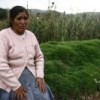
PERU: Rural Wisdom Against Climate Change
"The toads have disappeared from the countryside because of climate change, and now there is nothing to control the insects. Now we have to use chemicals to fight pests, and that is killing the soil," says worried Peruvian farmer Julián Pilco.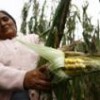
Rural Wisdom Against Climate Change in Peru
The proposal to take into account the ancestral knowledge of rural communities in Peru has become key in designing strategies for confronting climate change.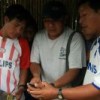
Q&A: Report on Massacre of Native Protesters in Peru Biased, Says Head of Inquiry
The coordinator of the commission convened by the Peruvian government to clarify a June massacre of 33 indigenous protesters and police near the Amazonian town of Bagua refused to sign the final report, which he says is biased.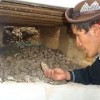
PERU: Fighting Hunger with Native Crops
As if he were showing off a treasure, Dionicio Sarmiento holds up his seed potatoes with a smile. "Look how nice they are, all ready to plant. It'll be a good harvest," says the peasant farmer from Huancavelica, Peru's poorest province, where most of the population depends on subsistence farming.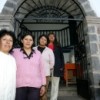
PERU: Cuzco Women Stand Up to Violence
For tourists and other visitors, Cuzco has a special fascination as the ancient capital of the Inca empire. But social scientists know it as one of the areas in the world with the highest rates of violence against women.PERU: On Track to Meeting Poverty Reduction Target
Peru is only one percentage point away from halving the proportion of its people living in extreme poverty, one of the Millennium Development Goals (MDGs) agreed by the international community in 2000, according to a United Nations report.
PERU: Guinea Pigs Spell Independence for Women
In a rural village in the Peruvian Andes, very near yet so far from the popular tourist destination of Cuzco, the guinea pig, a rodent native to the region, has become "woman’s best friend" – an important means for women to earn money to support their families, as well as to learn how to defend their rights.PERU: Environmental Clean-up not Complete, Say Achuar Communities
Leaders of the Achuar people are challenging a decision by the Peruvian government to declare that a clean-up effort by the PlusPetrol oil company in the northeastern Amazon jungle has been completed.
PERU: Rural Highlands Communities Coming Online
Little by little, rural communities in southern Peru are beginning to take advantage of the internet to acquire new knowledge and increase their income. But the use of computers in rural areas faces numerous challenges, from illiteracy to fear of the unknown or questions about the sustainability of these new communications initiatives once they are left in local hands.« Previous Page — Next Page »





The Week with IPS

NEXT STOP - SDGs
Tracking global progress towards a sustainable world
Tracking global progress towards a sustainable world
