Languages
Tuesday, October 6, 2026



News and Views from the Global South
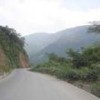
A Highway Built to Be Flooded
A stretch of the brand-new Inter-Ocean Road Corridor in the Peruvian Amazon is to be flooded by a hydroelectric dam.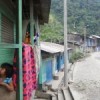
PERU: Jungle Residents Weigh Mega-Dam’s Promises and Pitfalls
In southeastern Peru, a message is circulating that has left some dubious, and others hopeful: "The Inambari hydroelectric dam will end illegal mining and coca crops, and bring development and jobs."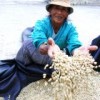
PERU: Women Farmers Dream in Organic Flavours of Coffee
It's Saturday and the women hurry in to the cooperative's warehouse in this rural town in southeastern Peru with their huge bags of coffee beans on their backs. Some come on their own, others are accompanied by their husbands or children. But they have all hiked long distances from their farms in the mountains where they grow some of the world's top organic specialty coffee.PERU: Gov’t Backs Down on Law Letting Rights Violators Off Hook
Human rights groups welcomed the revocation by the Peruvian Congress of a law that created a statute of limitations in human rights cases, which had sparked a flurry of criticism from home and abroad.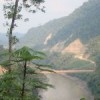
Brazilian Dam Would Put Peruvian Jungle Under Water
Seen from up high, the route to Puente Inambari looks like a green serpent -- long, robust and sinuous. The Amazon jungle that dominates this landscape will be underwater if one of the largest hydroelectric dams in Peru (and all Latin America) is built.
PERU: Transparency a Challenge for Mining and Oil
Peru is the only Latin American country that has made steps towards joining the international Extractive Industries Transparency Initiative (EITI), but has a difficult stretch ahead as it tries to overcome industry resistance to reporting profits and the government's own obstacles.
Transparency a Challenge for Peru Mining and Oil
Peru, with its vast mining and petroleum wealth, is progressing slowly in its adherence to the Extractive Industries Transparency Initiative.
PERU: Families of Victims of Biggest Shining Path Massacre Seek Justice
For 26 years, Gregoria Aguilar has been mourning the loss of her son, son-in-law and nephew, who were killed in the biggest massacre committed by the Maoist Shining Path guerrillas in Peru's highlands.PERU: Adios, Doe Run
Peruvian President Alan García confirmed Wednesday that the permit of the U.S. mining and metallurgical company Doe Run to operate a major smelter complex was being cancelled because the firm missed the deadline for proving that it had the necessary financing to restart operations and complete an environmental cleanup.Slack Oversight of Peru’s Amazon Rainforest
Fifty-three percent of Peru is covered with native rainforest, but the agencies in charge of protecting and monitoring this vast area are toothless and have neither the staff nor the resources to cope with the job, according to a report from the Defensoría del Pueblo (Ombudsperson's Office).
Q&A: “Latin America Faces an Environmental Emergency”
The Latin American economy based on exploitation of natural resources does not create social well-being and is unsustainable in the context of climate change, says Uruguayan Eduardo Gudynas, lead researcher at the Latin American Centre for Social Ecology (CLAES).
“Latin America Faces an Environmental Emergency”
An Uruguayan expert warns that the unrelenting extraction of natural resources in Latin America fails to take into account the environmental damage, with the pretext that the wealth generated will sustain social programs.
PERU: ‘Don’t Minimise’ Impacts of Amazon Oil Spill
Pluspetrol's Jun. 19 petroleum spill has left the Marañón River, in the Peruvian Amazon, with oil and grease levels thousands of times greater than the maximum allowed for human consumption, affecting more than 4,000 local residents.
ENERGY: Brazilian Dams in Peru’s Jungle, to Supply Brazil
An energy deal that Peru and Brazil signed this week in the Amazon city of Manaus in Brazil is opposed by environmentalists and local indigenous communities in Peru where the planned hydroelectric dams will be built. What is at stake?Distrust Hinders Disarmament in Latin America
Peru's proposal to curb military spending in Latin America is weakening as the 40th General Assembly of the Organisation of American States (OAS) comes to an end, undermined by wariness on the part of some governments and by nationalist interests, according to experts.LATIN AMERICA: Taxing the Poor
Not only do Latin America and the Caribbean collect less tax revenue than any other region in the world, in spite of positive economic growth this decade, but national tax systems are unfair, as they rely heavily on indirect taxes that are levied equally on rich and poor, according to a new study by ECLAC.
Latin America Urges More South-South Cooperation
The governments of Latin America and the Caribbean asked ECLAC Tuesday to come up with a new set of criteria so middle-income countries are not excluded from official development assistance. They also called for greater South-South cooperation.PERU: Native Peoples’ Right to Consultation on Land Use Enshrined in Law
Indigenous peoples in Peru finally have a law that obliges the state to consult them about any project or provision that affects their territory or communities. But it will be difficult to implement, as the body charged with this task is in need of reforms, and additional legislation is needed before it can be fully enforced.
PERU: Murky Waters Cut Through Andes
The Olmos megaproject, which will divert water from the Huancabamba River through a trans-Andean tunnel to a desert area along Peru's northern coast, is being touted as a catalyst for development, but disputes are heating up over land, crops and water.
Murky Waters Flow from Peruvian Andes
Work on a gigantic plan for water diversion and irrigation in a vast area of northern Peru is gaining speed amidst environmental and agricultural worries.
PARAGUAY: Native Group Defends Land Claim Before Inter-American Court
One of the three public hearings held this week in Lima by the Inter-American Court of Human Rights discussed the responsibility of the Paraguayan state for violations of the right of indigenous communities to collective ownership of their land.« Previous Page — Next Page »





The Week with IPS

NEXT STOP - SDGs
Tracking global progress towards a sustainable world
Tracking global progress towards a sustainable world
