Languages
Wednesday, October 7, 2026



News and Views from the Global South

PERU: Going to School Still a Feat for Rural Girls
María Belén Sabio, a 30-year-old Awajun woman from Peru’s northeastern Amazonia province, was able to complete a teacher training programme despite having five children to raise. "Life here in the countryside is not easy, and I’ve had a hard time getting ahead," she told IPS.
PERU: Petroleum Sullies the Amazon
"Now the fish are going to disappear," said Luis Umpunchi, an Awajún Indian, one of about 20 people gathered around a broken oil pipeline in the Jayais community, in the northern Peruvian province of Amazonas.
Petroleum Sullies the Peruvian Amazon
More than 70 percent of the Peruvian Amazon was divided up into concessions for oil investments between 2003 and 2008, according to a non-governmental report.
PERU: Families of Dead Native Protesters Tell Their Stories
Sobbing, an indigenous woman dressed in black cries out as she sees us arrive: "My son, my son, they have killed my son!" She is Andrea Rocca, the mother of Felipe Sabio, a young man who died in a clash between police and indigenous protesters in the northern Peruvian region of Amazonas.
Q&A: “The Order Was to Kill Us”
The Peruvian government described the recent deaths of police officers in clashes with indigenous protesters in the country’s Amazon rainforest as "genocide" at the hands of "extremist savages."
PERU: Native Protesters Search for Their Dead
Indigenous people taking part in protests near this town in the northern Peruvian province of Amazonas that ended in a bloody clash with the police last week are now focusing on drawing up a list of the dead and missing, amidst a climate of fear and mistrust.
PERU: ‘Police Are Throwing Bodies in the River,’ Say Native Protesters
There are conflicting reports on a violent incident in Peru’s Amazon jungle region in which both police officers and indigenous protesters were killed.ENVIRONMENT: Preserve Peru’s Biodiversity, Save the World
Peru, second in Latin America for total area of tropical forests, has adopted international laws, instruments and strategies to protect its wealth of flora and fauna. But those tools have not yet had much effect.Preserve Peru, Save the World
Serious threats to Peru’s natural wealth and biodiversity mean it is urgent to get its regulations up and running.SOUTH AMERICA: Rich in Biodiversity, Lagging in Protection
South America is the only region that has not submitted a report of its actions in the last year to implement the Convention on Biological Diversity, although it accounts for 40 percent of the world’s plant and animal species and the deadline was Mar. 30.
PERU: Talks Fall Flat; Indigenous Protests Rage On
The Peruvian government resumed talks with indigenous groups after a violent crackdown on protests left 10 injured and around 20 under arrest. But the dialogue has not yet brought results, and the demonstrations against decrees that affect indigenous lands and the rainforest continue, while a state of emergency remains in place in several Amazon regions.PERU: Bailout of Mining Co. Eclipses Environmental Disaster
The Peruvian government refused to bail out the U.S. mining and metallurgical company Doe Run, which has caused severe pollution in the highlands city of La Oroya, from its severe financial troubles.PERU: Few Benefits from Boom for Poorest Mining Districts
The poorest district in Peru is in an area of intense mining activity, in a country where the mining industry accounts for nearly 60 percent of all export revenues. But the people of Ongón receive no benefits from that activity.
PERU: Drama Exposes Rape as Weapon of War
The film La Teta Asustada/The Milk of Sorrow, the big winner at the Berlin Film Festival, drives home the brutal effects of Peru’s armed conflict on thousands of women who were raped and have lived with the pain and a lingering sense of shame and fear ever since.
PERU: A Mining Town’s Woes
A four-hour drive from the Peruvian capital, the town of Morococha ("coloured lake" in the Quechua language) is a living example of what the mining industry has brought to many poor rural villages and towns in this country.
PERU: Open-Pit Mine Continues to Swallow City
An immense open-pit mine located 4380 metres above sea level is swallowing up the centre of the city of Cerro de Pasco in Peru’s central highlands, while the damages, in the form of toxic waste, spread to nearby villages.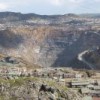
PERU: My Mining Deposits Are Under Your House
"Just imagine you’re told you have to leave your house, your livestock, the graves of your loved ones, and then they take you to an unfamiliar place without even asking you what you think about it. How would you feel?" asks Eduardo Sueldo, the local environment delegate in a highlands village in southern Peru.
LATIN AMERICA: Elusive Right to Land Inflames Indigenous Protests
In the past two decades Latin America has made advances in signing international and national instruments that recognise and protect the rights of indigenous peoples. The problem is that these laws are not always heeded by governments, and the lack of enforcement has fuelled protests.
Elusive Right to Land Inflames Indigenous Protest
The right of indigenous peoples to land is consecrated in most Latin American countries, although government compliance is subject to conflicting interpretations of that right.
PERU: Free Trade Opens Environmental Window
Legislative decree 1090, which modifies Peru's forest policy, is worrying U.S. trade authorities because it contravenes environmental clauses of the Free Trade Agreement (FTA) that is to enter force between the two countries in January 2009.
Trade Opens Environmental Window on Peru
Ecologists await Peru's revision of controversial environmental standards that contradict commitments made in the Free Trade Agreement with the United States.« Previous Page — Next Page »





The Week with IPS

NEXT STOP - SDGs
Tracking global progress towards a sustainable world
Tracking global progress towards a sustainable world
