Languages
Friday, October 9, 2026



News and Views from the Global South
PERU: Native Groups Hemmed in by Coca Threat
Small farmers from Peru’s impoverished Andean highlands provinces of Ayacucho are moving into indigenous land in the country’s central jungle region to grow coca.PERU: Mobilising to Hold President to His Promises
Social movements, trade unions, peasant farmer and indigenous organisations are holding strikes and demonstrations to demand that Peruvian President Alan García fulfil the social commitments he has made, in writing and at negotiating tables.
PERU: Birthing Houses Combine Native Traditions, Modern Medicine
"Ashaninka women give birth at home, in accordance with tradition," declares José Ponce, the head of the health committee in Puerto Ocopa, a village of 253 Ashaninka indigenous families deep in the central Peruvian jungle.PERU: Small Towns Face Challenge of Using Windfall Mining Revenues
Peru is enjoying a mining boom. But while some areas lacking in minerals and oil have seen very little of the windfall profits, other districts have taken in so much money that they have only been able to actually use a tiny portion of it.
OIL-PERU: “The Ashaninka People Will Not Allow These Abuses”
"We will not allow the oil company to come in because it will bring pollution and we will suffer," said Medaly Pancho, a member of the Ashaninka community in the central Peruvian province of Junín. "We hunt and fish, we live our peaceful lives, and we don't want that to change."
ENVIRONMENT: Amazon Increasingly Oily
More than 180 oil and natural gas fields extend across the western Amazon, shared by five South American countries and threatening biodiversity and indigenous lands, warns a study by U.S.-based organisations.
Amazon Increasingly Oily
Oil and natural gas exploration permits are multiplying in the Amazon region, especially in its most remote and biodiverse corners, say researchers.PERU: Indigenous Groups Win Major Battle in Congress
The Peruvian Congress voted Friday to repeal two decrees that opened up communally owned native lands to private investment and that triggered a wave of protests this month by indigenous people in Amazon jungle provinces.PERU: Native Groups Protest Laws Facilitating Sales of Land
Defending the state of emergency declared in three provinces in Peru to crack down on protests by indigenous communities against a law facilitating the sale of their community-owned lands, Prime Minister Jorge del Castillo said the government was safeguarding "the rights of the great majority of Peruvians."ECONOMY-PERU: Easier to Extract Minerals than Accounting Information
Sixty-six percent of the Peruvian state’s revenue from the extractive industries does not appear on government accounts. Parliament is taking a hand in the matter amid pressure from oil, gas and mining companies for the government to flout an international agreement on transparency.
CHILE-PERU: Preserving Potatoes More Important than Age-Old Dispute
Policies to get small farmers involved in saving, preserving, producing, marketing and genetically improving potatoes should take precedence over the age-old dispute between Chile and Peru about where potatoes originated, experts from both countries say.PERU: Seeking Ways to Remedy Unequal Distribution of Mining Taxes
The Peruvian parliament is studying ways to improve the distribution of the "canon minero", the portion of the taxes paid by mining companies that is transferred to the regions, in order to benefit the country’s poorest provinces.PERU: Social Rebellion Spreads Nationwide
The Peruvian capital, faced with rapidly rising cost of living, was the epicentre of protests calling for fulfilment of social and wage agreements signed by the government. Although only one violent incident occurred, some 200 demonstrators were arrested.PERU: Mining Companies Venture into the Amazon
The conflicts surrounding extractive industries in Peru could shift from the mountains to the jungles due to the rising number of concessions granted for the Amazonian regions of San Martín, Madre de Dios and Amazonas, and which are being strongly opposed by the local indigenous communities.
Mining Companies Venture into the Peruvian Amazon
The violent tensions arising from the mining boom in Peru could move from the mountains to the Amazon jungles, warn officials, activists and indigenous leaders.LABOUR-PERU: Business Fights Restrictions on Outsourcing
The business community in Peru is pressuring the government not to sign into law new legislation that would establish full labour rights for some 400,000 subcontracted workers.PERU: Upbeat Poverty Stats Questioned
The Peruvian government has announced that poverty fell by 5.2 percent in a year and forecasts that by 2015, less than 10 percent of the population will be below the poverty line. But experts and provincial governors cast doubt on these figures, given the unmet basic needs of peasant families.PERU: Indigenous Groups Challenge Private Investment Decree
More than 5,000 indigenous and peasant communities in Peru launched a petition drive this week with the aim of getting President Alan García’s decree promoting private investment in communally owned land declared unconstitutional.PERU: Indigenous Organisations Aim for the Presidency
Peru’s indigenous associations are pursuing a political project of their own, and hope to win power in the 2011 presidential elections in order to defend their collective rights.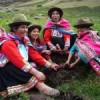
PERU: Women – The Guardians of Potato Biodiversity
In South America’s Andes mountain region, indigenous women have traditionally been responsible for selecting, conserving and managing seed potatoes from the countless native varieties of the crop, thus ensuring diversity and continued production while contributing to food security among their people.LATIN AMERICA: European Corporations on Trial
Twenty European corporations are being tried for human rights violations before an ethical tribunal at the Peoples’ Summit, organised for the third time by the Bi-Regional Network "Enlazando Alternativas" (Linking Alternatives) in Lima. The organisers announced that they hope to take some of these cases to ordinary courts of justice in Peru.« Previous Page — Next Page »





The Week with IPS

NEXT STOP - SDGs
Tracking global progress towards a sustainable world
Tracking global progress towards a sustainable world
