Languages
Saturday, October 17, 2026



News and Views from the Global South
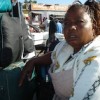
KENYA: Uneducated Women Struggle to Access Credit Fund
As an estimated 3.7 million dollars continues to sit idle in the Women Enterprise Fund (WEF) kitty, the very women the fund was meant to benefit have complained about the difficult requirements that need to be met in order to access the money.
CLIMATE CHANGE: Putting Children in Harm’s Way
It is late afternoon and the lone figure of nine-year-old Nancy Chepkemboi trudges home. To keep her head dry from the heavy rains, Chepkemboi has placed her books inside her shirt and used the polythene bag that is her school bag to cover her head.
AFRICA: More Skilled Attendants Needed to Reduce Maternal Mortality
Sub-Saharan African countries have claimed nine of the ten bottom places in a ranking of maternal health around the world. "The Mothers' Index", a new survey of motherhood by Save the Children, analyses health, education and economic conditions for women and children in 164 countries.AFRICA: Coalition Against the High Cost of Living
In Burkina Faso, Niger, Kenya, Uganda: governments are worried by soaring prices - and by newly confident and enraged civil society. Governments are being challenged to take decisive action, despite lacking the tools to address rising global oil prices. Their responses could have important consequences for their legitimacy and survival.KENYA: Sustainable Energy in the Heart of the Slums
Talk about foul foundations: the Katwekera Tosha Bio Centre is built on the stuff that goes into toilets. This community centre in the Nairobi slum of Kibera goes well beyond solving sanitation problems - it is a model for green energy, a meeting place for locals, and turning a profit for its operators.
KENYA: Community Turns Garbage Into Energy Source
A community-based organisation in the Kenyan slum area of Kibera set out to clean up garbage and deal with waste water; Ushiriki Wa Safi ended up creating a community cooker that turns waste into an energy source.AFRICA: Pneumonia Vaccine Rollout Will Protect Millions
The Kenyatta International Conference Centre resembled one big nursery with parents and their crying babies. Hundreds of parents with their infants thronged the Centre where they received their first shot against pneumonia, and not even their tears as the shot broke through their skin could dampen the smiling faces of their mothers.KENYA: Budget Too Small to Cover Health Needs
Professor Anyang Nyong'o might have guessed that a trip to the United States for treatment for prostate cancer would provoke a furore: he is the Minister for Medical Services.WOMEN’S DAY: Reflecting on Struggle for Equality in Kenya
"It is yet another significant day in the life of women across the world in the struggle for gender equality and equity. It is for this reason that women look forward to marking yet another International Women Day," says Janet Kanene, a gender studies university student.KENYA: One Woman’s Turbulent Journey to Success
Mount Elgon in Western Kenya is one of the most marginalised regions in the country. It is so marginalised that it is the only area where not even an inch of tarmac road has been constructed.KENYA: Civil Society Defends Access to Generic Drugs
Access to affordable medicine for millions of people in the South could be at risk if the production and distribution of generic medicine from India is restricted.
ELECTION-WATCH: Stakes High in What Might be Africa’s 55th State
South Sudan is memorable for unbearably high heat, persistent noise from the generators that help cool the temperatures and glaring poor infrastructure.
KENYA: No Easy Path for Disabled Women with Political Dreams
"People living with disability face all sorts of discrimination. We are discriminated against at job interviews in schools. Everyday is a battle to remain positive in the face of a world that is too bent on dismissing those among us that do not meet the standard of what is normal", explains Mishi Juma, a disabled community leader from the Coast region.HEALTH: The Silent Killer that Continues to Claim Children’s Lives
Medical experts have warned that malaria and HIV have monopolised interventions geared towards curbing child mortality in Kenya, thus ignoring the equally deadly killer, diarrhoea. This disease has silently claimed the lives of hundreds of children every year.Student Drop Out Rate on the Increase Despite Free Education
2010 will go down in history as the year when the first batch of pupils to benefit from the government’s introduction of free primary education sat for their Kenya Certificate of Primary Education (KCPE).
FOOD CRISIS: Two New Varieties of Vegetables on Kenyan Food Market
Agriculture remains one of the most significant economic activities in Kenya. It accounts for over 24 percent of Gross Domestic Product (GDP) with an estimated 70 percent of total production coming from small scale farmers who typically have about 2-5 acres of land, depending on the region.
HUMAN RIGHTS: Festive season a nightmare for Kenya’s Displaced
The Christmas season comes with joy and merrymaking in Kenya, where preparations for the festivities are underway as people crowd the street to shop for clothes and gifts. But even as the cheer spreads all around, the situation is different for the thousands of internally displaced Kenyans (IDP's) still living in various camps.
POLITICS: Women Still a Parliamentary Minority in Kenya
While some countries like Liberia can boast that they have a female President, Kenya is still grappling with allowing women room to exercise their leadership roles in Parliament and at local government level.
AGRICULTURE: Kenyan Researchers Say Traditional Vegetables Can Improve Food Security
According to Vision 2030, which is a government strategic plan on how to boost growth and development in Kenya, there are an estimated five million out of an estimated eight million households who depend directly on agriculture, despite the fact that agriculture continues to be one of the most under-budgeted ministries.
POLITICS: Women’s Representation Key to Development
Research has shown that women account for more than half of the population of any country. This is reflected in the 2010 Census results, where there are slightly more women than men in Kenya.KENYA: Agricultural Budget Out of Reach of Small-Scale Farmers
Although the majority of Kenyans are agricultural producers, only 3.6 percent of the country’s national budget goes towards the sector. This falls severely short of government’s promise to spend at least ten percent on agriculture.« Previous Page — Next Page »





The Week with IPS

NEXT STOP - SDGs
Tracking global progress towards a sustainable world
Tracking global progress towards a sustainable world
