Languages
Friday, October 2, 2026



News and Views from the Global South
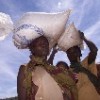
DEVELOPMENT: Donor Fatigue Leaves 2.8m People Hungrier in Southern Africa
2004 is ending on a grim note for many in Southern Africa, where emergency food supplies cannot meet their needs.DEVELOPMENT-SOUTH AFRICA: A Different Sort of Revolution
As the year hurtles to a close, a good many inhabitants of South Africa's commercial hub, Johannesburg, have deserted their home town for coastal resorts.POLITICS: Kofi Annan Receives a Vote of Confidence From His Home Continent
In recent weeks, United Nations Secretary-General Kofi Annan has been the subject of heated debate in the United States and Europe – this after he was accused of oversight in his handling of the Iraq oil-for-food programme between 1996 and 2003. Allegations of conflict of interest in the Annan family concerning the initiative have also been made.RIGHTS: Chinese Migration to South Africa Presents Challenges
Two months after the murder of a prominent Chinese businessman together with his family in South Africa, the small but growing number of Chinese immigrants here remains tight-lipped about the incident.POLITICS: China and Africa in an Ever-Closer – Sometimes Thornier – Embrace
Wang Ke gets agitated when asked about the arrival of the first Chinese visitors to Africa. As legend has it, the explorers were not overly impressed by what they discovered on the continent. After capturing a few giraffe, they boarded their ship and returned to China.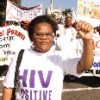
HEALTH-SOUTHERN AFRICA: AIDS Initiative Focuses on Women
"HIV is just a virus...If we change our attitudes, HIV will die. It will have no space and capacity to spread," says Musa Njoko, a young South African woman who has been living with the virus for the past decade.EDUCATION-AFRICA: Universal Schooling an Elusive Goal
A new report by the South African Institute for International Affairs (SAIIA) has highlighted the challenges and constraints facing education in Africa.
POLITICS: South Africa Keeps Out the Welcome Mat for Aristide
Haiti and South Africa are at odds over the fate of former Haitian President Jean-Bertrand Aristide. Although the two countries are located at opposite points on the globe, distance seems unlikely to make the heart grow fonder in this matter.WORLD AIDS DAY: African Women’s Rights Protocol a Weapon Against HIV
"When you look at the larger picture of HIV/AIDS, the leadership is mainly men. We need to train and have more women leaders," says Prudence Mabele, an AIDS campaigner in South Africa.
HEALTH-SOUTHERN AFRICA: HIV/AIDS May be Undermining Democracy
The figures speak volumes. Between 1999 and 2003 almost 1.5 million of about 20 million registered voters in South Africa were removed from the voters’ roll because they had died – most, it appears, from AIDS-related diseases.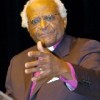
RIGHTS-SOUTH AFRICA: Anti-Apartheid Warrior Identifies New Enemies
Former Anglican archbishop Desmond Tutu does not mince his words. Known as a straight talker, the Nobel Peace Prize laureate was a thorn in the flesh of successive apartheid regimes in South Africa until the demise of white rule in 1994.
DEVELOPMENT-SOUTH AFRICA: Red Tape Delaying Housing for the Poor
South Africa is racing against time to deliver decent housing to millions of its citizens who are currently living in slums.CONSERVATION-AFRICA: One Park, Three Countries
Hope for the survival of many of Africa's unique animals lies in multinational cooperation initiatives like the Great Limpopo Transfrontier Park, although the challenges remain enormous, say conservationists.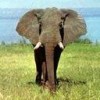
One Park, Three Countries
The creation of the Great Limpopo Transfrontier Park, one of the world's largest nature preserves, involves South Africa, Mozambique and Zimbabwe. It is hoped that the park will eliminate the need to cull the elephant population to prevent overcrowding in concentrated areas.
DEVELOPMENT-SOUTHERN AFRICA: Overcoming Water Scarcity
A routine visit to a village in the northern South African province of Limpopo brought Stephen McFarlane face-to-face with the reality of a child-headed family.POLITICS-IVORY COAST: South Africa Attempts to Defuse Tensions
South African President Thabo Mbeki is engaged in political fire-fighting in the Ivory Coast, where fears of a full-scale civil war between government and rebel forces loom large.
HEALTH-SOUTHERN AFRICA: HIV/AIDS Burden on Women Grows
‘’We cannot have women carrying hospital beds on their heads,’’ says Quinton Mageza of global charity ActionAid International, referring to the growing army of women and girls playing the role of nurse at home for relatives living with HIV/AIDS.POLITICS: Dalai Lama Conciliatory During Visit to South Africa
"I’m not seeking independence for Tibet. But the Chinese government and the media still call me a separatist. There is a lot of suspicion," the Dalai Lama, Tibet’s spiritual leader, told journalists in South Africa’s commercial hub of Johannesburg Thursday.U.S. ELECTION: Africa Expects a "Business as Usual" Approach From Bush
While the American presidential contest was nail-biting, there appears to be little suspense amongst analysts about what George W. Bush’s re-election as head of state means for Africa.
DEVELOPMENT-AFRICA: In Praise of Grace Under Pressure
Images of floods, drought, famine, refugees and malnourished children in Africa have long made the continent appear relentlessly disaster-prone. But, says Francoise Le Goff, these pictures only tell part of the story.U.S. ELECTION: Africa Barely on the Candidates’ Radars
With U.S. voters anxiously contemplating the body count arising from the United States' deployment in Iraq - as well as the associated threat of terrorism - it was probably to be expected that Africa would get little "face time" in the presidential election.« Previous Page — Next Page »


The Week with IPS

NEXT STOP - SDGs
Tracking global progress towards a sustainable world
Tracking global progress towards a sustainable world
