Languages
Sunday, November 8, 2026



News and Views from the Global South
Ecobreves – VENEZUELA: Red Tide Over the Orinoco
Hundreds of liters of red liquid waste were spilled in the waters of the Orinoco River near Ciudad Guayana, 500 km southeast of Caracas and center of heavy industry, including steel, iron and aluminum mills and hydroelectrical production.Ecobreves – CHILE: Salmon Workers Denounce Death of Diver
Conatrasal, the Chilean national confederation of salmon industry workers, is demanding that the Navy and the courts investigate the cause of death of a diver who was harvesting salmon at a fish farming operation in the southern region of Aysén.Ecobreves – CUBA: Reforestation Efforts Slide in Guantánamo
Poor coordination amongst government institutions slowed a program of forestry farms in the Cuban province of Guantánamo, which suffers dry conditions and desertification.LATIN AMERICA: REBIRTH OF THE AGRARIAN AGENDA
Repositioning the role of agrarian reform in regional development by examining the contribution it can make to social reconciliation, the economy, and the environment is one of the challenges facing FAO\'s 30th Regional Conference, which will bring together the 33 member nations in Brasil from April 14 to 18, writes Jose Graziano da Silva, Regional Representative for Latin America and the Caribbean for the United Nations Food and Agriculture Organisation (FAO). What distinguishes the current situation from previous cycles is that the imbalances of the past have been exacerbated by new social demands. In a way, these raise the agrarian issue to a new level of historical relevance and political legitimacy. And that changes everything. The steady growth of productive capacity in the 20th century -and the corresponding contamination and blight of the environment -has brought back together by a tortuous route that which was never really separated: human and natural history, the urban and the rural. Situated at the cusp of an historic and accelerated process of change in economic paradigms and cultural values, agrarian reform acquires a new and transformative sense in the eyes of society. In the 21st century, development can only be called development if it combines the old economic rationalism with social harmony and environmental balance.EU-ACP TRADE TALKS FAIL TO ADDRESS DEVELOPMENT
Trade deal negotiations between the EU and African, Caribbean, and Pacific (ACP) countries ended in a mess, writes Glenys Kinnock, Labour Party Member of the European Parliament. In this article, Kinnock writes that from the outset the European Commission negotiators approached the talks as if they were conventional free-trade area negotiations rather than tools for development. Now is the time for the EU to put development priorities back at the heart of the issue. There has to be a more participatory approach, more transparency, respect, and understanding for ACP regional and national interests. We urgently need a further opening of EU markets to ACP products, particularly agricultural products, which are the main exports for ACP countries. We must also ensure that the EC doesn\'t pressure ACP countries to liberalise services, investment, and government procurement, or to strengthen intellectual property rights or the inclusion of competition rules within EPAs. These EU-ACP trade agreements are absolutely critical to the future of the poorest countries in the world. We must ensure they are a genuine force for development.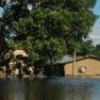
La Niña and Climate Confusion
While the climate cycle known as La Niña gradually winds down over the equatorial Pacific, its local consequences have surprised experts in the countries most affected.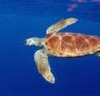
Fisherfolk to the Turtle Rescue!
A conservation campaign is motivating fisherfolk in southern Brazil to fight accidental capture of sea turtles.Ecobreves – ARGENTINA: Historic Ruling Defends Wetland
A 20-kilometer embankment constructed by an agri-business firm in the Esteros del Iberá wetlands, in the eastern Argentine province of Corrientes, must be demolished, says a court order.Ecobreves – BRAZIL: Banks Join Defense of Amazon
Banks, whether public or private, will have to apply environmental criteria as of July 1 in granting loans for rural activities in the Brazilian Amazon.Ecobreves – HONDURAS: Protests Against Forest Exploitation
More than 400 residents of three villages in El Porvenir municipality, located in the central Honduran department of Francisco Morazán, have protested forest exploitation on Pacaya Hill, which is the source of their water supply.Ecobreves – MEXICO: A Highway and Its Discontents
A project to build 62 kilometers of highway in an area neighboring the Mexican capital where there is a major forest has created tension between the government, environmentalists and residents.WORLD ECONOMY SEES BOOM IN CREATIVE INDUSTRIES
The world economy has seen an extraordinary expansion in the last five years, and the creative industries are in the forefront as a result of the globalisation and connectivity that have been reshaping the overall pattern of cultural production, consumption, and trade and transforming lifestyles worldwide, writes Supachai Panitchpakdi, Secretary-General of the United Nations Conference on Trade and Development (UNCTAD). In this article, the author writes that though developed countries still dominate this market, many developing-country products are already benefiting from the boom of their creative industries. Their exports of creative goods have increased astronomically, from USD 55.9 billion in 1996 to USD 136.2 billion in 2005, or about 140 percent. This rise is attributable primarily to China, which became the world\'s leading exporter of creative goods in 2005. A challenge to be faced, both domestic and systemic, is that most developing countries are not yet able to harness their creative capacities for development. In Africa, for instance, although there is an abundance of creative talents, the creative potential remains underutilised. The continent\'s share in global trade remains less than 1 percent of world exports, despite recent sharp increases. As is the case for other developing regions, this is a reflection of both domestic policy weaknesses and global systemic biases.WINDS OF CHANGE BLOW IN CUBA
Two significant events have occurred since the formation of Cuba\'s new government on February 24 and suggest a shift in the country\'s politics, writes Leonardo Padura Fuentes, a Cuban writer and journalist whose novels have been translated into a ten languages. His most recent work, La nieblina de ayer, won the Hammett Prize for the best crime novel written in Spanish for 2005. In this article, Padura writes that the first high-level representative of a foreign state received by the new Cuban president was the secretary of state of the Vatican. After this, for the first time since the visit of Pope John Paul II to Cuba in 1998, state television broadcast a mass in Havana\'s Cathedral Square which was attended by thousands who applauded the demands made in public by a Catholic church that is exerting pressure patiently but insistently on the all-controlling Cuban state. Almost immediately afterwards, at the UN headquarters the Cuban foreign minister fulfilled the promise of the government to sign two extremely important treaties: the International Covenant on Economic, Social,and Cultural Rights and the International Covenant on Civil and Political Rights. What is most important in Cuba today is that there is movement, and what moves changes, and what changes generates hope.
Record Reforestation, But Still Some Discontent
An unprecedented budget for Mexico's forest policies and the government's goal to plant hundreds of millions of trees have not been enough to calm the debate about the scope of deforestation.Ecobreves – BRAZIL: Yanomami Fight Mine
Eight Yanomami Indians protested before Brazil's Chamber of Deputies on Feb. 26 against attempts to authorize mining operations on their land.Ecobreves – VENEZUELA: Blue Crab Victim of Pollution
The blue crab (Callinectes sapidus) that inhabits the eastern shore of Lake Maracaibo, in northwest Venezuela, is the victim of oil pollution and urban waste.Ecobreves – CUBA: Energy Awareness Needs More Than One Blackout
Conducting a "general blackout" for five minutes on Feb. 29 was "laudable, but insufficient" for generating changes in energy consumption, says Ricardo Bérriz, coordinator in Cuba of the United Nations Environment Program's Global Environmental Citizenship project.Ecobreves – CHILE: Spreading Technologies for Organic Farming
Disseminating and updating scientific and technological information on organic agriculture -- farming free of toxic chemicals -- is the aim of a Mar. 12-14 symposium in the Chilean capital.HARNESSING RELIGIONS ADVANCE WELL-BEING OF CHILDREN
Though all the world\'s major religions consider childhood sacred and needing special protection, they do not use their power and influence adequately to advance the well-being of children, writes Kul C. Gautam, former Assistant Secretary-General of the United Nations, and Deputy Executive Director of UNICEF. . The Global Network of Religions for Children (GNRC) was established to do precisely this. Founded by a visionary Japanese Buddhist leader, GNRC\'s mission is to harness the deepest moral and spiritual beliefs and teachings of all the worlds religions for the well-being of children and for the defense of their rights. In May 2008, GNRC is organising a major world forum in Hiroshima, Japan, that will deal with the three current major ethical imperatives: ending violence against children, ensuring that no child lives in poverty, and empowering children to protect our planet. A partnership among the world\'s religions, governments, and civil society and international organisations is probably the most powerful key to creating a child-friendly world order that has eluded us so far.WORLD TRADE IS INSURANCE AGAINST FINANCIAL TURBULENCES
With clouds darkening over the world economy, the Doha Round of the WTO is the one global initiative that may boost the confidence of world businesses, workers, and consumers and send a powerful signal that more than 150 countries have the confidence to resist protectionism, to create a more just and balanced trading system, and to lay sustainable foundations for growth and development in the 21st Century, writes Pascal Lamy, Director-General of the World Trade Organisation (WTO). In this article, Lamy acknowledges that the economic growth resulting from the expansion of world trade has not been equitably distributed within our societies, which have seen a rise in inequality and disruptions in their economic and social fabrics. If we are to succeed in building on the achievements of the global trading system through more trade opening, it is essential that countries adopt necessary domestic reforms and sequence them properly. This means adequate social safety nets and widespread availability of education and trainingEcobreves – MEXICO: More Transportation Restrictions
Starting in July the vehicle use restriction program in force in the Mexican capital will be expanded from Monday through Friday to include Saturdays.« Previous Page — Next Page »





The Week with IPS

NEXT STOP - SDGs
Tracking global progress towards a sustainable world
Tracking global progress towards a sustainable world
