Languages
Tuesday, November 10, 2026



News and Views from the Global South
Eye on Urban Water Pollution
Brazil's two biggest metropolitan regions face serious problems when it comes to their potable water supply. Observers recommend more investment in basic sanitation.COMMUNICATIONS FOR DEVELOPMENT: PLANTING THE SEEDS OF KNOWLEDGE
We have always said, \"Give people fish and they will eat. Teach them how to fish and they will always eat.\" Today, we also say, \"Help people to communicate and you will change their lives\", writes Jacques Diouf, Director-General of the United Nations Food and Agriculture Organization. Between October 25-27, 500 delegates from across the world met in Rome at the First World Congress on Communication for Development, organized by the World Bank, FAO and the Communication Initiative, and hosted by the Government of Italy to examine how to share knowledge and information through social dialogue. This is underlined by the participation of many eminent policy and decision-makers, scholars, not to mention communications professionals. One of the most tangible contributions of the United Nations family of organizations, of which we are part, has been to help build the infrastructure for social dialogue within and between all the countries of the world. This has been a good investment, it turns out, because social science now tells us that communication lies at the heart of sustainable development. We are not talking about simply governments talking to citizens, an important responsibility though that is, but a horizontal, two-way process that allows governments to listen to people. A dialogue, not a monologue. It implies all participants in society having a voice, not just the powerful. In the past ten years, an entirely new economy worth over two trillion dollars in terms of goods and services has materialized. Information and communications technologies or ICTs have helped a number of emerging nations achieve phenomenal economic growth rates. But the pace at which the new frontiers are advancing also risks widening the gap between those who have access to the new communications technologies and the one billion of the world\'s population who don\'t. And by extension the danger is to further widen the rich-poor divide.Ecobreves – HONDURAS: El Tigre Hydroelectric Dam Loses Support
The Honduran Parliament voted last week to ask the Executive Branch to "detain" construction of El Tigre hydroelectric dam, on the Honduras-El Salvador border, until the diplomatic conflict between the two countries is resolved.
Mexico Shuts the Door on GM Maize
Mexico is closing the door on experimentation with genetically modified corn varieties. Environmentalists applaud the decision, but biotech scientists are disappointed.
Answer to Energy Crisis? Waste Not, Want Not
To fight climate change, it is not enough to produce alternative sources -- we must promote the idea of consuming less, warn experts.Playing for Our Lives
Governments of the world will gather in Kenya in November to discuss new ways to help the South adapt to climate change.Ecobreves – COLOMBIA: Organic Coffee for Japan
Beginning in February, the indigenous Arhuacos of Colombia's northern Sierra Nevada de Santa Marta, will export annually 15 containers to Japan with 289 tons of Tiwun coffee, which the community grows using environmentally sustainable methods.Ecobreves – BRAZIL: Plant Fibers to Replace Asbestos
Research at the University of Campina Grande, in the eastern Brazilian state of Paraíba, explores the potential uses of sisal (Agave sisalana) as a substitute for asbestos, a toxin and carcinogen, as a construction material.Ecobreves – ARGENTINA: Plastic Bricks Certified for Building
Argentina's Housing Secretariat this month granted certification of technical fitness to a prototype of a brick made from plastic bottles for use in construction of houses and buildings of up to two stories.Ecobreves – MEXICO: UNEP Wins Communication Prize
The United Nations Environment Program (UNEP) received the Silver Shell award in Mexico on Oct. 16. The award recognizes Ibero-American initiatives in communications about issues of social responsibility.Ecobreves – BRAZIL: Delay in Law to Limit Eucalyptus
Far past the 45 days predicted, the delay continues for the parliamentary vote on a bill that aims to stop the expansion of eucalyptus in the Brazilian municipality of Sao Luiz do Paraitinga, 170 km from Sao Paulo.Ecobreves – GUATEMALA: Ban on Leatherback Turtle Sales
From Oct. 15 to Apr. 15, 2007, a ban is in place on collecting and selling the eggs of the leatherback turtle (Dermochelys coriacea), imposed by the Guatemalan government's National Council on Protected Areas (CONAP).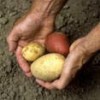
Keep Chiloé Free of Transgenics, Say Activists
The Chilean island is a birthplace of the potato, and ecologists say there are about 200 varieties that must be protected from genetic contamination from transgenic varieties of the tuber.
Bolivia's Challenge Blocks Dams in the Amazon
Environmentalists in La Paz warn that one of the hydroelectric dams that Brazil is planning to build on the Madeira River could flood Bolivian territory. They are calling for a binational agreement.Pacific Island Gives Clues to Tropical Biodiversity
Around 100 new species have been classified in just a month on the island of Espiritu Santo island in the South Pacific, which faces biodiversity devastation as a result of global climate change.Ecobreves – BRAZIL: Cultivating 'Clean' Tomatoes
Brazil can already produce tomatoes without agro-chemical residues, through Tomatec, a production technique that was tested in the planting of 12,000 tomato plants in Sao José do Ubá, near Rio de Janeiro.Ecobreves – CHILE: No' to Road Through Pumalín Park
Ecologists and residents oppose the Chilean government’s decision to build a 60-kilometer road through the center of Pumalín Park nature sanctuary, in the country's 10th region, instead of along its coastal border -- which is the cheaper option and would have lesser environmental impacts.Ecobreves – VENEZUELA: Veto Continues Against DDT
Venezuela rejects use of the insecticide DDT (dichloro-diphenyl-trichloroethane) that was used to fight malaria-carrying mosquitoes a half-century ago, "adopting the criteria that it is toxic, non-biodegradable and accumulates in animal tissue," said Jesús Toro, director of environmental health at the Ministry of Health.Ecobreves – URUGUAY: A Push for Biotech
The Pasteur Institute of Montevideo, which will officially open its doors Dec. 8, is trying to give a boost to biotechnology in the countries of Mercosur (Argentina, Brazil, Paraguay, Uruguay and Venezuela) and Chile, says executive director Guillermo Dighiero.Ecobreves – CARIBBEAN: Fewer Hurricanes Predicted, But Risk Persists
The influence of the climate phenomenon known as El Niño Southern Oscillation (ENSO) makes it less likely that tropical cyclones will form in the North Atlantic, but the risk is not eliminated, warn Cuban meteorologists.BRAZIL: THE MAIN ISSUES OF THE ELECTION
Beyond the usual acrobatics of political debate, certain basic issues have been introduced into Brazil\'s current general election campaign. One of these is the size of the budget, where we see a clear distinction between the liberal platform of centre-right opposition candidate Geraldo Alckmin, current governor of Sao Paulo, who supports shrinking government and reining in public spending, and the current president\'s position of better spending without a commitment to its reduction, writes Emir Sader, a philosopher and co-ordinator of the Public Policy Laboratory of the University of the State of Rio de Janeiro, executive secretary of the Latin American Council on Social Sciences. In this article for IPS, Sader writes that another fundamental issue is Lula\'s making a top priority of regional integration policy, whereas Alckmin focuses on the FTAA and free-trade treaties, above all with the US. But Alckmin, who began his campaign promising a \'\'management shake-up\'\' if he came to power with sharp cuts in public spending, inspired by the privatisation process he began in Sao Paulo, then agreed to sign a document committing himself to do no more privatisations, a direct contradiction of the repeated declarations of his primary economic advisors, backed by ex-President Fernando Henrique Cardoso, that he would go ahead with the privatisation of the state oil giant Petrobras. What changed his mind? The evidence that all of the successes of the Lula government are tied to policies and programmes that strengthen the government\'s presence in the public sphere, like social welfare, health, and culture policies, among others.« Previous Page — Next Page »





The Week with IPS

NEXT STOP - SDGs
Tracking global progress towards a sustainable world
Tracking global progress towards a sustainable world
