Languages
Tuesday, November 10, 2026



News and Views from the Global South

Butterflies in an Italian Eden
Two Italian bird experts have created a paradise in the province of Pavia for another type of flying creature: butterflies -- the hardest hit by pollution and changes in farming over the past 30 years. Tierramérica paid them a visit.Ecobreves – CHILE: Water Dispute with Argentina Resurfaces
Chile has renewed its protest against Argentina's publication of maps that annex the southern territory of Campos de Hielo Sur (Southern Ice Field of Patagonia), one of the planet's largest reserves of freshwater.Ecobreves – BRAZIL: World Record for Container Collection
Brazil, world champion in recycling of aluminum cans, has achieved the same record for collecting used containers for agro-chemicals, surpassing similar programs in countries of the North, like Canada and Germany.Ecobreves – GUATEMALA: An Eye on Nuclear Waste in the Pacific
The Guatemalan government and private entities have opened a laboratory for detecting contamination from toxic and nuclear substances in industry and ship traffic in a portion of the Pacific Ocean.Ecobreves – VENEZUELA: Much-Feared Duckweed Generates Income
Three resident cooperatives in the San Luis neighborhood of Maracaibo, Venezuela's second largest city, located on the lake of the same name, have obtained up to 5,000 dollars per day for harvesting lemna sp, the much-feared water lentil, or duckweed, that has taken over the lake's surface.Ecobreves – HONDURAS: 'Green' Village at Heart of a Mountain
El Pino, which covers more than 107 million hectares in the northern Honduran department of Atlántida, is being promoted as "the green villate" for the environmentally sustainable activities of its residents.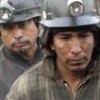
Mining an Open Pit of Disputes
Latin America's two leading mines have been hit by labor conflicts. The workers who daily risk their lives in extracting ore are demanding their share of the industry's recent bonanza.
Binational Crusade to Save Wetlands
A powerful desalinization plant will reopen in 2007 near the Mexico-U.S. border. Scientists in both countries will be working to halt harm to the Ciénaga de Santa Clara, a large marsh in the northern Mexican state of Sonora.Ecobreves – URUGUAY: Majority Heeds Anti-Smoking Decree
With few exceptions, Uruguayans are obeying the six-month-old presidential decree that bans smoking in enclosed spaces, whether public or private, aside from one's own home.WHAT HOPE FOR GLOBAL ACTION ON MIGRATION?
Governments are beginning to acknowledge the urgent need for international policies that address the root causes of migration, like poverty and the demand for migrant labour, writes Mary Robinson, former President of Ireland, UN High Commissioner for Human Rights and currently President of Realising Rights: The Ethical Globalisation Initiative. In this analysis, Robinson writes that protecting migrants\' rights is central to any effective migration management. One important way to ensure that human rights issues are firmly on the agenda is to involve civil society and migrants themselves. Robinson observes that migrants with opportunities for decent and legal work contribute more to development than those who are exploited, and that policies which promote human rights like legalisation of status and access to health and housing build the capacity of diaspora communities and help their integration, even while maintaining close ties to their countries of origin.US CUBA POLICY CONFUSED, AS USUAL
On September 15, at the annual Miami Herald Americas conference, US Secretary of Commerce, Cuban-American Carlos Gutierrez, sent up a trial balloon for a referendum for the Cuban people on whether to keep the current government led by Raul Castro, writes Joaquin Roy is Jean Monnet Professor and Director of the European Union Centre at the University of Miami. In this article, Roy writes that Gutierrez\'s idea is interesting because, it satisfies the requirement of making the Bush administration look tough on Cuba, is acceptable for domestic consumption in Florida, but it also implies that the US would accept a government with Raul Castro if the vote went his way. It is important to point out, however, that this scenario would violate Title II of the Helms-Burton Act, which establishes the conditions for normalising relations with Cuba. Lifting the embargo would be barred as long as either of the Castro brothers remained in the government. But most parties agree that Helms-Burton is a nuisance, and many today regret endorsing it in the tragic aftermath of the criminal downing of the Brothers to the Rescue planes in 1996. In conclusion, it might be wise to do follow the suggestion of John Kavulich, head of the US-Cuba Trade and Economic Council, an organisation of US companies trying to do business with Cuba: in the event of Castro\'s death, say nothing.NEPAL: KING WITHOUT A KINGDOM
It has been five months since Nepal\'s Rhododendron Revolution forced autocratic King Gyanendra to restore parliament and hand power back to an alliance of parliamentary parties. Since then, a restored parliament has carried out one of the most dramatic transformations of state structure ever realised without violence or bloodshed, writes Kunda Dixit, Publisher and Editor of the Kathmandu-based newspaper, Nepali Times. In this article, Dixit writes that Nepal still faces the larger challenge of resolving the insurgency. A ceasefire has been in force since April, and negotiations are underway between the government and the Maoist rebels. In the past month, the peace process has been stuck over disagreement on the issue of what to do with Maoist weapons. The rebels are under pressure from their rank and file who don\'t want to give up their guns, and the government is under pressure from the United States and India not to bring the Maoists into an interim administration until their weapons are laid down. There is a good chance that Nepal can come out of this having resolved not just the conflict but also the social injustices that are at the root of it. But it needs all parties to look beyond immediate strategic gain to ensure peace and stability so that Nepal\'s long-suffering people can finally hope for economic progress.OTHER COUNTRIES MUST ACT TO CORRECT THE DISASTER OF US-ISRAELI POLICY
The current American-Israeli Middle East policy has caused such enormous damage and such grave problems for both Israel and the West in general that other powers should feel more confident in criticising them and taking vigorous and concerted action, writes Kare Willoch, former Prime Minister and leader of the conservative party in Norway It is clearer than ever that peace in the broader Middle East is impossible without peace between Israel and the Palestinians. Efforts for peace cannot assume that the oppressed must first renounce all violence. History shows that oppressed peoples deprived of all hope for a life of dignity do not renounce violence. Attempts to pressure Lebanon to use force against Hezbollah would be counterproductive. The transition to a single Lebanese armed force will take time. Some may fear that Lebanon could be left defenceless if Hezbollah is disarmed faster than the Lebanese army is built up. And one can\'t expect complete confidence in the UN\'s ability to defend Lebanon after the discouraging experience with UNIFIL, which gave the country no real protection. And some may remember Bosnia, where the UN failed to prevent mass murders of Muslims, not unlike those that Ariel Sharon presided over in the Beirut of 1982.REGIME CHANGE IN THE US
As the administration finds it harder to spin the tragic fiasco in Iraq, a resurgent Taliban in Afghanistan, bungling over Hurricane Katrina, immigration policy, the nightmarish Homeland Security Administration, turf battles between the CIA and FBI, spiraling debt, and revelations of corruption, and now the Mark Foley scandal, Americans are also increasingly disenchanted with Democrats, who are often mired in the same Washington sleaze, writes Hazel Henderson, whose new book, \'\'Ethical Markets: Growing the Green Economy\'\' , covers reform of capitalism and unsustainable, fossilized industrialism. She created the TV series \'\'Ethical Markets\'\' and the Calvert-Henderson Quality of Life Indicators. In this analysis, Henderson writes that the two-party political duopoly makes a mockery of \'\'bi-partisan\'\' cooperation and hypocritical calls for national unity. Too many voters see only collusion between the powerful corporate and financial special interests and legislators with the burgeoning lobbying industry making the deals that leave out ordinary citizens. The rigidly-controlled two-party system, largely supported by contributions from similar corporations, makes third parties unviable unless led by billionaires. Both parties control the TV debates. Systemic reforms of the US political system are essential and go well beyond regime change:overhaul and standardise elections nationally, abolish the Electoral College, require all election supervisors and officials to be unaffiliated to political parties; require all voting machines be transparent to voters and provide paper ballot receipts, introducing universal health care.UN SECRETARY-GENERAL UNBOUND
Given the pressures to which the UN is subjected, and the current threats to the very character and underlying values of the international system, the election of a new Secretary General is of great significance, writes Branislav Gosovic, author of books on UNCTAD and UNEP and numerous articles. He headed the South Centre Secretariat 1990-2005. In this article, Gosovic writes that unipolarity and \'\'pensee unique\'\' have put serious constraints on the SG and the Secretariat and reduced the policy space for their action. Furthermore, North-driven reforms supposedly intended to give greater discretionary authority to the SG risk facilitating unilateral political and administrative influence over the Secretariat. The South will need to protect the multilateral character of the UN Secretariat -- the only permanent multilateral structure with a universal, holistic task -- from efforts to reduce it to a merely administrative/management function and make it serve the interests of a few powerful actors. It will need to press for greatly strengthening the Secretariat and so provide the Secretary-General with institutional support inter alia to contribute to evolving democratic forms of multilateral statecraft and global governance.HIGH ENERGY PRICES FUEL SOLAR BOOM
After decades of frustratingly slow growth, rising energy prices are hastening the dawn of a long-heralded solar renaissance, writes Mark Sommer, host of the internationally-syndicated radio programme, A World of Possibilities. Though still outdistanced by the rapid rise of wind power, silicon-based solar technologies are finally becoming sufficiently efficient to be competitive with conventional energy sources, Sommer writes in this article. Industry experts predict that based on recent advances, further improvements in efficiency will continue, but a real breakthrough to widespread use worldwide awaits development of a technology beyond the painstaking silicon-based manufacturing process. Solar advocates argue that in an era of permanent oil decline, if the photovoltaic industry sustains growth averaging 50 percent or more per year for the next two decades, it will contribute as much as 20 percent of the global energy budget. This is an ambitious, even unlikely rate of growth, but it also presumes no significant technological breakthroughs. And given that necessity is the mother of invention, solar energy may yet surprise us all.NUCLEAR STATES IN VIOLATION OF NUKE TREATY
As the UN General Assembly in New York grapples yet again with the urgent question of nuclear disarmament, the world would do well to revisit the story of pioneer nuclear whistleblower Mordechai Vanunu, writes Fredrik S. Heffermehl, President of the Norwegian Peace Alliance, Vice President of the International Peace Bureau and editor at www.peaceispossible.info. In this analysis, Heffermehl writes that exactly twenty years have passed since a major news story using Vanunu as its source removed any doubt that Israel had a nuclear weapons programme. His dramatic abduction by Israel, followed by a secret trial in Jerusalem and 18 years in gaol under cruel conditions, made Vanunu world famous. Few cases more vividly dramatise the utter hypocrisy of nuclear policy. Ten years ago the ICJ in The Hague ruled the use of nuclear arms generally illegal under international law, finding that states have a legally binding obligation to enter into negotiations in good faith -- and reach a specific result-- on nuclear disarmament. There was, however, widespread disappointment with compliance with the ruling, and anti-nuclear and peace groups decided to request from the court more specific clarification of whether the nuclear weapon states have complied with the treaty in the past and what they are obliged to do in the future.ECOLOGICAL ALARM – WE ARE DOOMED UNLESS WE CHANGE COURSE
It is already evident that the planet cannot support the violence and voraciousness of the current mode of production and consumption, writes Leonardo Boff, a Brazilian theologian and writer and member of the International Commission of the Earth Charter. In this analysis, the author argues that what is needed is a new paradigm of co-existence between nature, earth, and humanity which puts life at the centre and maintains natural and cultural diversity. The foundation of this new ethics has been set out in two documents: the Earth Charter, an international initiative adopted by UNESCO in 2000; and the Manifesto for Life, approved in 2002 by the environment ministers of Latin America. Both have much in common with the UN Millennium Development Goals (MDGs). The mission of the human being, as the bearer of consciousness, intelligence, will, and love, is to take care of the earth, to be the gardener of this splendid garden of Eden. This mission must be urgently undertaken, because the earth, life, and humanity are sick and threatened in their entirety.THE PROBLEM WITH SOYA
Fifty years ago no culture in the world ate soya. Today it is in 60 percent of all processed foods, writes Vandana Shiva, author and international campaigner for women and the environment who received the Right Livelihood Award (Alternative Nobel Prize) in 1993. In this analysis, Shiva writes that the promotion of soya in food is a huge experiment promoted with USD 13 billion of subsidies from the US government between 1998 and 2004, and USD 80 million a year from the American Soya Industry. Agro-giants Cargill and ADM are now destroying the Amazon to grow this crop. This is in turn destroying the planet\'s climate. In depending on monocultures, the food system is being made increasingly dependent on fossil fuels -- for synthetic fertilisers, running the giant machinery, and long-distance transport. Monocultures lead to malnutrition for the underfed and overfed alike. One billion people are without food because industrial monocultures robbed them of their livelihoods in agriculture and their food entitlements. Another 1.7 billion are suffering from obesity and food-related diseases.CHINA: THE OTHER SIDE OF THE COIN
Since its accession to the WTO five years ago, China has been the fastest-growing trading nation in the world and now the third- largest trading economy, after the EU and US, writes Pascal Lamy, Director-General of the Word Trade Organization (WTO) In this article, Lamy writes that a successful Doha Round can provide China with a stable and predictable global trading environment and offer the prospects for another 10-15 years period of peaceful economic development. In the Doha Round, we are negotiating the trade regime which will apply to all its members for the next 10 years. A trading system based on strong multilateral rules is the least expensive insurance policy against the risks of protectionism available to China and to the world economy. There are some signals that trade protectionism whether in developed or in developing countries could be on the rise. Given China\'s insertion into the world economy, multilateral trade opening and strong multilateral discipline are the best means to safeguard China\'s trade interests whether home or abroad. Without the Doha Round and without a well-functioning WTO, China could well be one of the biggest victims.INFALLIBILITY AND THE POPE
Pope Benedict XVI\'s unfortunate citation of the statement of a 14th Century Byzantine emperor is a cause of scandal and shame for Christians as well as Muslims, writes Leonardo Boff, a Brazilian theologian and writer. In this article, Boff writes that the Pope knows that there is a confrontation underway between Muslims and the West, which has brought war to Afghanistan and Iraq and openly backs the Israeli cause against the Palestinians. Thus Benedict XVI\'s quotation has created an association between the papacy and the military strategies of the West. How could this not give rise to irritation? It must be pointed out that this is not an isolated incident for this Pope. As Cardinal, Joseph Ratzinger opposed letting Turkey join the European Union because it is has a Muslim majority. Not long ago, he suppressed an initiative in the Vatican to promote dialogue between Christianity and Islam. For him dialogue with other religions makes no sense given that \'\'it is contrary to the Catholic faith to consider the Church as one way of salvation equal to others\'\'.« Previous Page — Next Page »





The Week with IPS

NEXT STOP - SDGs
Tracking global progress towards a sustainable world
Tracking global progress towards a sustainable world
