Languages
Wednesday, November 11, 2026



News and Views from the Global South
Ecobreves – BRAZIL: Cyber-Tongue Controls Beverage Quality
The Brazilian agricultural research agency Embrapa has invented an "electronic tongue" to taste and control the quality of coffee and other beverages.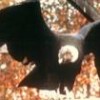
Ecobreves – COLOMBIA: Condor Population on the Rise
The number of Andean condors (Vultur griphus) in Colombia has grown by 10 percent this year, under a repopulation program of the environment ministry.Ecobreves – GUATEMALA: Filtering a Threatened Lake
The Guatemalan government has installed a plant to treat and filter water as it arrives at the southeastern Lake Amatitlán, which is in danger of turning into a swamp by 2015.HEALTH IS A HUMAN RIGHT
The 10th of December is the International Human Rights Day. Anniversaries should be about celebration. But this Human Rights Day is, tragically, yet another reminder of how far we are from living up to the commitments made by the world\'s governments to ensure a life of dignity for all people, writes Mary Robinson, former President of Ireland (1990-1997) and UN High Commissioner for Human Rights (1997-2002) and current chair of Realising Rights: the Ethical Globalisation Initiative. In this analysis, Robinson writes that despite the increased attention paid this year to combating extreme poverty around the world, the fundamental right to health remains unfulfilled for millions of people today -- not only those suffering from diseases like HIV/AIDS but also those without access to clean water, adequate food, or a reliable health system. Health is not a side issue: it is key to the most basic of the rights the world now agrees should be guaranteed. Health underpins the right to life, the right to security, and the right to a sustainable livelihood.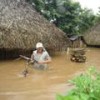
Stan Was a Blow to the Poor, but Not the GDP
Experts are taking stock a month after Hurricane Stan blew through Central America: although thousands of people lost everything they had, the larger economy is set to come out just fine.
Ecobreves – ARGENTINA: Virtual Path to Nature
An Internet site based in Argentina is promoting environmental education among Latin American children and adolescents.Ecobreves – C HILE: Presidential Candidate Opposes Native Forest Law
Michelle Bachelet, candidate for the governing center-left coalition in Chile and favored in the polls for the Dec. 11 presidential elections, expressed her opposition to the native forests bill, which has the preliminary approval of a Senate commission.Ecobreves – MEXICO: Green Horseback Ride
On horseback and bearing a message of respect for the environment and cultural diversity, a group of people is traveling across Mexico, reviving a sort of nomadic life.Ecobreves – VENEZUELA: Guácharo Cave Is Crumbling
Stalactites, stalagmites and other formations in Guáharo Cave, in northeast Venezuela, the largest in the country at 10.2 km long, are threatened by sewage, garbage left behind by visitors, and rats that are destroying birdnests.Ecobreves – CUBA: Horses for the Cure
Experts from Cuba and Uruguay are working to build a Latin American alliance to promote "equine therapy", using horses as a therapuetical tool.Ecobreves – GUATEMALA: Promoting Fruit Growing
With the aim of developing Guatemala's fruit industry, the government will plant 6,149 new areas with fruit species, announced Alvaro Aguilar, agriculture minister.Ecobreves – HONDURAS: Border Zone Development
A million-dollar project to promote ecological, tourism, agricultural and archeological development in western Honduras, in the area bordering Guatemala, was recently approved by the BCIE, the Central American Economic Integration Bank, as part of a bilateral plan between the two nations.Ecobreves – BRAZIL: Conference to Set Environment Policies
"Integrated environmental policy and sustainable use of natural resources" will be the central themes of the second National Conference on the Environment, in which government and civil society delegates will participate in Brasilia, Dec. 10-13.Ecobreves – COLOMBIA: Pacific Reserve Expanded for Species Protection
The Colombian Ministry of Environment extended the fauna and flora sanctuary from six to 25 nautical miles from Malpelo Island, located in the Pacific Ocean.Ecobreves – ARGENTINA:: In Search of Young Eco-Leaders
Around a hundred children and youths from Latin America are in the running to be part of the "Ecopibes" council, an Argentine organization dedicated to education for sustainable development.
The Post-Kyoto Era Up for Debate
Another international forum on climate change is underway this week in Montreal. The hope is to relaunch the debate about what will happen after 2012 -- but that task won't be easy.
Poisoning Victims Demand Pesticide Restrictions
A group of 73 Chilean workers who were poisoned demand regulation of agro-chemicals that have chronic effects on human health. The authorities are studying the case.Ecobreves – BRAZIL: Protection for Cerrado Ecosystem
The Cerrado, a savannah-like ecosystem that covers a fifth of Brazil's territory, is slated to receive 81 million dollars under a program for environmental protection.Ecobreves – GUATEMALA: Pinabete Tree in Danger
The national forest institute, INAB, issued a warning about the extinction of the pinabete tree in Guatemala -- the result of illegal cutting of this tree during the Christams season.
Evolution Faster Than We Thought
Tierramérica spoke with scientists Peter and Rosemary Grant, who have documented that the process of mutations in finches in the Galapagos Islands is faster than Charles Darwin, father of evolutionary theory, realized.
A Crusade Against Nanotechnology
The award-winning activist Pat Mooney travels the world calling for a moratorium on commercial development based on nanoparticles, pointing to what he says are their potentially harmful effects.« Previous Page — Next Page »





The Week with IPS

NEXT STOP - SDGs
Tracking global progress towards a sustainable world
Tracking global progress towards a sustainable world
