Languages
Wednesday, November 11, 2026



News and Views from the Global South

Thousands of Kilometers with Camera in Hand
Photographer Mauricio Ramos will cross Mexico on foot, from the United States border in the north, to Guatemala in the south, in a challenging five-month adventure covering 3,100 km. Ramos hopes for an abundant harvest of images of nature and of the people he encounters.Ecobreves – BRAZIL: Invention for Saving Wash Water
A mechanism for re-using nearly all of the water utilized in the clothes washing machine reduces water consumption of 6,000 liters to just 15, and is very inexpensive, the president of Brazil's National Association of Inventors, Carlos Mazzei, told Tierramérica.Ecobreves – ARGENTINA: Maradona Defends Wichí Indigenous Peoples
On his television program "La noche del 10", the most watched show in Argentina, former soccer star Diego Maradona asked the government to prevent the clearing of the Pizarro reserve, in the northeastern province of Salta, where a community of Wichí Indians lives.Ecobreves – PERU: Denunciations of Mining Pollution
Community leaders in the mining province of Oyón, 160 km northeast of Lima, are demanding that the government take immediate steps to prevent the contamination caused by the company Buenaventura, world leader in silver production.Ecobreves – BRAZIL: Companies for Cleaner Production
From May 3 to May 6, 2006, in Bento Goncalves, in the Brazilian state of Rio Grande do Sul, the second International Ecological and Environmental Fair (FIEMA) will promote new technologies for sustainable development.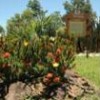
Beautiful Meadows Emerge from the Rubbish
Lush vegetation grows atop what was once garbage in the Don Juanito landfill in Colombia. Some 300 tons of waste are processed there each day in a sustainable way.Ecobreves – BRAZIL: Eco-Education Expands
Ninety-four percent of Brazilian schools include environmental education in their curriculum, as a regular course or in specific projects, according to the 2004 school census, which covered 215,000 schools.Ecobreves – CUBA: Bamboo In Vitro
A project to develop bamboo in Cuba aims to obtain and multiply "in vitro" four species useable as lumber in order to expand its use throughout this Caribbean island.Ecobreves – GUATEMALA: Protests Put the Brakes on Water Law
Guatemalan lawmakers have withdrawn a bill to establish the Water Law in the wake of protests staged in mid-September by thousands of peasant farmers in the western part of the country.Ecobreves – CHILE: No Risk of Drought
Heavy rains and snowfall over much of Chile, more than 70 percent above average and triggered by a prolonged, harsh winter, have ruled out any risk of drought and energy rationing that was proposed earlier this year.Ecobreves – VENEZUELA: Building on a Devastated Mountain
Venezuela is considering the construction of 30,000 housing units on 3,500 hectares in the north of Avila, the mountain that separates Caracas from the Caribbean Sea, and where flooding and mudslides left thousands dead in 1999, says Environment minister Jacqueline Faría.
Amazonian Paranoia
A broad sector of the Brazilian population believes that foreign powers aim to take over the Amazon region. Could their fears have a basis in reality?
Prison Is a Blow, but Doesn't Knock Down Peasant-Activist
"If they keep on killing trees, there won't be any more water. I'll continue fighting this. I'm not afraid," says Mexican peasant farmer Felipe Arreaga, released Sep. 15 after spending 10 months behind bars.
Canaima Pits Miners Against Environment
More than a thousand miners in the Venezuelan town of Las Claritas are demanding their right to work. The government is sending mixed signals about how it will quell the conflict, which has already left several people injured.HELP CHINA HELP ITSELF
As international leaders gathered at the United Nations in the middle of September to address plans to eradicate global poverty, the Bush administration notified Congress that it will withhold the U.S. contribution ($34 million) to the United Nations Population Fund (UNFPA) for the fourth consecutive year, writes Kerry Kennedy, founder of the Robert F. Kennedy Center for Human Rights. This aid provides vital services for the world\'s poorest women and girls, so why would the U.S. fail to help? Because, despite the U.S. State Department claims to the contrary, the administration asserts that the fund supports China\'s forced sterilization policy. The truth is, in order to change that policy, Washington should support the population fund, not cripple it. The U.S. government can leverage change. This is hard, because China is an important trading partner and increasingly holds more of the U.S. debt. So we also need to engage the international community. I take a back seat to no one in my horror at China\'s abuses in its one-child policy. To end them, we must support many efforts, and that includes the United Nations Population Fund. Elie Wiesel, who survived the Holocaust, said the opposite of love is not hate but indifference. We must no longer be indifferent to what is going on in China.Years Before Katrina's Environmental Costs Measured
Hurricane Katrina wiped out 52 square kilometers of coastal wetlands, and many barrier islands along the Gulf of Mexico coast disappeared. The environmental effects of this mega-storm will be felt for at least 15 years, say scientists.
An Island That Wants to Survive
Wind and sun produce 70 percent of the electricity in Foehr, an island in northern Germany in the North Sea that is fighting against rising sea levels.Ecobreves – COLOMBIA: Peasants Recuperate Forests
Some 3,000 peasant farming families in the northern Colombian department of Bolívar this month completed two years in the governmental program Guardabosques, eradicating illegal drug crops in the areas where they work.Ecobreves – BRAZIL: Mega-Pipeline Considered Nonviable
In the short term, the project to build a gas pipeline more than 8,000 km long, from Venezuela through Brazil and ending in Buenos Aires and Montevideo, is financially nonviable, Giuseppe Bacoccoli, of the Federal University of Rio de Janeiro, told Tierramérica.Ecobreves – GUATEMALA: Maya Monument Discovered
A group of Guatemalan archeologists discovered somewhat by luck a Maya monument that dates to the year 677, in the northern department of Petén.« Previous Page — Next Page »





The Week with IPS

NEXT STOP - SDGs
Tracking global progress towards a sustainable world
Tracking global progress towards a sustainable world
