Languages
Wednesday, November 11, 2026



News and Views from the Global South
Ecobreves – BRAZIL: Hydroelectric Dam Looms Over Endangered Species
The construction of the Barra Grande hydroelectric facility on the border of Brazil's Santa Catarina and Rio Grande do Sul states threatens two plant species that are on the verge of extinction, say environmental groups.Ecobreves – VENEZUELA: Documentary on Vast Wetlands
The documentary "Tierras de agua dulce" (Lands of Freshwater), about the vast Venezuelan wetlands of the plains along the Orinoco River, premiered July 9 "to show the potential we have and must take care of, as one of the 12 countries with greatest reserves of freshwater," the film's directory, Ana Cristina Henríquez, told Tierramérica.Ecobreves – BRAZIL: Mercury Threatens Amazonian Population
An environmental disaster is developing in the Tapajós River basin, in the eastern Brazilian Amazon, due to the mercury used by 'garimpeiros' (informal miners) to extract gold from the ore.Ecobreves – CUBA: Soap from an Oil Nut
Farming families in El Oro community, located in the semi-arid region of this eastern Cuban province, have been successful in making soap from the extracted from the Jatropha curcas tree (known locally as 'piñón botija'), a plant that also helps prevent erosion.
Crackdown Not Enough to Stop Deforestation
Entrepreneurs and activists are challenging the results of Operation Curupira, which in June struck at the mafias behind destruction of the Amazon forest. They charge that the government's sting operation also paralyzed the legal lumber industry.Ecobreves – BRAZIL: WTO to Hear Used Tire Dispute
Brazil is getting ready to defend its ban on imports of used tires from the European Union before an arbitration committee of the World Trade Organization (WTO) on July 20 in Geneva, Switzerland.Ecobreves – CHILE: Solar Energy for Rural Families
More than 3,000 families isolated in rural villages of Chile's Fourth Region, some 500 km north of the capital, will soon be supplied by energy from photovoltaic systems, in a project financed in part by the Inter-American Development Bank, with support from the United Nations Development Program (UNDP).SAYINGS
\'\'NEW YORK, MADRID, LONDON: TERRORISM STRIKES ANEW.\'\' This was the headline of many of the world\'s newspapers reporting the recent explosions in London. They didn\'t mention either Afghanistan or Iraq. Weren\'t --aren\'t-- the bombings there terrorist attacks as well, which in the case of Iraq occur daily? asks Eduardo Galeano, Uruguayan writer and journalist and author of \'\'The Open Veins of Latin America\'\' and \'\'Memories of Fire\'\'. In this article, Galeano writes that the military industry needs to produce fear to justify its existence. It is a vicious circle: the world becomes a slaughterhouse which becomes a madhouse which becomes a slaughterhouse ... Iraq, bombarded, occupied, humiliated, becomes the preeminent school for crime of our day. Its invaders, who call themselves liberators, have set up there the world\'s most prolific nursery of terrorists. \'\'The Devil provides the weapons.\'\' At last a true saying. God couldn\'t be such a bastard. It must be the Devil that provides the weapons, or at least the weapons of mass destruction, the real ones, the ones Iraq didn\'t have and that are ripping the world apart: the bombardment of lies from the factories of public opinion; the chemical weapons of consumer society that are maddening the climate and polluting the air; the poison gas from the factories of fear that make us accept the unacceptable and turn indignity into a feature of destiny; the deadly impunity of the serial killers become heads of state; the double-edged swords of the major powers which multiply in tandem poverty and arguments against poverty while they sow anti-personnel mines and sell prostheses, and rain from the sky bombs and contracts for the reconstruction of the countries they annihilate.AN UNSTABLE WORLD IN SEARCH OF WORLD LEADERSHIP
The statement issued by the G8 on the 8th July illuminates the many blind spots, the deep divisions, the lack of ambition and above all, the failure of world leadership by eight presidents and prime ministers. Their blind spots have grown to the size of moats; their divisions have deepened; and their ambitions for climate change and for Africa have been slashed to fit in with the apathy and torpor of US oil companies and high-worth taxpayers. The question we must pose is this: do these men deserve the accolade - “world leaders”? , writes Ann Pettifor, director of Advocacy International and editor of “Real World Economic Outlook”. It is in relation to Africa that these eight men have most clearly illuminated the feebleness of their ambition, and the weakness of their leadership. The talk was of increasing aid to Africa by $50 billion in 2006 to tackle the plague that is AIDS, to replace the past stripping of Africa's assets, and to address the impoverishment of that continent. Instead, after a long statement hectoring African leaders on “good governance” and “promoting growth” the eight leaders committed no new money to Africa in 2006. Instead they simply reiterated past commitments to increase aid to Africa by $25 billion in five years time. As UK NGOs have noted, only £10 billion of this commitment will be new money in 2010 far less than the additional $50 billion in 2006 that the social movement “Make Poverty History” had campaigned for.
Natural Gas Drilling Takes Toll in Bolivian Sierra
Environmentalists denounce threats to the Aguaragüe mountain region in Bolivia, the second leading South American country in natural gas reserves.
Centuries-Old Mine Struggles to Save Its Surroundings
Experts are working to rehabilitate the ecosystem damaged by a mine that operated in Cuba for nearly five centuries.
The Rich Herb of the Guaraní
Small farmers in Paraguay make the most of a sweet herb used by the Tupí Guaraní indigenous community. They hope to plant 5,000 hectares of this naturally powerful sweetener in 2007.Ecobreves – MEXICO: Taking the Planet's Pulse
A high altitude climate observation center will begin operating in 2006 in Mexico, the first of its type in the Mesoamerican and Caribbean regions. Located at more than 4,000 meters above sea level, it will measure, among other things, levels of ozone and carbon dioxide, gases that are altering the planet's health.Ecobreves – ARGENTINA: Alarm over Uranium Accident
Residents of the mountain resort city of San Carlos de Bariloche, in Argentina's southern Patagonia, expressed to Tierramérica their concern about an accident involving uranium at a plant near the city.Ecobreves – GUATEMALA: Pollution Persists in Lake Atitlán
Guatemala's Lake Atitlán, located 140 km west of the capital and considered the country's most beautiful, is contaminated with agrochemicals and human waste from nearby towns, restaurants and hotels.Ecobreves – AMAZON: Agro-Forest Management Agreement
The promotion of agroforestry will be the economic strategy to improve the living standards of the population and protect the biodiversity of the Amazon and three other regions with rain forests, according to an agreement signed Jun. 24 in Washington by the World Agroforestry Center (ICRAF) and Conservation International.THE REAL THREAT IS NUCLEAR TERRORISM
If the world continues on its current course, the terrorist bombs in London should be considered a mere foretaste of far worse future catastrophes, writes Dietrich Fischer, Academic Director of the European University Centre for Peace Studies in Stadtschlaining, Austria, and a member of TRANSCEND, a peace and development network. As long as the major powers insist on maintaining nuclear weapons, they cannot expect to prevent other countries and terrorist organisations from acquiring and using them. Those who still believe in the fairy tale of \"deterrence theory\" better wake up to the age of suicide bombers. Ee need a vastly more open world, where all nuclear weapons are verifiably destroyed and the manufacturing of new ones cannot be hidden. The IAEA can now inspect only sites that member countries voluntarily place under its supervision; such an \"inspection\" is meaningless. If we cling to obsolete ways of thinking --that threatening others will make us safe-- we face extinction as a human species. Is getting rid of all nuclear weapons a realistic prospect? Certainly more realistic than waiting until they are used. Some have argued that we cannot disinvent nuclear weapons and therefore will have to live with them as long as civilisation exists. But nobody disinvented cannibalism either; we simply learned to abhor it.Ecobreves – BRAZIL: Studying the Flora of the Amazon
Sustainable economic exploitation of the riches of Brazil's forests gained a new tool with the book "Useful Fruits and Plants in Amazonian Life", a collection of scientific and traditional knowledge of 32 native species.Ecobreves – GUATEMALA: Regulations for Gas Emissions
Guatemala's Environment and Natural Resources Ministry is drawing up regulations for gas emissions -- and could take effect before the end of the year.
Biotech Opens Doors to Andean Development
Colombia, Peru and Venezuela are the Andean vanguard in exploiting biodiversity for biotechnology, a global market that moves more than 90 billion dollars annually.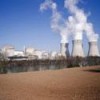
Dangerous Summer for Nuclear Power Plants
A wave of simmering heat could force some of France's 58 nuclear reactors to shut down. A warning has already been declared due to recent high temperatures.« Previous Page — Next Page »





The Week with IPS

NEXT STOP - SDGs
Tracking global progress towards a sustainable world
Tracking global progress towards a sustainable world
