Languages
Wednesday, November 11, 2026



News and Views from the Global South
Ecobreves – PERU: President Blocks Environmental Law
Peruvian President Alejandro Toledo's rejection of the new General Law on the Environment, approved by Congress, has opened a debate on the priorities of the population's quality of life and the conditions that most benefit economic growth.Ecobreves – ARGENTINA: A Move for Responsible Forest Management
The international Forest Stewardship Council and the Argentine Fundación Vida Silvestre (Wildlife Foundation) are calling on government and non-governmental organizations to draft standards for managing forests.Ecobreves – GUATEMALA: Looking for Energy in the Trash
Municipal authorities in the Guatemalan capital began tests to calculate the amount of gas emanating from the city's landfill, with hopes of using it as an energy source for nearby residents.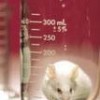
Life in the Lab Can Be Cruel
Millions of mice, rats, rabbits and monkeys are sacrificed in laboratory experiments each year to test medications, cosmetics and other products. Animal rights advocates demand an end to the practice.
Mercury, Another Threat to the Amazon
Informal gold mining has led to more than 2,000 tons of the dangerous metal mercury being dumped into the Brazilian environment. The eight countries of the Amazon Basin will present a plan of action to protect the region in September.Ecobreves – COLOMBIA: Port a Threat to Whales
Colombian ecologists are fighting the proposed deep-water port in the western Málaga Bay and the Gorgona and Tribugá islands, where in the next few weeks some 800 humpback whales (Megaptera novaeangliae) will begin to gather as part of their annual migration pattern.Ecobreves – BRAZIL: More Contamination, Fewer Males
Urban pollution contributes to the gender imbalance of the population, to the detriment of males, as do violence and the longevity of females.
Hunting Out of Control
Some 7,000 foreign hunters visit Argentina each year, setting their crosshairs on deer, antelope or puma. Controls for protected species are scarce.
The Earth Trembles in Cuba Too
Santiago, Cuba, founded in 1515, is one of the cities at greatest seismic risk on this Caribbean island. Quake-proof standards guide the construction of new housing.Ecobreves – BRAZIL: Whale Watching on the Rise
The July-November whale watching season has begun in Brazil, a tourist activity that is in its nascent stages but quickly growing. This year the northeastern state of Bahia will increase the number of embarkation points from three to five, in hopes of doubling the number of people going out in boats to see whales like the humpback (Megaptera novaeangliae), which gather there to reproduce.Ecobreves – CHILE: Police Protect Biodiversity
The Chilean National Environment Commission, CONAMA, is training the militarized police, known here as Carabineros, to protect the country's biodiversity.Ecobreves – CUBA: Turtles the New Attraction
A development plan in the village of Cocodrilo, on the southwestern Cuban Isla de la Juventud (Isle of Youth), aims to draw ecotourists to one of the most important projects for hawksbill turtle (Eretmochelys imbricata) management in the Caribbean.Ecobreves – GUATEMALA: The Capital Turns into a Dump
In the Guatemalan capital some 2,300 tons arrive each day at one huge central dump, according to a study conducted for the city government by the company Guatemalan Environmental Engineering Services.Ecobreves – HONDURAS: Women Build Eco-Housing
With no need for iron bars for reinforcement, or cement, women in the village of Campo Cielo, in the outskirts of the Honduran capital, began four months ago to build ecological houses with sand, soil and plastic bottles -- and they are proud of what they have accomplished.A CHINESE APPROACH TO BEATING POVERTY
Given the recent G-8 summit\'s focus on reducing poverty in Africa, it is worth calling attention to a successful anti-poverty programme in China, write Fred Dubee, a long-time advisor to the UN Global Compact and a graduate of the European University Centre, for Peace Studies (EPU) in Stadtschlaining, Austria, and Dietrich Fischer, Academic Director of EPU. Both are members of TRANSCEND, a peace and development network. In 1994, the China Society for the Promotion of the Guangcai (glory) Programme was founded by a group of ten concerned, dedicated, and brilliant young Chinese entrepreneurs, the authors write in this article. In contrast to other poverty relief projects, the Guangcai Programme encourages social responsibility among private entrepreneurs. It facilitates investment in sustainable development projects in China\'s less-developed areas, thus bringing to disadvantaged groups the fruits of economic development. When Deng Xiaoping changed the laws in China in 1994 to encourage private enterprise, they knew they would become very successful, because they had good business plans, and opportunities abounded. But they also realized that if they did not share their success, they would arouse the envy of the public and local officials. For this reason, and because they wanted to help their fellow citizens, they set out to create a multitude of small and medium enterprises to help generate jobs and income, especially in the poorer regions of China.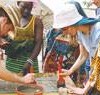
Tourism with a Social Conscience Gains Popularity
Some 15,000 people travel from Italy each year to experience first-hand the realities of communities in the developing South or in Eastern Europe.
Scientist Condemns Mexico's Environmental “Double Standard”
It is easy to be the first to ratify international environmental treaties. It is quite another thing to effectively control air pollution, says Mexican scientist Luis Roberto Acosta.Ecobreves – ARGENTINA: Town Says No to Pesticide Storage
Residents of the town of Bouwer, in the central Argentine province of Córdoba, are staging street protests against a temporary storage site for 12 tons of DDC (dichloro diphenyl trichloroethane) and other highly toxic pesticides.Ecobreves – BRAZIL: Amazon Deforestation on Decline
A sharp decline in deforestation in the Brazilian Amazon in June -- 95 percent in comparison with the same month in 2004 (plummeting from 10,017 to 531 square km) -- is raising hopes for success in fighting the phenomenon.Ecobreves – PERU: Critics Target Inter-Ocean Highway
The construction of a highway that would connect Brazil's Atlantic coast with Peru's Pacific shores is coming under fire for its cost and environmental impacts.Ecobreves – COLOMBIA: Congress to Debate Water Management
The Colombian Congress will discuss in its sessions, begun July 20, the bill on Integrated Management of Hydric Resources, also known as the Water Law, which seeks to ensure distribution and supply of the essential liquid.« Previous Page — Next Page »





The Week with IPS

NEXT STOP - SDGs
Tracking global progress towards a sustainable world
Tracking global progress towards a sustainable world
