Languages
Wednesday, November 11, 2026



News and Views from the Global South
Low Marks in Achieving 'Green' Goals
Latin America and the Caribbean will continue to lag behind as long as they fail to recognize that sustainable management of their natural capital can be good business, says Ricardo Sánchez, regional director of the United Nations Environment Program.
Biological Clean-Up for Oil Spills
A Cuban bio-product cleans up marine oil spills in just 30 days. Some five million barrels of fuel are moved each day through the Caribbean waters in tanker ships.Ecobreves – VENEZUELA: Compensation for Families on Overflowing Lake
More than a thousand families who lost their homes on the shores of the flooded Lake Valencia, Venezuela's second largest, are receiving compensation from the government and will have to rebuild their lives elsewhere.Ecobreves – CUBA: Polluting Gas Replaced
A program for curbing the use of ozone-depleting substances in the eastern Cuban province of Las Tunas has replaced the contaminating gas freon in 2,100 refrigerators in the first seven months of this year.Ecobreves – GUATEMALA: Biodiesel Made from Nut Oil
The Guatemalan company Octagon planted 2,500 hectares of 'piñón', or physic nut (Jatropha curcas L.), from which oil can be extracted for use as biodiesel, a fuel that is cheaper and less polluting than those derived from petroleum.Ecobreves – CHILE: State TV Runs Ads for Controversial Mining Company
Environmental and citizen groups protested last week outside the state-run Televisión Nacional de Chile (TVN) for broadcasting advertisement for a Canadian mining company that aims to remove three glaciers in the northern Chilean Andes to extract gold, silver and copper.Ecobreves – BRAZIL: City of Natal Promotes Recycling
The first National Congress for Sustainable Management of Solid Waste, to take place Sep. 1-2 in the northeastern Brazilian city of Natal, will focus on garbage recycling projects that can be financed through the Kyoto Protocol on climate change.
Untreated Wastewater Making the Seas Sick
Between 80 and 90 percent of wastewater dumped into the seas of Latin America is untreated. And experts say there are few efforts to prevent the practice.Ecobreves – BRAZIL: Testing a Method to Prevent Evaporation
A powder sprinkled over water, creating a thin film, could reduce evaporation, say scientists who are working on ways to fight water shortages. Evaporation is a problem in Brazil's semi-arid Northeast region, where 75 percent of the water in its reservoirs is lost to this natural phenomenon.Ecobreves – GUATEMALA: A Call to Protect Cloud Forest
Local and national authorities are calling on the Guatemalan Congress to declare El Amay mountain, in the northern department of Quiché, a protected area, because it is one of the country's few cloud forests and is habitat for symbolic Guatemalan species like the quetzal bird.Ecobreves – COLOMBIA: Ban on Tuna Fishing
The Colombian Institute of Rural Development, INCODER, has banned tuna boats from fishing in the Pacific Ocean until Sep. 12. The measure is intended to protect the endangered yellowfin (Thunnus albacares) and bigeye (Thunnus obesus) tuna species.Ecobreves – MEXICO: Transgenic Maize Report Feeds Doubts
Activists received with skepticism a scientific report released this month with great fanfare that assures that no trace of transgenic maize was found in a specific area of Mexico, a country where the presence of genetically modified corn has been recorded since 2001.
Indigenous Lands Turn to Desert
Desertification affects 45 percent of Bolivian territory, claiming cropland and pastures that provide sustenance to many indigenous groups.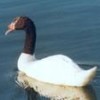
Factory Reopens After Charges of Killing Swans
In late August the Chilean cellulose plant blamed for the death of some 500 black-necked swans will begin operating once again. Local indigenous and fishing communities oppose the reopening.Unstoppable Fires in Europe's Forests
One-hundred thousand hectares of forests have been destroyed by fire in Spain, more than 70,000 hectares in Portugal, and around 15,000 in France so far this European summer.Ecobreves – CUBA: An Education in Sunshine
A solar research center created in the eastern Cuban province of Granma aims to instill in youth attitudes of caring for natural resources.Ecobreves – BRAZIL: Teeth from Stem Cells
In around five years the people of the world could have the option of a "third set of teeth," formed from stem cells, if resources can be found for experiments, says Brazil's Silvio Dualibi, researcher with the Federal University of Sao Paulo.Ecobreves – GUATEMALA: Mayan Relics Discovered
Archeologists led by Jonathan Kaplan, of the United States, discovered on Guatemala's southern coast a statue and a building with a 400-meter front -- part of a Mayan city corresponding to the late pre-classic period, 300 to 200 years B.C.Ecobreves – CHILE: Environmentalists Fight Government Secrets
The Chilean government has pledged to five environmental groups to promote a constitutional reform that would eliminate the obstacles to information held by public entities.Ecobreves – VENEZUELA: New Evidence of Mercury Contamination
A study of 209 artisanal miners and their families in El Callao, a town in southeast Venezuela along the Yuruari River, a source of gold and diamonds, found that 105 of them had toxic levels of mercury from inhaling the vapors of the heavy metal.Ecobreves – HONDURAS: Communities Unite to Fight Forest Pest
Communities of the Río Plátano biosphere, in the northeastern departments of Olancho and Mosquitia, Honduras, have joined forces and in less than two months staved off four attacks by the northern pine weevil plague in the pine forest.« Previous Page — Next Page »





The Week with IPS

NEXT STOP - SDGs
Tracking global progress towards a sustainable world
Tracking global progress towards a sustainable world
