
Friday, September 25, 2026



News and Views from the Global South

Low Marks in Achieving 'Green' Goals
- Latin America and the Caribbean will continue to lag behind as long as they fail to recognize that sustainable management of their natural capital can be good business, says Ricardo Sánchez, regional director of the United Nations Environment Program.
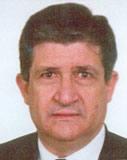
Ricardo Sánchez. -
They lag behind because the region continues to link “economic growth to environmental deterioration,” and fails to recognize “the value of natural capital,” said Ricardo Sánchez, director of the Latin American office of the United Nations Environment Program (UNEP), in a dialogue with Tierramérica.
The environmental situation of the region, which concentrates seven of the world's 25 richest ecosystems, is not very encouraging. Deforestation, which cleared 46.7 million hectares between 1990 and 2000, advances at a rate of 0.5 percent a year — twice the global average for destruction of forests. Just two countries in the region show progress in reversing this trend, there is no improvement in seven, and 24 countries continue to worsen.
Of the 178 “eco-regions” existing in Latin America and the Caribbean, 77 percent are threatened, and three-quarters of the genetic diversity of farm crops has been lost. In the region's seas, the panorama is just as bad, with over-exploitation of resources and degradation of ecosystems.
Only eight of the region's 33 countries show progress in the use of efficient energy alternatives, and just four have reduced their emissions of carbon dioxide, the leading culprit in the greenhouse effect.
This assessment comes from the UN's own agencies, and was presented in Mexico just two weeks before a global summit gets under way in New York, Sep. 14-16, to evaluate efforts towards the Millennium Development Goals (MDGs).
TIERRAMERICA: The region will not be arriving in New York with good marks on the environment. What happened?
SANCHEZ: Although the region made great progress on laws about the issue and recognizes the environment as a basic right of our population, and although civil society and the media have an increasingly louder voice, the inclusion of the environmental dimension in all sectors remains a pending matter. The environment is not just one sector; it is a variable that should feed all sectors.
– Does the environmental variable continue to be on the periphery of development policies in Latin America and the Caribbean? – Yes, and it must be taken into consideration that the environment is not a fancy box that is put on when all the other problems have been resolved. On the contrary, the environment is the cornerstone on which the MDGs rise or fall.
– Do we need to revise the current development model? – Yes, it must be revised. Progress isn't being made at the desired pace, because the region continues to link economic growth to environmental deterioration. Our economies continue to be based on the intensive use of natural resources. That has to change to be able to grow without continuing to destroy the environment.
– How can that be achieved? – Recognizing that sustainable management of natural capital has a greater impact on the economy than its intensive exploitation: the forest produces more generating water, sustaining biodiversity and capturing carbon than through its lumber and firewood. The mangrove forest, for example, allows us to save a great deal of money by protecting a country's coastline from the devastating effects of a hurricane. There are already many examples of how the environment is good business: waste treatment, for example. Only 23 percent of the region's garbage is treated, and that is where there is raw material to be recovered and recycled, organic material that can be used to improve the soil and also to generate energy. That is where there is room for businesses that can generate employment, at the same time improving the environment in which people carry out their activities. And there is also ecotourism.
– But there are also external conditions, like protectionist trade, which seem to prop up this not-so-sustainable model of development. Is that the way it is? – The MDGs should be read in reverse order, from eight (which is about international development partnerships) to one (about reducing poverty), because the global partnership for development is the starting point for obtaining resources and achieving the goals. It would be very difficult to do so if we don't make progress in a scenario of legitimate trade, based on non-discriminatory rules. There are billions of dollars a day in subsidies for the agricultural production in the developed world that limit market access for the products from our region.
– And what about development assistance? – The eighth goal also calls for attending to the special needs of the least developed countries. We must achieve the goal of 0.7 percent (gross domestic product) for official aid for development, and increase it. Now it barely reaches 0.25 percent in Latin America.
 Print
|
Print
|




