Languages
Wednesday, November 11, 2026



News and Views from the Global South
BIODIVERSITY ESSENTIAL TO ELIMINATING HUNGER
World Food Day, October 16, presents an occasion to reflect on the nature and extent of hunger in the world today, which affects more than 840 million people, writes Jacques Diouf, Director General of the UN Food and Agricultural Organisation (FAO). In this article, Diouf writes that this year FAO has decided to stress the importance of biodiversity for the world food supply, present and future. What this means is that the conservation of the varieties of plants and animals that we have today is fundamental to preserving an array of essential natural processes, from pollenisation by insects to the regeneration of soil with microorganisms. It also means that we must create the conditions for plants and animals to be better able resist blights and disease. The reduction of biodiversity seriously jeopardises world food security. The food supply is growing ever more vulnerable, and opportunities for growth and innovation are growing fewer in agriculture, the capacity of which to adopt to environmental changes is weakening.THE NEW URUGUAY
Uruguay has passed through one of the most dire crises of its history, which called into question the values on which our society rests and was painstakingly built by previous generations, writes Jorge Larranaga, National Party candidate for president of Uruguay. In this article for IPS, Larranaga writes that the priorities of the next government must be job creation, decentralisation of the government bureaucracy, rejuvenation of the country\'s system of production, education, regional integration, and participation in the international arena. Four principles will guide a National Party administration: a reaffirmation of the principle of equal opportunity for all Uruguayans; making a top priority the satisfaction of the needs of the least well-off sectors of the society; the restoration of intergenerational solidarity; and transparency and honesty in all public service. A collective project of this nature must include all Uruguayans and be lead by an organisation that has true credibility. The National Party, which was founded with the country itself and represents, and has always represented, the true modernisation of Uruguay, has the credentials to realise the shared hopes of the people. I know that I am up to this daunting task.Ecobreves – COLOMBIA: Eco-Certificates for Flower Growers
Nine Colombian flower-growing companies received ''Florverde'' certification from SGS (Société Générale de Surveillance, an international quality and testing company), for their contributions to protecting the environment and improving the working conditions of their employees.Ecobreves – MEXICO: Demands for Release of Maize Report
The environmental watchdog group Greenpeace will exhaust its legal options to force the Mexican government to release a report on contamination of traditional corn crops with pollen from genetically modified maize. The study was prepared by the North American Commission for Environmental Cooperation (CEC).Ecobreves – PERU: River Tube Proposed
The contamination of the Rímac River, which supplies water to the Peruvian capital, can be reversed by running it through a tube of at least 70 km, says engineer Nicolás Morales in a proposal to the authorities.Ecobreves – GUATEMALA: Aquifers Exhausted
The aquifers that provide water to around two million people in the Guatemalan capital are running dry, say assessors from Empagua, the municipal water agency.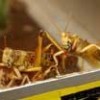
Biblical Plague Thrashes Africa
Millions of locusts are devouring vegetables, grains and even clothing in nine African countries. The United Nations Food and Agriculture Organization fears that the plague -- the worst in 15 years -- will extend even farther.'The Kyoto Protocol is just a first step'
Tierramérica spoke with Joke Waller-Hunter, executive secretary of the United Nations Framework Convention on Climate Change and in charge of organizing the upcoming conference of parties to that agreement, to take place in December in Buenos Aires.Fires Burn Out of Control
The residents of Santa Cruz, Bolivia are suffering the effects of air pollution caused by more than 2,000 forest fires that were started to clear land for crops and cattle.
Ecobreves – A Transgenic Sunflower Is Born: ARGENTINA
Scientists from Argentina's Universidad del Litoral have isolated a gene that, once introduced into the sunflower, helps this crop tolerate extreme drought.Ecobreves – CHILE: Sculptures Denounce Impacts of Pesticides
Small sculptures made of clay and silicone, representing deformed fetuses inside glass jars, have caused a stir in Chile. They are part of a unique protest of the effects of indiscriminate use of pesticides on crops.Ecobreves – CUBA: Electrical Weeds
The 'marabú' (Dichrostachys cinarea), a weed that has proved difficult to eradicate from fields in Cuba, could become the raw material for generating electricity, through a project that is the brainchild of experts from the University of Camagüey.Ecobreves – GUATEMALA: A Vote Against Whales?
Environmental organizations, led by the international watchdog Greenpeace, denounced that Guatemala would vote in favor of reducing protection of whales, especially the hunting of minke whales.Ecobreves – HONDURAS: Women to Export Bio-Pesticides
In the Marcala region, in the central Honduran department of La Paz, a group of women is preparing to export biological pesticides to other Central American countries and to Europe.
Bring Out the Anti-Hurricane Artillery
Within five years there may be methods available to manipulate and reduce the devastating impacts of hurricanes like Ivan, Frances and Jeanne, which have hit the Caribbean in recent weeks.Brazilian Heartthrob Goes Organic
Marcos Palmeira, a famous Brazilian film and television actor, spoke with Tierramérica about his experience in sustainable agriculture and what he thinks of genetically modified crops.Ecobreves – VENEZUELA: Measuring Air Pollutants
The Venezuelan Environment Ministry is testing vehicles traveling on one of the main access routes to Caracas to assess the emissions of contaminating gases.Ecobreves – BRAZIL: Eyes on the Cerrado Ecosystem
The Cerrado, a type of savannah that is the second largest Brazilian biome, surpassed only by the Amazon, has finally become the center of attention of concerned government officials and environmentalists.
The Return of the Ozone Layer
The Montreal Protocol on ozone-depleting substances is making verifiable progress. Future generations may be able to enjoy fun in the sun with fewer threats to their health, predict some experts.
Faith, Too, Affects the Environment
Theologians and academics say the world's major religions have failed to provide leadership in defending nature.Ecobreves – COLOMBIA: Biological Vaccine for Cattle
The Colombian agricultural research agency CORPOICA last week released the first biological vaccine developed in this country to fight 'ranillas', a blood disease spread amongst cattle by flies and ticks.« Previous Page — Next Page »





The Week with IPS

NEXT STOP - SDGs
Tracking global progress towards a sustainable world
Tracking global progress towards a sustainable world
