Languages
Thursday, November 12, 2026



News and Views from the Global South
Fight Against Slavery
2004 is the International Year to Commemorate the Struggle Against Slavery and its Abolition. A half-century since its international prohibition, new forms of slavery persist around the world today.
Ecobreves – UNITED STATES: Campaign to Save the Hubble
Scientists responsible for the Hubble space telescope are seeking a reversal of the decision by NASA (U.S. National Aeronautics and Space Administration) to cancel maintenance missions to prolong the useful life of the telescope-satellite by four to five years.H2O BUSINESS TURNS PUBLIC WATER INTO PRIVATE WINDFALL
In a seemingly unquenchable thirst for new wellsprings of profit, multinational food and drink industry giants are rapidly draining public water supplies worldwide into a billion-dollar bottled water industry, writes Mark Sommer, director of the US-based Mainstream Media Project and host of award-winning internationally-syndicated radio program \'\'A World of Possibilities\'\' The issue, Sommer writes in this analysis, is whether industry giants are drowning in profits at public expense. When there are effectively no rules and no enforcement, when the profit margin puts drug dealers to shame, and an inalienable common resource is privatized at public expense, then we must reconsider the very basis of the enterprise. Pure fresh water is growing ever more scarce as population and pollution accelerate. But the most effective response is not to sell the last liters like fine wines to the fortunate few but to upgrade public water systems worldwide, at far lower individual and aggregate cost, so no one needs to resort to \'\'private\'\' water.A FAIR GLOBALISATION FOR ALL: IT CAN BE DONE
The world stands at a historic moment of decision, write President of Tanzania Benjamin William Mkapa and President of Finland Tarja Halonen, Co-Chairs of the World Commission on the Social Dimension of Globalisation. In this analysis, the authors write that it is in our power to take a correct turn, which would make the world safer, fair, ethical, inclusive, and prosperous for the majority, not just for a few, both within countries and between countries. But it is also in our power to prevaricate, to ignore the road signs, and let the world slide into further political turbulence, conflict, and war. The authors propose a process by which the benefits of globalisation can be enjoyed at all levels, beginning with empowered local communities and improved national governance. Unfairness currently characterises the system. Equal rules for unequal players ensure unequal outcomes. Some rules, such as on farm and textile and trade, specifically disadvantage developing countries. The lack of a level international playing field is deepening mistrust and perpetuating social divisions. The real question is not whether globalisation can work, but how. The positive must be enhanced, the negative minimised. Only when everyone has a stake can the prosperity we expect from globalisation be sustainable. Only then will our collective peaceful future be founded on solid ground.THE CHURCH, VIOLENCE, AND BASQUE SEPARATISM
ETA, the Basque separatist group, has killed more than a thousand people, from businessmen, functionaries, and professionals to children, but not a single priest. Does ETA perhaps have some debt to the church, or fear it? writes Jose Bono, president of the autonomous community of Castilla-La Mancha. In this article, Bono notes the predominance of nationalism in sectors of the church hierarchy and the Basque clergy, which raises new questions about the relation between power and religion, not only for the church prelates but the parishioners as well. In the Basque Country, many citizens have lost the freedoms that they had won. Though it is difficult to state with precision when this happened, the cause is clear: the terrorism of the ETA. The loss was gradual and progressive, as an unobserved sowing of hatred and destruction brought an ever greater harvest of fear. What the Basque region needs is to end ETA violence and guarantee democracy, which requires not only politics but the ethics necessary to a pluralist society, which Basque society is and must remain. If the church (the whole church, not just the Spanish or the Basque, the clergy or the lay) wants to play a role in this transition, based on an ethic of democratic coexistence --which does not exist today-- it must broaden its thinking and historical perspective on its own relation to higher powers and on violence.US: DEBT RELIEF FOR IRAQ BUT NOT DESTITUTE ETHIOPIA.
The US has been quick to call for cancellation of the odious debts of Iraq largely because it will cost the US very little and free up resources for US projects. Yet at the same time the US is blocking debt cancellation for one of the poorest country in the world, Ethiopia, writes Ann Pettifor, director of Jubilee Research at the New Economics Foundation (nef) and editor of Real World Economic Outlook. This is a glaring double standard, writes Pettifor in this article. Additional relief for Ethiopia is being delayed and blocked by the US with the tacit support of Germany and Japan as US and German creditors have gone to great lengths to obtain international legitimacy for the cancellation of Iraq\'s debt. The international community must honour commitments made to the millions of Jubilee 2000 supporters worldwide, in Cologne in June 1999. Led by Chancellor Schroder, world leaders promised to deepen and broaden debt relief for countries like Ethiopia. Above all the hypocrisy of their diverging approaches to Iraq and Ethiopia must be thwarted.LIQUID GOLD RUSH: PRIVATISING GLOBAL WATER RESOURCES
The issue of water and who controls it has suddenly taken centre stage in world affairs, writes Mark Sommer, director of the US-based Mainstream Media Project and hosts of \'\'A World of Possibilities\'\', a syndicated radio programme. Nearly a billion of the world\'s six billion people lack dependable access to affordable drinking water, and this figure is expected to triple within the next 25 years. Several trends are contributing to this growing scarcity: increasing use by water- intensive industries, inefficient irrigation, desertification, global warming, and chemical and organic pollution. At the heart of the debate over the future of fresh water is whether it is a commodity like oil or gas, to be bought or sold on the open market to the highest bidder, or a human right, a resource so essential that a minimum allowance should be provided to every person as an acceptance of his or her right of survival. But there is no substitute for water. To deprive up to a third of the planet\'s population access to safe and affordable water is to sentence that portion of humanity to slow death by deprivation and disease.A WORLD OF DISORDER
The international crisis generated by the US invasion of Iraq captures the tension in world politics between the \'\'international community\'\' as represented in the UN, and the role of power and its attendant interests, writes Kingsley Moghalu, an international lawyer and head of resource mobilisation and global partnerships at the Global Fund to Fight AIDS, Tuberculosis and Malaria in Geneva, Switzerland. In this analysis, the author argues that the problem with a unipolar world is that international law --a significant component in the maintenance of order in world politics-- can become a major casualty. In such a world, international law can be violated with little direct consequence to the hegemonic power. Far from consolidating order, such use of power, even in the name of freedom, human rights, and liberal democracy, will rather increase disorder. A certain degree of anarchy will always exist in an international society based on sovereign states and mobile non-state actors that pursue frequently divergent interests. We must manage that anarchy by addressing the fundamental issues that exacerbate it. The way forward is not the balance of power of bye-gone years but a balance of approach in which the world\'s hegemon has not only special circumstances but special responsibilities of global leadership.Ecobreves – GUATEMALA: Dam Threatens Dozens of Families
The inundation caused by a dam in Guatemala has already claimed the life of one local resident, and threatens 58 families, who fear floods in the village of Los Cerritos, 125 km south of the capital.Ecobreves – HONDURAS: Effort for Air Quality Control
The municipal government has installed four air quality control boxes throughout the Honduran capital, the city with highest rates of air pollution in Central America.Ecobreves – BRAZIL: Forest Fires Here Hurt the Environment Elsewhere
The gases and particulates generated by forest fires in the Brazilian Amazon cause climate changes more than 4,000 km away, says Paulo Eduardo Artaxo Neto, physics professor at the University of Sao Paulo.Ecobreves – VENEZUELA: Free Maggie?
Venezuelan authorities are preparing to release Maggie the dolphin, a young female of the Delphinus capensis family, who beached on the coast of Margarita Island in May 2003.Ecobreves – CHILE: Warning: Fake Sunscreens
Chile's Institute of Public Health (ISP) has appealed to consumers to help detect sunscreen lotions sold in the capital that do not meet skin protection requirements.Ecobreves – CUBA: Recovering Ecosystem Hurt by Copper Mining
Cuban experts are working a project to recuperate an ecosystem damaged by several centuries of copper exploitation in Santiago de Cuba, 900 km east of Havana.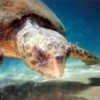
Sea Turtles Face Deadly Beaches
Thousands of sea turtles continue to be hacked or beaten to death in Latin America. The seven species that lay their eggs on the region's beaches all face extinction.A Nation Runs on Natural Gas
Brazil is beginning construction of a 5,000-km pipeline to transport natural gas imported from Bolivia. By the end of the decade, this fossil fuel will cover 15 percent of the country's energy consumption.
A Passport to the Universe
The Papalote Children's Museum in Mexico will inaugurate the world's largest digital dome on Feb. 3, with an interactive spectacle that will transport audiences to the farthest reaches of the cosmos, 15 billion light-years away.World Economic Forum
Amidst criticisms from civil society groups, more than a thousand executives from the world's biggest corporations, national leaders and economists gathered in Davos, Switzerland for the annual meeting of the World Economic Forum, a defender of the current globalization process. Just days early, in Mumbai, India, some 100,000 people gathered to assert that "another world is possible."Ecobreves – COLOMBIA: More Palm Oil, Less Coca
The presidential advisory council for Plan Colombia, an anti-drugs initiative, approved two projects for growing palm oil trees in the department of Norte de Santander, aimed at replacing illegal drug crops and to benefit 714 rural families.Ecobreves – PERU:: Recycling Fish Waste
A Peruvian farming community on the Pacific coast, 800 km north of Lima, is manufacturing a new type of fertilizer, using fish remains and other waste, previously dumped at sea by the local fisherfolk.Ecobreves – UNITED STATES: Politics Behind Space Program
The announcement that the United States will establish a lunar space station by 2020 and use it as a base to reach Mars is seen by critics as a political move by President George W. Bush to boost his chances for re-election in November.« Previous Page — Next Page »





The Week with IPS

NEXT STOP - SDGs
Tracking global progress towards a sustainable world
Tracking global progress towards a sustainable world
