Languages
Thursday, November 12, 2026



News and Views from the Global South
Ecobreves – GUATEMALA: Training Eco-Tourism and Natural Resources Experts
The Ministry of Education of Guatemala will inaugurate 23 technology institutes to train experts in areas including ecological tourism, water resources management and forestry.Ecobreves – HONDURAS: Protection for Cayos Cochinos
Honduran environmentalists hope to promote scientific research and eco-tourism in the bay of Cayos Cochinos, on the Caribbean Sea, declared a natural marine monument in December.Ecobreves – COSTA RICA: Kids Take a Closer Look at Bats
More than 550 primary school children from the Costa Rican capital, from Sarapiquí, in the north, and from Guanacaste, in the northeast, will study the lives of bats through a program to begin in February.Ecobreves – NICARAGUA: Producing Organic Beef
Ranchers and slaughterhouses in Nicaragua are promoting the production of organic beef, low in fat and cholesterol, from cattle that are fed only natural grasses.Ecobreves – COLOMBIA: More Palm Oil, Less Coca
The presidential advisory council for Plan Colombia, an anti-drugs initiative, approved two projects for growing palm oil trees in the department of Norte de Santander, aimed at replacing illegal drug crops and to benefit 714 rural families.Ecobreves – PERU:: Recycling Fish Waste
A Peruvian farming community on the Pacific coast, 800 km north of Lima, is manufacturing a new type of fertilizer, using fish remains and other waste, previously dumped at sea by the local fisherfolk.Ecobreves – UNITED STATES: Politics Behind Space Program
The announcement that the United States will establish a lunar space station by 2020 and use it as a base to reach Mars is seen by critics as a political move by President George W. Bush to boost his chances for re-election in November.Ecobreves – GLOBAL: Sea Turtle Symposium
More than 1,000 researchers from 70 countries will gather in Costa Rica from Feb 22 to 29 to debate the current state of sea turtles and the measures necessary to prevent their extinction.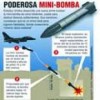
Mini-Nukes, the New Threat
The United States will begin this year to design low-power nuclear arms. Their firepower is to be less than five kilotons of TNT but, say critics, they could cause the biggest humanitarian and environmental disaster since World War II.Ecobreves – BRAZIL: Cloning Cacao
Biotechnology and specialized agronomy practices are contributing to the recovery of the cacao crop in the northeastern Brazilian state of Bahia, which until 1989 was the world leader in this raw material for chocolate.
Sovereignty Debate Surrounds Chilean Nature Park
Politicians say the declaration of protection for Pumalín Park, in southern Chile, is a violation of national security. The park is the property of a U.S. millionaire.Slow Reaction on Mad Cow Disease
Consumers charge that the Bush administration is giving in to pressure from the beef industry, opposed to instituting stricter controls at the slaughterhouse.
Mining Sets Off Wave of Protest
Hondurans are mobilizing against several mining companies accused of causing harm against the environment and against human health.Electronic Waste
Mountains of outdated electronics are accumulating in landfills around the world. A new law in the U.S. state of California seeks to fight the problem through a recycling program to enter into force in July.Ecobreves – CHILE: Historic Decision Against Cell Phone Antenna
The Chilean Supreme Court on Jan. 6 ordered the removal of the cellular telephone tower from the historic center of La Serena, a city 460 km north of Santiago. The ruling stated that the antenna is an environmental and architectonic offense.Ecobreves – CUBA: Cranes at Center of Study
Cuban scientists this year will study potential reproduction sites of the Cuban crane (Grus canadiensis nesiotes), considered endangered due to changes in its natural habitat.Ecobreves – VENEZUELA: Land Handed Over to Indians
Venezuelan Indians this year will receive land property titles for the first time, although the authorities have not determined which territories will be granted to each indigenous group.Ecobreves – GUATEMALA: Protecting a Thorny Forest
A small forest populated with thorny plants was declared a protected area by the local Cabañas government in eastern Guatemala. The move is aimed at protecting endangered species.Ecobreves – COSTA RICA: Sustainable Tourism Gets a Boost
Twenty initiatives for rural tourism in Talamanca, in Costa Rica's southeastern highlands, this year are becoming pilot projects for sustainable tourism in Central America.Ecobreves – COLOMBIA: Reforesting River Basins
With an investment of 6.6 million dollars over the next five years, the Colombian public works agency EPM will reforest 5,000 hectares of forests in the watershed areas of the northwestern department of Antioquia.Environment Ministers Carve Out a Space
Little by little, the environmental ministries in Latin America are expanding their influence in the public sphere. Since 1998, they have been part of a regional forum that has helped unite them as a single voice in global environmental politics.« Previous Page — Next Page »





The Week with IPS

NEXT STOP - SDGs
Tracking global progress towards a sustainable world
Tracking global progress towards a sustainable world
