
Saturday, October 3, 2026



News and Views from the Global South

Mining Sets Off Wave of Protest
- Hondurans are mobilizing against several mining companies accused of causing harm against the environment and against human health.
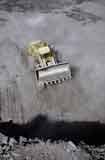
- Photo Stock.
The first sign was sent by the residents of Valle de Siria, in the central departments of Francisco Morazán, where the U.S.-based Entremares transnational mines for gold.
A recent health impact study attributed the emergence of skin diseases and baldness among the Valle de Siria population to inappropriate mining practices.
Doctor Juan Almendares, director of the non-governmental group Tierra Madre, led the study of 23 families. He found that many newborns presented with skin problems and that school-aged children “are losing hair without explanation.”
The operations of Entremares were the target of a protest by Roman Catholic cardinal Oscar Andrés Rodríguez, who two years ago led a march of local residents against the mining company. But the effort proved useless, as Entremares continues to mine for gold.
Executives deny that the company has caused contamination, and say the denunciations are part of a campaign to discredit Entremares and to halt development.
Similar protests have taken place in western Honduras, where two communities have mobilized against the Canadian-based Maverick company and Minerales de Occidente S.A. (Minosa), property of the Honduran Banco Atlántida.
In January 2003, Minosa was slapped with a 54,000-dollar fine for contaminating the environment after a cyanide spill was discovered to have killed off fish in the Lara River, which flows into the Higuito, the main supply of potable water for the Santa Rosa de Copán region, one of the cradles of the ancient Maya civilization.
And more irregularities were found in the granting of environmental licenses. The authorization for Minosa was renewed in August 2003, just as the company threatened to declare bankruptcy.
Juan Carlos Elvir, mayor of Santa Rosa de Copán, told Tierramérica that the public protests against the mining company are so strong “that we have even received death threats.”
According to Elvir, his community is not opposed to development, but believes it should be achieved in a balanced way that respects the environment.
The residents oppose open pit mining because it requires cutting down the forest.
As the ore is extracted, it is mixed with chemicals like cyanide in order to separate out the metal. Experts say the technique is appropriate for desert areas, but in Honduras it is being used in lush forested valleys.
The mining companies “clear a forest or a hill without taking into account the environmental consequences. They are depleting our natural resources, and the ones who will pay for the results are those of us who live nearby,” said the mayor.
Elvir has led actions against Maverick, joined by his colleague, mayor Amílcar Rodríguez, of La Labor, in the western department of Ocotopeque, on the Guatemalan border.
Maverick holds a state-granted environmental license to exploit 400 hectares in the heart of El Güisayote national reserve, considered one of the “lungs” of western Honduras.
A commission made up of environmental officials, the attorney general, residents, mayors and non-governmental organization activists found that the license is illegal because it violates laws that prohibit exploitation of resources in protected areas.
The commission says “the damage caused by the activities of logging and leveling are considerable, given the topographic conditions and characteristics of the soil in the zone.”
The mining industry generates 45 million dollars annually in Honduras. The most common metals mined here are lead, silver, zinc and, to a lesser extent, gold.
In 112,492 square km of territory, 35,359 square km have been ceded for mineral exploration and exploitation. The concessions have been granted to some 15 companies.
The licenses handed out by the mining directorate must be reviewed, because “we have received many reports of irregularities and we believe the concessions should be granted after seeking consensus with the municipalities affected,” state environmental prosecutor Elmer Lizardo told Tierramérica.
Joaquín Agüero, adviser to the Ministry of Environment, said the problem lies in the fact that the Mining Law, approved by Congress three years ago, gives too much authority to the mining directorate.
The agency “is totally independent of the Ministry of Environment and nobody regulates or controls it,” says Agüero.
 Print
|
Print
|




