Languages
Thursday, November 12, 2026



News and Views from the Global South
Ecobreves – ARGENTINA: Bacteria Eat Alkaline Batteries
Bacteria Eat Alkaline Batteries BUENOS AIRES - Sulfur-eating bacteria may be the solution to the contamination caused by used alkaline batteries, say scientists at Argentina's National University of San Martín.Ecobreves – PERU: Recycling Plan for Lima
The Peruvian non-governmental Office of Environmental Assessment and Consulting is designing a plan to organize the efforts of some 5,000 informal garbage collectors, who recycle 10 percent of Lima's solid waste.Ecobreves – COLOMBIA: Dumps Threaten Aircraft
A program to relocate the garbage dumps near the northern Colombian airport of Barranquilla and a citizen education campaign aim to put an end to flight safety problems.Ecobreves – COSTA RICA: Crocodile Center Opens Its Doors
On Sep. 26 the first center dedicated to environmental education and research of crocodiles and caimans opens its doors in Costa Rica.Ecobreves – NICARAGUA: Respiratory Illnesses on the Decline
The incidence of acute respiratory ailments in Nicaragua decreased 23 percent in the first nine months of this year, compared to the same period in 2002, says Maribel Orozco, director of epidemiological monitoring at the Ministry of Health.Ecobreves – HONDURAS: Ten Years Protecting the Environment
The Honduran non-governmental Vida Environment and Development Foundation has under its custody, after a decade of existence, 300,000 hectares of protected areas.
Protected Areas – On Paper Only
Many of the 2,267 zones under protective legislation in Latin America and the Caribbean exist only on the paper that created them, says the United Nations Environment Program, stressing that the provisions for management and protection must be put into practice.Conservationism Has Not Reached the Seas
Since 1962, the year of the first World Parks Congress, the number of protected areas has jumped from two million square km to over 18 million today. But barely 0.5 percent of the earth's seas and oceans are included in that category.
The Hubble's Days Are Numbered
If no new maintenance missions are sent, the useful life of the magnificent telescope-satellite will come to an end in just three years. Much depends on a renewal of space exploration efforts by the United States.
World Ozone Day
The scientific community estimates that the ozone layer, which filters the ultraviolet rays of the Sun, could recover its density by the middle of this century. Recent studies show an improvement, a closing of the so-called ozone hole, but only in the upper stratosphere.Ecobreves – VENEZUELA: Bacteria Against Contamination
The chemistry department of the University of Carabobo in Valencia, central Venezuela, is investing the use of thermophile bacteria, which exist at temperatures of 40 to 60 degrees Celsius, as biological catalysts for destroying organic material that has contaminated Cabriales River and Lake Valencia.Ecobreves – GLOBAL:: Desertification Threatens Migratory Birds
Desertification threatens the hundreds of millions of migratory birds that cross the world's arid regions twice a year, warned experts at the conference of the United Nations Convention to Combat Desertification (UNCCD), held here Aug. 25 to Sep. 5.Ecobreves – CHILE: Canine Disease Kills Foxes
Distemper, a disease that affects dogs in particular, is claiming the lives in Chile of culpeo and chilla foxes, both protected species, in the areas of Puerto Velero and Fray Jorge National Park, 350 km north of the capitalEcobreves – GUATEMALA: Radio Dramas Promote Public Health
The non-governmental League of Mental Hygiene has designed a radio theater program titled "Let's Go to the Market", which begins broadcast this month by 150 community radio stations here, and aims to improve the population's health.Ecobreves – EL SALVADOR: Barrels of Dangerous Toxin
A third of the 92 barrels with the dangerous agro-chemical toxaphene, abandoned in the eastern Salvadoran city of San Miguel, are damaged and are contaminating the air, soil and water, report environmental groups, including CESTA-Friends of the Earth.Ecobreves – HONDURAS: Replacing Maize with Soy
A tropical mold has forced maize growers in the northeastern Honduran department of Olancho to replace that crop with soy, vice-minister of agriculture José María Ordóñez, told Tierramérica.Ecobreves – BRAZIL: Reusing Urban Wastewater
Researchers at the University of Brasilia, who have been studying water reuse since 1996, support local projects with the aim of saving 60 percent of urban water consumption.Investment: The Hidden Green Agenda at WTO's Cancun Meet?
Conservationists fear that the Fifth Ministerial Conference of the World Trade Organization, Sep. 10-14 in the Mexican resort city of Cancun, will launch negotiations on rules that could undermine environmental policies.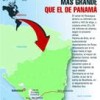
Plan for Nicaraguan Canal Reborn
A feasibility study for an inter-ocean route "bigger than the Panama Canal" will be ready by the end of the year, say Nicaraguan officials.Protected Areas
There are 100,000 protected areas around the world, which together would cover an area larger than China and India combined. But very few provide benefits to the communities that inhabit them. Some 2,500 delegates are meeting in Durban, South Africa until Sep. 17 to discuss the problem, under the auspices of the Fifth World Congress on Protected Areas.Ecobreves – GLOBAL:: Demands to Eliminate Farm Subsidies
Heads of state and of government meeting in Cuba urged the WTO Fifth Ministerial Conference, this week in the Mexican city of Cancun, to speed up the process of progressive elimination of agricultural subsidies.« Previous Page — Next Page »


The Week with IPS

NEXT STOP - SDGs
Tracking global progress towards a sustainable world
Tracking global progress towards a sustainable world
