Languages
Wednesday, October 28, 2026



News and Views from the Global South
Ecobreves – MEXICO: City Campaign to Protect Birds
An initiative - backed by the city government and the schools - aims to raise awareness about preserving birds in the metropolitan zone of the Mexican capital. Threats to the birds include cats and rats, as well as lack of food and water, and the effects of climate change.Ecobreves – HONDURAS: Prize for La Mosquitia Documentary Film
A documentary that collects the multiplicity of sounds and forms of life of La Mosquitia, the Honduran jungle region on the Caribbean coast, has won an award from the Environment Secretariat (ministry) and a private foundation.Ecobreves – ARGENTINA: Refuge for Rescued Wild Animals
An Argentine environmental group has proposed creating a Wild Animal Rescue Center in the central province of La Pampa for animals captured by hunters.LOW-INTENSITY PROTECTIONISM, SO FAR
World economic growth, as measured by the world's production of goods and services, has slowed abruptly in 2008 and the early part of this year. The contraction in demand led to a slowdown in production, and in international trade. World merchandise trade is projected to fall by a full 10 per cent this year, and foreign direct investment, which fell by 15 per cent in 2008, is projected to drop further.Ecobreves – HONDURAS: Betting on Renewable Energies
In the next two months Honduras is launching several renewable energy products that could save the country 87 million dollars and improve the operations of the government's national electrical energy agency.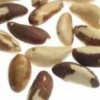
Amazon Nuts at Exploitative Prices
The low pay for harvesting Brazil nuts in the Amazon has allowed Bolivia to become the world's leading exporter of this forest-grown food.
Desertification and Climate Change Go Hand in Hand
Precise indicators are needed to quantify desertification and its interactions with climate change, says expert Massimo Candelori in this exclusive Tierramérica interview.Ecobreves – BRAZIL: Biodiesel Sustainability Is in Doubt
Animal fat is the second leading raw material used in making biodiesel in Brazil, representing 14.62 percent of the total in July, following soybean oil (78.7 percent).Ecobreves – VENEZUELA: Dolphin Census
With cameras in hand, youths from the environmental group Vida Marina (Marine Life) use boats to track the dolphins in the Caribbean off the coast of the Venezuelan state of Aragua. They are putting together a dolphin database.Ecobreves – CUBA: Cultivating Sea Sponges
The creation of farms to grow sea sponges is opening the way for an economic and environmental alternative in Carahatas, a fishing community of 800 people in the central Cuban province of Villa Clara.Ecobreves – CHILE: Studying Flora for Biofuels
The Chilean government's National Resources Information Center will analyze 30 plant species to determine which are most suitable for developing biofuels and their potential for cultivation in this country.CRISIS SLOWS NORTH-TO-SOUTH INVESTMENT
The current crisis has precipitated a significant downturn in world foreign direct investment (FDI) flows which over the past year has spread to all sectors and regions. 2008 marked the end of a growth cycle in international investment that began in 2003 and reached a historic high of nearly $2 trillion in 2007.
Underwater Museum to Protect Mexico's Coral Reefs
In the ocean depths off the coast of southeastern Mexico, galleries of human sculptures are to be installed as an artistic attraction with environmental ends.
Cuba Encourages Tourism in Its Largest Marsh
One of the most important wetlands of the Caribbean, Ciénaga de Zapata in Cuba, is throwing open the doors to tourists interested in nature.Ecobreves – BRAZIL: Pure and Cheap Biokerosene
Biokerosene developed by the Brazilian University of Campinas as a means to reduce polluting emissions from the aviation industry is notable for its purity and low cost, says one of the scientists involved in producing it.Ecobreves – URUGUAY: Anti-Tobacco Fight Needs More Time
The strict measures against smoking that Uruguay implemented in March 2006 "are very good, but don't take into account the health consequences of those who have been smoking for 30 or 40 years."Ecobreves – MEXICO: Pacific Coast Threatened by Hurricanes
Deficient urban and coastal planning are contributing to heightened risk from hurricanes along Mexico's western seaboard on the Gulf of California, warns an environmentalist.CUBA: START THE DEBATE
Cuba's official newspaper and organ of the Communist Party recently published a story that stunned the populace: in a country where the lack of food has become endemic and causes the people dire economic hardship, it happened that tonnes of agricultural products were left to rot outside the city of Havana because there were neither the containers nor the vehicles nor the organisational capacity to transport them.THE NEXT FINANCIAL CRISIS IS JUST A MATTER OF TIME
US Treasury Secretary Tim Geithner's rejection of the European request for regulation of bank executives' bonuses has given rise to various interpretations: some cite President Barack Obama's need to avoid more confrontations with the American right wing, others point to the influence of the historical bond between the US and the UK, the only European country to defend financial corporations.G-20: REFORM THE GLOBAL CASINO
The awful truth is emerging: globalised rogue finance is disordering human societies and destroying our ecological life-support systems on a global scale. A spate of books and studies examining the role of finance finds deep flaws in the way money is created and credit is allocated. The age-old invention of money, which extended opportunities for trading beyond barter, has become a computerised global monster. Blind to other human values and goals, this global casino has decoupled and abstracted from real economies.Ecobreves – BRAZIL: Sewage Water Contaminates Crops
Sewage water can be used to boost agricultural yields, as Tierramérica has reported, but can also contaminate crops and soil with polycyclic aromatic hydrocarbons (PAHs).« Previous Page — Next Page »





The Week with IPS

NEXT STOP - SDGs
Tracking global progress towards a sustainable world
Tracking global progress towards a sustainable world
