Languages
Friday, October 23, 2026



News and Views from the Global South
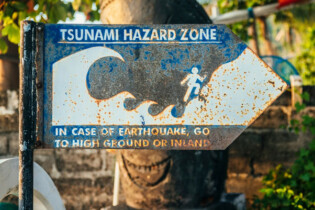
15 Years After the Great East Japan Earthquake & Tsunami
On 11 March 2011, the powerful 9.0 magnitude Tōhoku earthquake struck off the northeastern coast of Japan, triggering a 40-meter Tsunami. Many coastal towns along Japan’s Pacific coast were devastated. Approximately 20,000 people lost their lives and around 470,000 were evacuated from their homes.
A Unified Oceanic Commitment to Tsunami Preparedness
On a quiet July morning in Severo-Kurilsk, a coastal town in the East of the Russian Federation, the sea began to retreat unnaturally fast. Within minutes, tsunami sirens blared and 2,700 residents evacuated to higher ground. Waves up to five meters inundated the port and fish factory, but no lives were lost. The town’s survival reflected years of investment in early warning systems, community drills, and resilient infrastructure. The 2025 Kamchatka tsunami demonstrated what preparedness can achieve when science, governance, and community action align.
A Reinvigorated Regional Commitment to Tsunami Preparedness in Asia & the Pacific
Between 1970 and 2022, disaster events in Asia and the Pacific caused 2.04 million deaths and $2.71 trillion in economic damages. ESCAP estimates that among these totals, tsunamis rank as the third deadliest hazard, accounting for 12% of fatalities, and the fourth most economically destructive hazard, comprising 11 per cent of economic damages.





The Week with IPS

NEXT STOP - SDGs
Tracking global progress towards a sustainable world
Tracking global progress towards a sustainable world
