Languages
Thursday, October 22, 2026



News and Views from the Global South

Advice to US: When You’re Going to a Gunfight, Bring all Your Friends with Guns
Jim Mattis a former United States Defense Secretary in the Trump administration quotes a Marine Corps dictum in a recently released book titled “Call Sign Chaos: Learning to Lead”.
World’s Hard Fought Battle Against Climate Change
UN Secretary-General Antonio Guterres describes the ongoing crisis as a “climate emergency”-- as the world continues its hard fought battle against devastating droughts, floods, hurricanes and rising sea levels that threaten the very existence of small island developing states located in low-lying areas.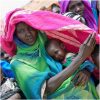
As Climate Crisis Worsens & Poverty Rises, UN Appears Off-Track on Development Agenda
The two key goals in the UN’s development agenda are the eradication of extreme poverty and hunger by 2030. But most of the world’s developing nations, currently fighting a losing battle against rising poverty and hunger –and suffering from the devastating impact of climate change-- are likely to miss the deadline for most of the 17 Sustainable Development Goals (SDGs), according to the latest report by Secretary-General Antonio Guterres.
UN Chief Calls for Action, Not “Beautiful Speeches”
UN Secretary-General Antonio Guterres has offered an unsolicited piece of advice to the 190-plus speakers, including heads of state and heads of government, who will address an unprecedented six high level plenary meetings during the General Assembly sessions September 23-27.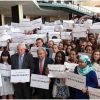
Are 9-to-5 Jobs Fast Becoming History – Even at the UN?
With the rapid leap in digital technology – including increased access to conference calls, e-translations, skype, text messaging and emails—more and more offices in the United States are providing employees with an option to “work from home”.
UN’s Upcoming Summits May Foreshadow a Revival of Multilateralism or an Obituary for World Order
The United Nations will be hosting six high level plenary meetings –- unprecedented even by its own standards—during the beginning of the 74th session of the General Assembly in late September.
Is the UN’s High Seas Treaty Heading Towards Troubled Waters?
The world’s high seas, which extend beyond 200 nautical miles, are deemed “international waters” to be shared globally-- but they remain largely ungoverned.
UNICEF’s Goodwill Envoy a Messenger of ill-Will, Complain Critics
When two-time Wimbledon tennis champion Boris Becker, a UNICEF goodwill ambassador, refused to make a commitment not to play in South Africa, a country blacklisted for its apartheid policies, the UN children’s agency stripped him of the prestigious title, back in October 1987.
G7 Leaders Urged to Promote Gender Empowerment
As leaders of the seven major industrialised nations (G7) meet in the coastal seatown of Biarritz in the south west of France, one of the world’s leading women’s organisations is calling for the protection and advancement of women worldwide.
A Key Role for 1.8 Billion Youth in UN’s 2030 Development Agenda
The UN Population Fund (UNFPA) is convinced that the world’s 1.8 billion adolescents and youth-- a quarter of the global population—have a key role to play in helping implement the UN’s 2030 Development Agenda.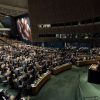
Will Sanctions Undermine 1947 US Treaty with UN?
When Yassir Arafat was denied a US visa to visit New York to address the United Nations back in 1988, the General Assembly defied the United States by temporarily moving the UN’s highest policy making body to Geneva-- perhaps for the first time in UN history-- providing a less-hostile political environment for the leader of the Palestine Liberation Organisation (PLO).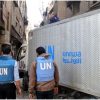
Will Palestinian Refugees Pay a Heavy Price for UNRWA Bungling?
A crisis that has threatened to undermine the future of the UN Relief and Works Agency (UNRWA) is expected to have a devastating impact—not only on the credibility of the United Nations-- but also on the lives of over five million Palestinian refugees whose very survival depends on the humanitarian services provided by the beleaguered UN agency based in Amman and Gaza.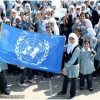
UNRWA Faces Donor Backlash Amidst Charges of Sexual Misconduct & Nepotism
The UN Relief and Works Agency (UNRWA), which has been undermined by a sharp cut in US contributions, has been embroiled in a scandal that threatens to jeopardize its very future.
How Widespread is Human Trafficking in the US?
The United States is no exception to the practice of modern day slavery—a crime for which it is rarely held accountable at the United Nations.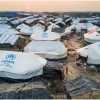
Treaty Violators Make Mockery of Refugee Convention
With the rise of rightwing nationalism, primarily in the Western world, an increasingly large number of countries are not only abandoning multilateralism but also violating international treaties and conventions signed and ratified in a bygone era.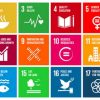
Will a Global Fund Help Deliver UN’s Development Agenda?
The United Nations, which has been tracking both the successes and failures of its highly-ambitious Agenda for Sustainable Development, has warned that “progress has been slow” in many of the 17 Goals after four years of implementation.
US Defunds UNFPA for Third Consecutive Year– on Misconceived Assumptions
The Trump administration, in its continued hostility towards the United Nations-- and as part of its policy aimed at undermining multilateral institutions and international commitments-- has withheld its annual contributions to the UN Population Fund (UNFPA) – for the third consecutive year.
A Relentless Battle Against Poverty & Hunger in World’s Most Populous Region
The world’s two most populous nations-– China and India—have been making steady progress in eradicating extreme poverty, but have fallen short in their attempts to eliminate extreme hunger, according to the Bangkok-based UN Economic and Social Commission for Asia and the Pacific (ESCAP).
Will the UN & World Bank Continue to Lag Behind Europe in Ending Male Leadership?
The nominations of Christine Lagarde of France as the first woman to head the European Central Bank (ECB) and Ursula von der Leyen of Germany as the first woman to lead the 28-nation European Commission, have been described as significant landmarks in the higher echelons of international institutions long dominated by men.
How Effective is a Non-Binding Treaty Aimed at Ending Harassment at Work Places?
Against the back drop of widespread charges of sexual abuse and harassment at workplaces-- including the United Nations-- the International Labour Conference (ILC) last week adopted a “Convention” and a set of “Recommendations” to protect workers and employees worldwide.
World’s Poorest Nations Weighed Down by Fastest Growing Populations
With a new report projecting a rise in population, specifically in Asia and Africa, the United Nations has warned that continued rapid population growth presents enormous challenges for sustainable development in the world’s 134 developing nations.« Previous Page — Next Page »





The Week with IPS

NEXT STOP - SDGs
Tracking global progress towards a sustainable world
Tracking global progress towards a sustainable world
