Languages
Tuesday, October 27, 2026



News and Views from the Global South
Active Citizens

ALBANIA: ‘The Public Only Learns about These Development Megaprojects Once Construction Machinery Arrives’
CIVICUS discusses land grabs and environmental damage linked to a luxury coastal resort project with Eva Kushova, Director of Destination Management Organisation Albania, a civil society organisation that supports sustainable tourism in Albanian destinations, seeking to preserve culture and nature while maximising benefits for communities.
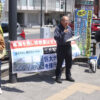
Communities vs. Datacentres
Few things unite Donald Trump’s most ardent supporters with the Democratic Party’s progressive wing, but datacentres are one of them. Across the USA, communities are joining forces across the political divide to oppose developments few want but governments seem determined to impose.
SERBIA: ‘We Are Becoming an Electoral Autocracy, a System Where the Government Cannot Lose’
CIVICUS discusses the prospects for elections in Serbia with Rasa Nedeljkov, Programme Director at the Center for Research, Transparency and Accountability, a civil society organisation that monitors electoral processes and the rule of law in Serbia.
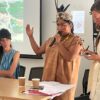
As Gold Prices Soar, Communities Pay the Price in Poisoned Rivers, Vanishing Forests and Organized Crime
The sweltering heat inside a London conference hall did not deter Indigenous leader Jackeline Mendoza Díaz from condemning the sheer destruction of the Peruvian Amazon. Her voice occasionally trembled with emotion but delivered a strong message — painting a picture far removed from the glittering gold bars traded in the world’s financial capitals.
Pride: Once Again a Protest
On the morning of 28 June, riot police sealed off Taksim Square with iron barriers and enforced bans on all weekend gatherings in Istanbul. Marchers pressed ahead anyway, re-emerging from side streets each time police dispersed them. By the end of the day police had detained at least 50 people, including a journalist. It was Istanbul Pride’s 24th edition, and the 12th year running that the authorities banned it outright.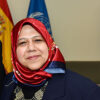
Women Peacebuilders: The Missing Voices at the Negotiating Table
 For most individuals, the process of peace starts with the signing of a ceasefire or an agreement among politicians. However, those who live in regions experiencing violence understand that peace is made long before politicians meet at the negotiating table. Peace is created among communities by people who work everyday to ensure that no violence takes place, and that disputes are sorted out.
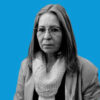
MEXICO: ‘Our Call for Justice for Our Missing Loved Ones Must Reach the World Just as World Cup Goals Do’
CIVICUS speaks about efforts to use the 2026 FIFA World Cup to highlight Mexico’s enforced disappearance crisis with Ana Enamorado, a Honduran national who continues to search for her missing son in Mexico, and founder of the Regional Network of Migrant Families.
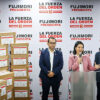
Peru’s Gridlock a Licence for Autocracy?
Right-wing candidate Keiko Fujimori has won Peru’s presidential runoff, narrowly defeating leftist Roberto Sánchez to become the country’s ninth president in a decade. She inherits a system so engineered for dysfunction that rather than making compromises, she may decide the concentration of power is her only means of survival. The constitution that created this trap was written by her father.
MEXICO: ‘The World Cup Is an Opportunity to Raise Global Awareness of the Crisis of Enforced Disappearances’
CIVICUS discusses Mexico’s enforced disappearance crisis with Angélica Orozco, a member of Fuerzas Unidas por Nuestros Desaparecidos en Nuevo León (FUNDENL), a collective of relatives of disappeared people and people who support them. Since 2012, FUNDENL has been searching for the disappeared and documenting the human rights crisis.
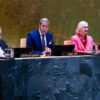
UN Peacebuilding Week: Military Expenditure Soars as Funding for Civilian Protection and Prevention Collapses
From June 22 to 26, the United Nations (UN) commemorated its first annual Peacebuilding Week, marking the 20th anniversary of the UN Peacebuilding Commission’s inaugural session. Featuring discussions among world leaders, policymakers, civil society, and advocates, the event explored how collaboration among governments, international organizations, and the private sector can enhance the visibility and effectiveness of peacebuilding efforts worldwide.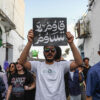
Tunisia: Civil Society Criminalised
In May, Tunisian lawyer and journalist Sonia Dahmani was handed her second conviction of the year. Her latest sentence, a two-year jail term, came in reaction to her criticism of poor prison conditions. She previously received an 18-month sentence for calling out the government’s anti-migrant policies. Dahmani faces five more charges under a 2022 cybercrime law that criminalises the spreading of what it calls ‘false information’.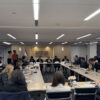
Building Peace Infrastructures: African Leaders Reflect on Peacebuilding
As the United Nations held its first-ever Peacebuilding Week (June 22-26), UN officials and developmental partners gathered at Egypt's Permanent Mission on June 23 to hold a dialogue on the main question that emerged from the 2025 Peacebuilding Architecture Review (PBAR): “How can global commitments to peacebuilding translate into tangible results on the ground?”
GHANA: ‘This Is Bigger than Lgbtqi+ Rights – It’s about the Kind of Society We Want to Be’
CIVICUS discusses Ghana’s anti-LGBTQI+ law with Leila Lariba, Executive Director of One Love Sisters Ghana, a community-driven organisation that advances human rights, social inclusion and wellbeing for Muslim LGBTQI+ people in Ghana.
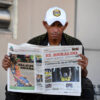
Colombia’s next President: A Reckoning for Peace, Climate and Human Rights
On 21 June Colombians made their choice. By the narrowest of margins, Abelardo de la Espriella, a far-right criminal lawyer who’s never held elected office, became president-elect. Climate activists, human rights defenders, Indigenous communities and peace advocates have the most to lose from the incoming government’s agenda.
From Rotten Tomatoes to AI: Ugandan Commonwealth Youth Award Winner Takes Aim at Hunger Across Africa
Before anyone called her an innovator, before artificial intelligence entered the conversation, before solar-powered cold rooms, before the language of sustainable development, Shifra Ainomugisha knew food loss in its painful form.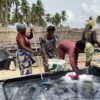
In West Africa’s Benin, Women Make Centuries-Old Salt Production Methods Sustainable
It is barely noon, and a group of women sit near the beach on the outskirts of Djégbadji village, in West Africa’s Benin, sifting through mounds of salt harvested from the Gulf of Guinea’s ocean.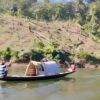
New GEF Project Raises Hope for Change in India’s Indigenous Lake Community
At dawn, when the waters of Dumboor Lake lie still under a pale grey sky, Santo Chakma, 63, nudges his narrow wooden boat into a reservoir that swallowed his childhood.
WORLD CUP: ‘FIFA Has Placed Itself on the Side of the Polluters, Not the Rest of the Planet’
CIVICUS speaks about the climate impacts of the 2026 World Cup with Frank Huisingh, founder of Fossil Free Football, a fan-led group that campaigns to end fossil fuel sponsorship in football and make the game more sustainable.

Hong Kong: No Safety in Exile
When performance artist Sammu Chen tried to tie a red thread to a streetpost, plainclothes police stopped him before he could finish. Chen has twice been detained for his symbolic acts of commemoration of the 4 June 1989 Tiananmen Square Massacre, when Chinese authorities killed hundreds, perhaps thousands, to crush democracy protests.
RightsCon’s Cancellation Signals a Growing Threat to Human Rights and Digital Freedoms
RightsCon, the world’s leading summit on human rights in the digital age, has served for over a decade as a vital global gathering, bringing together civil society, academics, technologists, policymakers, and the private sector in cross-border collaboration. The abrupt cancellation of RightsCon 2026, following intervention by Zambia’s government just days before the convening was due to commence in Lusaka, should concern us all.
In Sikkim, Snow Leopards and Communities Share the High Mountains
The tea arrives before the conversation starts. Jayanta Mukhia sets two cups on the wooden table and pulls up a chair across from the couple who arrived that afternoon with trekking poles and rucksacks. They have come to walk the Goechala trail into the heart of Khangchendzonga National Park in India. They will leave in two days. Before they go, she has something to tell them.« Previous Page — Next Page »





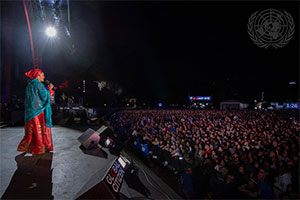 Global Citizen Festival in New York. Credit: UN Photo/Eskinder Debebe
Active citizens are committed to social change because they know that it is achievable. However, major political challenges face active citizens across the world. For example, in authoritarian regimes in Latin America where the hegemonic party has been in power for decades on end, protestors and human rights activists face enormous repression and struggle to materialize their advocacy into concrete results. The same can be said for Africans, where a shift towards elected government in recent decades has yet to translate into an effective voice in decision-making. Now, the Strengthening Citizen Demand for Good Governance, which uses evidence-based approaches – funded by DFID's Governance and Transparency Fund – seeks to raise their voices.
In 2025, the CIVICUS Monitor’s People Power Under Attack report revealed that civic freedoms are severely limited in 122 of 198 countries and territories, and only 7.2% of the global population now lives in countries where civic space is open. Through partnership with the Overseas Development Institute (ODI) and CIVICUS, IPS reporters across the continent will seek to define the extent and limits of state capability, government accountability and the responsiveness of leaders to the needs of citizens.

The Week with IPS

NEXT STOP - SDGs
Tracking global progress towards a sustainable world
Tracking global progress towards a sustainable world
