Languages
Saturday, October 3, 2026



News and Views from the Global South
Health

In Zimbabwe’s Rural Areas, Bicycles Keep Girls in School
Rejoice Muzamani is studying in preparation for her next paper during the end-of-term examinations at Mwenje Primary School in Chiredzi, southeast Zimbabwe. The 13-year-old girl, who is in Grade 7 or final year of primary school, is not worried about leaving school early to make the 7-kilometer journey back home before dusk, risking attacks from wild animals.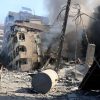
Death Toll Rises During Israel’s Siege in Lebanon
One week has passed since the beginning of Israel’s invasion of Lebanon. Over the past three weeks, Lebanon has seen a considerable uptick in hostilities from the Israeli armed forces. Routine bombardments have resulted in significant civilian casualties as well as the failure of several critical infrastructures. The United Nations warns that displacement continues to grow as shelters approach maximum capacity.
Amazonian Bioeconomy: An Essential Path for Sustainable Development
The Amazon is at a critical juncture. Despite its abundant biodiversity, cultural richness, and immeasurable environmental value, it faces serious threats that endanger its future and the communities that depend on it.
Continued Hostilities in Gaza Threaten the Second Round of Polio Vaccinations
Over the past two months, the polio epidemic in Gaza has slowly mitigated due to response efforts by the World Health Organization (WHO) and the United Nations (UN). The first round of the polio vaccination campaign has been largely successful, with around 506,000 children having been immunized. If the Israel authorities allow for further humanitarian pauses, the second round is expected to begin on October 14. However, health officials are concerned that this will be more difficult than expected due to the continuance of deadly attacks in the past few weeks.
Dominican Republic Orders the Expulsion of Thousands of Haitian Migrants
Over the past few months, the escalation of gang violence and mass displacement in Haiti have been of great concern for humanitarian organizations. Severe levels of armed violence have resulted in significant instability, with food insecurity, sexual violence, civilian casualities, and restricted freedom of movement plaguing the nation. Displacement cases have risen sharply, to the extent that the Dominican Republic has ordered the return of thousands of Haitian migrants.
Prostitution an ‘Egregious Violation of Human Rights’—UN Special Rapporteur
Reem Alsalem, the UN Special Rapporteur on Violence Against Women and Girls, calls prostitution a “system of violence” that does not benefit society at all, especially the women and girls forced into this system.
The Approaching Rainy Season Signals Trouble for Gaza
As the humanitarian crisis in Gaza continues to grow more dire as a result of the Israel-Hamas war, concerns of diminishing public health are growing due to prolonged flooding. Repeated airstrikes and forced evacuations in recent weeks have pushed many displaced citizens to flooding hotspots. An influx of torrential rain has greatly exacerbated the failing sanitation system, increasing the risk of contracting waterborne diseases. Health experts fear that conditions will continue to worsen in the coming winter months.
TikTok and WHO Join Efforts to Combat Misinformation
Today’s digital age is centered around TikTok, the short-form social media platform that hosts around 1 billion global users. Sensationalized or reductive videos often get the most engagement with young audiences, leading to the spread of misinformation on a global level.
Uptick in Mpox Cases Raises Concern Among Health Officials
Yesterday, India’s Federal Health Ministry reported the nation’s first documented case of mpox. The infected individual was reported to have contracted the clade Ib strain of the virus, which is a far deadlier variant than the more common clade II. This development has raised considerable concern among health officials around the world as the mpox epidemic had been contained in the Democratic Republic of Congo until recently.
World Governments, NGOs Announce $350m Investments in Sexual and Reproductive Health Services
On the heels of the Summit of the Future and the sidelines of the United Nations High-Level Meeting Week, governments and philanthropies pledged to commit at least USD 350 million to boost family planning, sexual and reproductive health and supplies on the national and global level. As enshrined in the newly-adopted Pact for the Future, seeking new international finance models is critical to solving the issues that the world faces today. The decision to pledge forward is a demonstration of commitment to ongoing health issues.
Flooding and Armed Conflict Aggravates Sudan’s Cholera Epidemic
Sudan has been plunged into a deadly cholera outbreak in the midst of the Sudanese Civil War. Sudan is currently home to an approximate 15 million people, many of which have had to bear the brunt of hostilities between warring parties, widespread food insecurity, mass displacement, and extreme weather anomalies. Flooding, in particular, has been very damaging, leading to the collapse of critical infrastructures that ensure sanitation. This has caused the cholera outbreak to become a national concern.
The Crucial Connection Between Climate Change and Mental Health
“Young people today are growing up with enormous uncertainty about their future. Climate change is a major driver of that uncertainty, but we weren’t talking enough about how the climate crisis impacts mental health,” researcher Dr. Emma Lawrance told IPS from her family home in Australia.
Violence, Displacement, and Hunger Plagues Somalia
Somalia is currently in the midst of a dire humanitarian crisis that threatens to destabilize the nation’s security. This crisis is a result of the Somali Civil War, which began in 1991. Altercations between clan-based operations have caused a host of issues over the years, including over 596 civilian casualties, according to the United Nations Assistance Mission in Somalia (UNSOM). Tensions have greatly intensified in 2024, with levels of internal displacement and food insecurity increasing rapidly.
Gang Violence and Mass Displacement Ravage Haiti
Amid the ongoing civil unrest in Haiti due to gang violence, levels of internal displacement have soared. Mass internal displacements in Haiti have led to a host of adverse consequences. This includes a disruption of schooling, increased levels of violence and exploitation, and limited access to essential services such as healthcare.
Forest Fires in the Amazon Threaten Earth’s Stability
This year has been the worst for the Amazon rainforest in almost two decades. Although there has been a measured decline in deforestation when compared to 2023, forest fires have ravaged acres of critical ecosystems. For the first eight months of this year, the Amazon has seen routine forest fires, totalling to over 53,000 recorded instances.
Typhoon Yagi Devastates Southeast Asia
In early September, Typhoon Yagi, a deadly tropical cyclone, hit Southeast Asia and Southern China, causing widespread destruction. According to the United Nations (UN), wind speeds, reaching 213 kilometers per hour, as well as heavy flooding and severe landslides, have devastated affected areas. Yagi is the strongest natural disaster to hit the South China Sea in three decades, leaving over 500 people killed, 38 missing, and 1,900 injured.
Humanitarian Crisis in Gaza Worsens While Polio Vaccine Campaign Succeeds
Today, the chief of the United Nations Relief and Works Agency for Palestine Refugees in the Near East (UNRWA), Philippe Lazzarini, confirmed that the first round of Gaza’s polio vaccination campaign had ended successfully, reaching 90 percent coverage. The second round of this campaign is set to begin by the end of September, delivering Gaza’s children with a critical second dose of the polio vaccine.
Odious Debts: What Can Bangladesh Learn from Ecuador?
Bangladesh’s White Paper committee will review foreign loan deals signed by the fallen kleptocratic regime. We recommend that it identifies and declares the loans or portions of loans that did not benefit the nation as unpayable, because they were siphoned off the country by corrupt politically powerful elites, or worse used to buy deadly weapons and surveillance equipment to oppress people. Such loans are “odious” – they stink and are detestable.
Leaders Can Rise to the Summit, Together
As heads of state and government fly into New York for the United Nations General Assembly and the Summit of the Future (September 22-30), 2.3 billion mothers, fathers, and children are unsure where their next meal will come from. Millions face the terror of brutal, protracted armed conflicts that make no distinction between civilians and soldiers.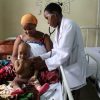
Incorporate Genetics, Social Support and Place of Residence into Public Health Campaigns
A recent study published in Journal Communications Medicine explores how people from different income levels and urban or rural backgrounds view the factors that influence health across eight countries: Brazil, China, Germany, Egypt, India, Indonesia, Nigeria, and the United States. It found that those with higher incomes are more likely to think genetics are the most important factor for health, while those with lower incomes value social support more. In contrast, urban residents prioritize healthcare, while those in non-urban areas place more importance on social support. This information can influence public health messaging.
Africa Taking Targeted Preparedness Measures as Mpox Cases Increase
As the mpox virus continues to spread to new countries across Africa, triggering a continental health emergency, health authorities are sparing no effort in taking targeted measures to control the outbreak—and have called on funders to ensure that resources are distributed fairly.« Previous Page — Next Page »


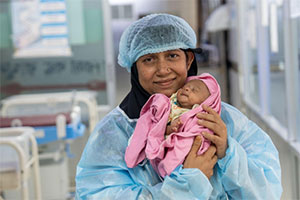 Bangladesh: Sarid, born one month early, receives specialized newborn care and grows stronger every day. Credit: UNICEF/UNI944397/Mojumder
Since the onset of the 2000s, global life expectancy has seen an overall rise, attributed to significant technological and scientific innovations in healthcare. Due to an increased understanding of different conditions as well as a rise in cooperation among healthcare experts around the world, there have been major strides made in ensuring that as few people die from chronic illnesses as possible. Despite the belief that healthcare is a fundamental human right, people from low- or middle-class backgrounds, marginalized groups, and underdeveloped countries have far more limited access to basic healthcare services.
The COVID-19 pandemic showed how marginalized communities are disproportionately affected by health crises, proving that we have much work to do in ensuring that no one dies of terminal conditions. While the global response to the coronavirus saw significant strides in immunization and vaccine development, the global outbreak of mpox in 2022 and its upsurge in parts of Africa in 2024 must remind us to remain vigilant.
Other major disease outbreaks in recent years have been linked to the destruction of infrastructure during warfare. Notably, in 2024, the Gaza Strip witnessed a return of the poliovirus since its eradication in the region 25 years ago. Israel’s blockade on Gaza has resulted in the collapse of the region’s sewage plants and desalination plants, and also destroyed healthcare capacities. The UN stated that this lack of clean water and sanitation would lead to an outbreak of cholera and other deadly infectious diseases. The 2026 OCHA Humanitarian Situation Report confirmed that the over two years of conflict in Gaza has produced a catastrophic health emergency, with millions remaining dependent on relief aid amid tight restrictions and no functioning public health system.
IPS is committed to providing full and comprehensive coverage on healthcare challenges around the world. IPS seeks to address the multifaceted causes of such challenges, including unprecedented pandemics, conflict-driven disease outbreaks, as well as socioeconomic barriers to equal healthcare access. IPS is also dedicated to reporting on innovations in the healthcare industry.

The Week with IPS

NEXT STOP - SDGs
Tracking global progress towards a sustainable world
Tracking global progress towards a sustainable world
