Languages
Friday, October 9, 2026



News and Views from the Global South
Development & Aid

PERU: ‘For 20 Years, Voters Have Had to Choose the Lesser of Two Evils’
CIVICUS discusses the outlook ahead of Peru’s runoff presidential election with David Hidalgo, journalist and executive director of OjoPúblico, a Peruvian digital investigative journalism outlet.

At GEF’s Eighth Assembly, Uzbekistan Signals New Role as Donor
In a significant policy shift symbolising rising environmental ambition, Uzbekistan on Thursday announced that it will become a donor of international environmental funding to the Global Environment Facility (GEF), as the Eighth GEF Assembly opened in the historic city of Samarkand.
From War Zones to Global Environment Talks, Communities Seek Faster Green Finance
For three decades, Iffat Rachid Edriss walked Lebanon's coastline with a clear purpose: protecting the sea she loves.
What the Sino-Russian Declaration Exposes
The joint declaration issued by Russia and China on 20 May, Joint Declaration of the Russian Federation and the People’s Republic of China on the Establishment of a Multipolar World and a New Type of International Relations, has been read in sharply different ways. Some welcome its language of sovereign equality, multilateralism and a UN-centred international order. Others dismiss it as legal rhetoric deployed in bad faith. Both responses miss the more important point.
Governments Falling 90 percent Short of Climate Adaptation Finance Needs
Governments are falling 90 percent short of adaptation finance targets and leaving people in climate-vulnerable communities drastically under-equipped to cope with the devastating impacts of climate change, Oxfam warns ahead of Bonn climate talks (8-18 June).
GEF Pushes Innovation, Blended Finance Ahead of the Eighth Assembly
As the Global Environment Facility (GEF) steps into the starting blocks of its next financial cycle, the Interim CEO Claude Gascon reflects on what he termed a “moment of transition and delivery".
A Larger, Older, and More Diverse Population
In 2026, the population of the United States is significantly larger, older, and more diverse than it was 250 years ago when the country declared its independence from the Kingdom of Great Britain on July 4, 1776.
People With Albinism Face Discrimination, Danger
When Patricia J. looks for work or shops at the outdoor markets near her home in rural Malawi, fear still follows her. Years after surviving two attacks linked to harmful beliefs about albinism, she says she remains constantly alert. “I still carry the fear that at any moment I can be attacked again,” she told us as we did research about conditions for people with albinism.
Russia Ensuring Africa’s Food Security
Within the framework of the Expert Council on Africa at Russia's State Duma, the lower chamber of parliamentarians, during its annual round-table conference, held in late May 2026, focused concretely on food security in Africa.
Filipino Indigenous Leader Takes Ancient Wisdom to the Global Stage
Every year, when dark clouds gather above the dense forests of the Philippines, 56-year-old Mini Baeyens, of the Aplay Kankanaey tribe, vigilantly watches the sky.
GEF Approves Adaptation Funds Strengthening Resilience in Vulnerable Countries
Bangladesh, the Democratic Republic of Congo, Guinea-Bissau, Niue, Senegal, Solomon Islands, Sudan, and Togo will receive over USD 67 million in new funding to help strengthen resilience.
Increased Rates of Deaths, Displacement and Diesel Amid New Ceasefire Escalations in Lebanon
Last week on May 28, the Israeli Defence Forces (IDF) issued an evacuation order to Lebanese civilians ordering them to move north of the Zahrani River, approximately 25 miles from the Israeli border, and roughly 20 percent of the Lebanese territory. These new escalations bring the displaced population to more than 1.3 million people, including more than 300,000 of those people being children. 1.3 million people represents approximately 1/4th of the nation's population of 5.3 million.
World Environment Day, 2026

2025 was one of the three hottest years ever recorded. The years from 2015 to 2025 were the hottest eleven years on record.
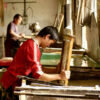
Bhutan’s WTO Path: Learning from the Global South
Bhutan’s decision to restart its accession to the World Trade Organization (WTO) comes at an important junction. Since graduating from Least Developed Country (LDC) status in 2023, the country is entering a new phase of development, which requires stronger competitiveness, deeper global engagement and greater economic resilience.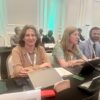
As Three COPs Converge, Leaders at GEF Council Call for Unified Global Action
On day 2 of the Global Environment Facility’s 71st Council Meeting, which focused on process and procedure, a clear message emerged: global environmental governance cannot afford fragmentation.
Afghan Women Complete Medical Studies but Are Barred From Practicing
While Afghanistan faces a serious shortage of female doctors, the country’s Islamist regime has placed restrictions on female students from graduating, further exacerbating the situation. Female medical graduates are barred from writing their final exams, which provide them with the professional qualification to practice as medical doctors.
Delegates Push for Greater Accountability, Community Inclusion as GEF Crosses Major Environmental Milestones
While the Global Environment Facility (GEF) said its eighth replenishment cycle (GEF-8) was about to exceed environmental targets for biodiversity protection, marine conservation, ecosystem restoration, and reducing greenhouse gas emissions, governments and civil society groups called for stronger safeguards to ensure that local communities, Indigenous Peoples, and smaller implementing agencies are not left behind as funding mechanisms become more complex.
Africa’s Water is its Future. Who will Govern it?
Africa holds 9 per cent of global renewable freshwater, over 600 gigawatts of untapped hydropower potential, and between 60 and 65 per cent of the world's uncultivated arable land.
GEF Council Welcomes New Green Pledges, Highlights Old Access Barriers
The 71st Council meeting of the Global Environment Facility (GEF) opened today amid a sharp divide, with donor nations urging broader and increased funding commitments, while developing countries called for more equitable and accessible pathways to environmental finance.
“The Heat Is No Longer Distant: A Global Climate Reckoning“
‘As record heat sweeps the world, the climate crisis is no longer a warning for the future, but a reality of the present.’
When UN Elections Were Once Tainted by Trade-Offs, Cheque Book Diplomacy & Luxury Cruises…
The year 2026 seems to be an eventful year at the United Nations --a new President of the General Assembly (PGA), who will officially preside over the 81st session in mid-September, plus the election and appointment of a new Secretary-General (SG) who will takeover in January 2027 after the conclusion of a 10-year tenure by the outgoing SG Antonio Guterres.« Previous Page — Next Page »





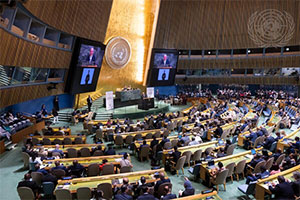 2026 High-level Political Forum on Sustainable Development. Credit: UN Photo/Eskinder Debebe
In 2015, the United Nations and its Member States adopted the Sustainable Development Goals (SDGs) in an effort to make the world a more sustainable and peaceful place for future generations. Progress on the 17 SDGs has been uneven, and inequality persists across the globe. 10 years after adoption, the 2025 UN SDGs Report revealed that only 35% of the SDG targets are on track, with more than half moving too slowly, and 18% moving backwards from the 2015 baseline. Poverty remains one of the world’s most pressing issues, with hunger, violence, and inequality impeding the opportunities for all people to achieve success. In September 2024, the United Nations Summit of the Future introduced a new goal: to eradicate global poverty by 2030, ensure universal rights to basic services, and increase the overall standard of living in terms of industrialization, economic well-being, citizen health, and literacy. Furthermore, recent shifts in United States foreign aid policy – notably, major budget cuts to USAID and the termination of thousands of development programmes– have severely threatened vital lifelines of financial aid to impoverished communities around the world. Additionally, the United States’ withdrawal from the Paris Climate Agreement has undercut international efforts at sustainable development. With the upcoming 2030 deadline, the UN Secretary-General has called for urgent multilateralism across six priority areas: food systems, energy, digital connectivity, education, jobs and social protection, and climate and biodiversity. IPS sheds light on marginalized communities that struggle on a daily basis to survive and have their stories heard and respected.
Updated by Yilan Batista and Shuli Wong August 2026

The Week with IPS

NEXT STOP - SDGs
Tracking global progress towards a sustainable world
Tracking global progress towards a sustainable world
