Languages
Saturday, October 24, 2026



News and Views from the Global South
Economy & Trade
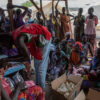
Famine in South Sudan Projected to Worsen Without Humanitarian Intervention
In 2026, the humanitarian situation in South Sudan has taken a considerable turn for the worse, with widespread food shortages, ongoing disruptions to food production systems, and rising rates of malnutrition affecting over half of the population. Compounded by the vast scale of needs and an overwhelming lack of access to basic services, humanitarian experts warn that nationwide levels of hunger are projected to worsen to catastrophic levels if urgent intervention is not secured.
Press Freedom: A Story of Lives Lost, Budgets Slashed, Status Eroded
Press freedom is on the retreat across much of the world. As documented by recent global surveys authored by the UN and media institutes, the erosion of an independent, fearless and diversified press is a trend that has worsened for well over a decade.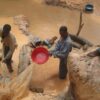
Clean Energy, Digital Technologies Are Coming at a Human Cost, UN Report Warns
A newly released United Nations report has raised urgent concerns that the world’s push toward clean energy and digital technologies is driving a hidden crisis in some of the planet’s most vulnerable regions, where mining for critical minerals is depleting water supplies, damaging health, and deepening inequality.
BULGARIA: ‘We Protested Against a Whole System of Corrupt Governance and State Capture’
CIVICUS discusses Bulgaria’s Gen Z-led protests with Aleksandar Tanev, founder of Students Against the Mafia, an informal student organisation that took part in mass protests against corruption and state capture.

The War in Iran Isn’t Just Raising Food Prices — It’s Revealing Who Really Sets Them
As the United States and Israel’s 2026 attack on Iran remains on pause, most eyes have fixed on oil. Tankers reroute around the Strait of Hormuz, oil benchmarks climb, and insurance costs spike. But while the headlines focus on energy, warning signs are already flashing from the food commodities markets.
Climate-Driven Disruptions to Education in Africa Raise Protection Risks for Millions of Children
The escalating global climate crisis has led to an increase in the frequency of climate-induced natural disasters, affecting millions worldwide. As governments struggle to keep up due to persistent funding shortfalls and inadequate preparedness and response mechanisms, education systems in Eastern and Southern Africa continue to deteriorate, pushing millions of children into displacement and poverty, further deepening long-term inequalities.
Pacific Islanders Combat Mercury Poisoning of the Environment
It is an invisible contaminant that has been found in fisheries, an essential part of the food chain for many Pacific Islanders. Mercury, emitted from fossil fuel power generation and other industrial processes around the world, has now penetrated marine ecosystems in the Pacific Islands with detrimental consequences for people’s health and wellbeing.
Seychelles’ Blue Bond: Turning Ocean Vision into Action
As the world prepares for the Global Environment Facility (GEF) meeting in Samarkand next month, Seychelles’ pioneering blue bond offers a compelling lesson in practical ocean finance.
Corruption in Bangladesh: Will Development Partners Remain Complicit?
Bangladesh remains one of the most corrupt countries in the world. Its corruption perception index (CPI) score, 24, is 18 points below the global average score of 42, and 21 points lower than the Asia-Pacific region’s average of 45. One of the main sources of corruption is over-priced aid-funded projects as they lack competitive bidding. Projects funded through Government-to-Government deals drive up costs by more than 400% compared to more transparent alternatives, and around 35% of project costs are lost to corruption and inefficiency.
US Military Strategy Document Misleads. Deliberately?
The January 2026 US National Defense Strategy (NDS) departs significantly from those preceding it, including from Trump’s first term. Is it deliberately misleading? Or is actual policy, including war, being driven by other considerations?
Inside GEF-9: What it is and Why it Could Define the Next Four Years of Environmental Action
The gap between global environmental ambition and real-world progress is widening, with less than five years left to meet key climate and biodiversity targets.
From Struggle to Strength: Turning Daily Hustle Into a Force for Survival
In the bustling Chifubu constituency of Ndola, the provincial capital of Zambia’s mineral-rich Copperbelt Province, 31-year-old Victoria Bwalya is usually among the early risers, cleaning and setting up for the day in her restaurant business.
NEPAL: ‘Voting on Discord Was a Very Gen Z Way of Doing Politics’
CIVICUS discusses Gen Z-led protests in Nepal with Abhijeet Adhikari (Abhi), a lawyer and political activist who took part in the protests.
Inside the Funding Model Behind Kenya’s Tana Delta Restoration Project
Lydia Hagodana stands next to a bee yard (apiary) in Golbanti, Tana Delta, where she lives. The air carries a low, steady hum as bees move in and out in a constant stream. She lifts the back of one hive slightly, gauging its weight.
African Institutions in Plan to Stabilise Food, Fuel and Fertiliser Amid Mideast War
Fearing the Middle East war could drive millions into hunger and cripple economies, Africa’s leading institutions are drafting a strategy to mobilise domestic and "innovative" finance and harness national competitiveness to stabilise food, fuel, and fertiliser supplies.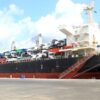
Global Shipping Reforms Cast Shadow Over Tanzania’s Fishing Communities
At dawn, as the sun rises across the Indian Ocean, Venance Shayo perches on the edge of his boat, hauling in a net. The sea gently ripples under the breeze and the sound of revving engines.
“War-Shock Inflation” and Inflation Phobia: Lessons of History for Central Bankers
The global economy, is at the precipice of “stagflation” – growth slowdown and higher inflation – due to the energy price shock following the illegal US-Israel war on Iran. The International Monetary Fund (IMF) has recently termed this as a “textbook negative supply shock”. For the first time since the 1970s, the prospect of stagflation seems real.
Guardians of the Sea: How GEF Small Grants Program Enables Young Volunteers Take the Lead in Sea Turtle Conservation
Every winter thousands of sea turtles come ashore at Cox’s Bazar, in the Bay of Bengal, Bangladesh, to lay eggs.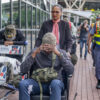
Russia’s African Cannon Fodder
On 7 April, the government of Cameroon published a list of 16 of its citizens confirmed killed fighting for Russia against Ukraine. That means the number of Cameroon citizens killed in this distant war has likely surpassed a hundred, making the country the biggest victim of a Russian recruitment drive increasingly focused on Africa.
Global Shocks Push Geoeconomics to the Center Stage at Foreign Policy Forum
As war in the Middle East ripples through global markets, policymakers, economists, and industry leaders gathered in Washington this week to agree that economics is no longer separate from geopolitics. It is now its core instrument.
Africa’s Future Depends on Innovation, Data, and Frontier Technologies
Across the continent, GDP has risen on the back of more workers, more capital and a commodity super-cycle, rather than through genuine gains in productivity and innovation. Too little labour has moved out of subsistence agriculture into higher-productivity manufacturing and modern services.« Previous Page — Next Page »





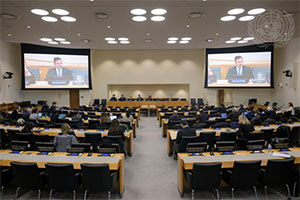 UN Commission on International Trade Law Holds Colloquium on Harmonizing Law in Age of Digital Trade and Finance. Credit: UN Photo/Manuel Elías
Trade has historically been a geopolitical tool that can both be used to propel development as well as entrench inequalities. In various nations in East Asia and Latin America, increased trade, as often seen in export booms, has allowed them to achieve influential standings within the global economy. On the other hand, many low-income countries in Sub-Saharan Africa, Asia, and Latin America struggle to maintain a robust trade performance, and oftentimes are subjugated to exploitative trade dynamics through intense extraction of their natural resources. In recent decades, international trade has reached a new era as emerging economies across the world are rising in economic preeminence. Stable international trade is crucial to world peace as global interconnectedness facilitates reliable diplomacy. Nevertheless, significant challenges are on the rise. Notably, a major wave of United States tariff escalations in January 2025 lifted US import taxes to their highest level since the 1930s, changing market dynamics and forcing renegotiations with global trading partners.These articles are aimed at informing readers about the complexities of trade and its varying effects on development, with a special focus on the consequences of the global economic crisis, the potential of fair trade and the gender implications of trade policies.
Updated by Yilan Batista and Shuli Wong August 2026

The Week with IPS

NEXT STOP - SDGs
Tracking global progress towards a sustainable world
Tracking global progress towards a sustainable world
