
Wednesday, October 7, 2026



News and Views from the Global South
Combating Desertification and Drought
SOUTHERN AFRICA: Unequal Water Resources Present a Challenge
Water resources are unevenly distributed throughout the countries of Southern Africa. The region boasts of some of the world’s largest lakes and rivers, but is also a land of vast deserts.ENVIRONMENT-NIGERIA: Rich in Oil, Dependent on Firewood
It is a paradox of note: the fact that while Nigerians live in the world's sixth-largest oil producer, most of them still rely on wood for their fuel.
HAITI: A Land Crumbling Beneath Their Feet
Dardy Saint-Jean gazes at the rock-strewn river coursing through his village and shakes his head in disgust.
DEVELOPMENT-WEST AFRICA: History Just Waiting to Repeat Itself
Two years ago, several West African states found themselves in the grip of severe food shortages - with some three million people affected in Niger alone. Children died, aid officials wrung their hands, people marched in Niger's capital, Niamey, to demand food...But were lessons learned - really learned - to ensure that the crisis does not recur?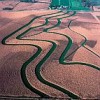
ENVIRONMENT: Replanting the Planet
In reviewing the literature on soil erosion, references to the "loss of protective vegetation" occur again and again. Over the last half-century, we have removed so much of that protective cover by clearcutting, overgrazing, and overplowing that we are fast losing soil accumulated over long stretches of geological time.ENVIRONMENT-COTE D’IVOIRE: The Knock-on Effect of Disappearing Forests
Sogbéné Soro claims to be able to treat a variety of ailments: leprosy, diarrhea and ringworm to name a few. But, this traditional healer is finding it increasingly difficult to ply his trade. "I am faced with a shortage of certain plant species that have medicinal properties," he told IPS.Q&A: “The Sahel Should Already Have Been Green”
For 'newTree-nouvelarbre', a non-governmental organisation (NGO) that works largely in Burkina Faso, good fences don't only make good neighbours - they also make a line of attack against land degradation.WEST AFRICA: Shared River Basins, Common Problems
Nigeria and Niger, in West Africa, are neighbouring states. But the two countries have more than a border in common; they are also share a number of river basins that are under threat, and the responsibility for conserving them.
Q&A: "Species Are Moving Southwards"
For South African author Leonie Joubert, global warming is a grass roots issue - literally.
Q&A: Water Is a Right, Not Business
Water is not the stuff of business, it is a basic human right. Hama Arba Diallo, outgoing executive secretary of the Convention of the United Nations to Combat Desertification (UNCCD), is convinced that the United Nations is about to formally recognise this principle, possibly by 2008.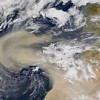
ENVIRONMENT: Around the Globe, Farmers Losing Ground
In 1938, Walter Lowdermilk, a senior official in the Soil Conservation Service of the U.S. Department of Agriculture, traveled abroad to look at lands that had been cultivated for thousands of years, seeking to learn how these older civilisations had coped with soil erosion.TOGO: Trees Disappearing, Even as Some Believe the Supply “Will Never End”
In the southern Togolese village of Yoto Kopé, Akoua Amouzouvi and several other women emerge from the bush with bowls of charcoal balanced on their heads - hands and faces smeared with black dust.
Q&A: "After the Initial Warnings About Desertification, We Could Have Done More"
Years of working in West Africa have given agricultural technician Henri Girard many insights into what is needed to halt land degradation in the region.COTE D’IVOIRE: Forests Sacred No More
In Côte d'Ivoire, the importance of a forest can go far beyond its environmental significance, as critical as this may be. Certain wooded areas are viewed as sacred.Q&A: “People Often Cannot Avoid Putting at Risk the Natural Resource Base Upon Which They Depend”
With the World Day to Combat Desertification set to take place shortly (Jun. 17), efforts are gearing up to highlight the threats posed by land degradation in much of Africa - as well as initiatives to safeguard against desertification.ENVIRONMENT-RWANDA: Unhappy Ending of a Welcome Return
The return in 1996 of over a million Rwandans who had fled their country in the wake of genocide two years earlier, fearing persecution at the hands of Tutsi rebels who took control of Rwanda, was greeted with relief in many quarters.G8: Poverty Reduction and Climate Change Inextricably Linked, Say Activists
In the final hours before this week's Group of Eight (G8) summit gets underway in Germany, activists have underscored the need for progress with both climate change and poverty alleviation - key items on the meeting's agenda - for there to be real improvement in Africa's living conditions.ENVIRONMENT-BURUNDI: Urban Waste Becomes Urban Fuel
Several months ago, residents of the Burundian capital, Bujumbura, were struggling with disposal of household waste. The Municipal Technical Services (Services techniques municipaux, SETEMU) weren't able to deal with all the refuse - and health conditions in the city were deteriorating.ENVIRONMENT: Learning to Live With the Mekong’s Floods
A Vietnamese academic has developed a small following over the past two years for his views about the waters that inundate the Mekong delta. The seminars he attends ends with participants wanting to know more.ENVIRONMENT: China – New Promoter of Mega Dams
China is emerging as a new backer of massive dam projects around the globe, giving rise to fears for pristine natural resources and the cultural heritage of river peoples.ENVIRONMENT-CUBA: Guantanamo’s Two-Faced Climate
Nature is hard to pin down in Guantánamo. The salty and eroded soils and infrequent rains in the south mark a clear contrast with the lush green of the northern coast of Cuba's eastern-most province.« Previous Page — Next Page »





Today, some two billion people depend on ecosystems in dryland areas, with 90 percent of them living in developing countries. But the pace of arable land degradation is accelerating – now estimated at 35 times the historical rate -- impacting biodiversity, availability of clean water and food security, as well as exposing vulnerable communities to the harsh impacts of climate change. As the only legally binding international agreement linking environment and development to sustainable land management, the United Nations Convention to Combat Desertification (UNCCD) works to improve the living conditions of people in the drylands. IPS looks at local solutions being implemented around the world, from restoring soil productivity and mitigating the effects of drought, to projects that empower communities to manage their dryland resources more effectively.

The Week with IPS

Tracking global progress towards a sustainable world
