Languages
Thursday, October 22, 2026



News and Views from the Global South
Biodiversity

Visualizing a Sustainable Future: The Intersection of Art and Climate Justice
In the 1900s, global discussions around climate change and fossil fuel usage reached new heights, leading to the emergence of climate change art. Since then, it has remained a key theme in contemporary art, with artists and corporations alike continuing to push messages of climate reform to instill a sense of urgency, fear, and shared responsibility in viewers.
Bending the Curve: Overhaul Global Food Systems to Avert Worsening Land Crisis
Current rates of land degradation pose a major environmental and socioeconomic threat, driving climate change, biodiversity loss, and social crises. Food production to feed more than 8 billion people is the dominant land use on Earth. Yet, this industrial-scale enterprise comes with a heavy environmental toll.
Why Crop Diversity Matters for the Future of Food
Across continents and cultures, seeds and plants hold more than the promise of a harvest—they carry the wisdom of generations, the hopes of communities, and the keys to a more resilient future. Yet the diversity of the seeds and plants we grow, eat, and depend upon, is under growing strain.
UN Trade and Environment Agencies Target Plastic Pollution through Global Negotiations and Trade Measures
They are lightweight, cheap, and able to be used in every sector of every supply chain. Few materials have revolutionized manufacturing and the global economy as much as plastics have. They are essential in almost everything, however this comes at a cost. A cost of 1.5 trillion annually in environmental damage, and a 75 percent waste ratio of all plastic ever produced.
Belem City Limits: How to Host a Successful Climate COP
There is no question that most climate activists and governments were delighted when Brazil offered to host the 2025 UN Climate Conference taking place this November.
Climate Reparations are Necessary but Not Sufficient: World Needs Less Growth & More Justice
While recent heat waves were causing thousands of deaths, the Trump administration was busy dismantling policies that regulate greenhouse gases on the theory they don’t harm human health.
Historic Inter-American Court Ruling: A Game-Changer for Environmental Defenders?
The Inter-American Court of Human Rights has issued one of the most progressive climate justice decisions of our time. Its historic Advisory Opinion on the climate emergency and human rights, released on July 3, 2025, was unequivocal: States have legal obligations under international human rights law to reduce, prevent, and address climate damage, including reining in big polluters.
Forests, Fossil Fuels, and the Fight for the Future: DRC’s Oil Expansion Sparks Global Alarm
The Democratic Republic of Congo (DRC) stands on the precipice of a profound environmental and social crisis, as the government prepares to auction 55 new oil blocks that cover more than half the country’s landmass.
How Clustering Multilateral Environmental Agreements Can Bring Multiple Benefits to the Environment
The UN80 Initiative, unveiled in March by Secretary-General António Guterres, is a system-wide effort to reaffirm the UN’s relevance for a rapidly changing world.
To Tackle Microplastic Pollution from Synthetic Textiles, Rebuild Natural Fibre Markets
Plastic pollution has emerged as one of the most pressing environmental challenges of our time. Since the mid-20th century, over 8 billion metric tons of plastic have been produced globally (UNEP, 2021). Shockingly, more than 90% of this plastic waste has not been recycled. Instead, it has been incinerated, buried in landfills, or leaked into the environment where it can persist for hundreds of years, fragmenting into microplastics.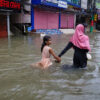
Climate Pressures are Redefining Macroeconomic Resilience in Asia & the Pacific
In the past year, Asia and the Pacific has faced intensifying climate pressures, from extreme heat in Bangladesh and India to devastating floods in northern Thailand and rising food insecurity across the Pacific.
Climate Change An Existential Threat To Humanity, Urges Action – ICJ
The case was “unlike any that have previously come before the court,” President of the International Court of Justice Judge Yuji Iwasawa said while reading the court's unanimous advisory opinion outlining the legal obligations of United Nations member states with regard to climate change.
Kenyan Biochar Project Becomes First in Africa Validated Under European Carbon Standard
In June 2025, Kenyan climate-tech firm Tera became the first African project developer to have its carbon removal initiative independently validated and registered under Riverse, a European standard for engineered climate solutions.
Humans Have Blown Past 6 of 9 ‘Planetary Boundaries’: Governments Alone Won’t Fix This
Nearly ten years after the Paris Agreement — a legally binding commitment to reduce greenhouse gas emissions — the gap between climate goals and government actions remains stubborn.
From Streets to Rivers: Driving Bangkok’s Sustainable Transport Future
Thailand’s transport sector is a significant contributor to national greenhouse gas emissions, accounting for 18.4 per cent of the country’s total emissions. Bangkok is at the centre of this challenge. With more registered vehicles than residents, the resulting traffic congestion worsens air pollution and strains the city’s roads and overall mobility infrastructure.
Man, Sea, Algae: HOMO SARGASSUM’s Stirring Critique of Human Culpability in the Caribbean
The United Nations’ HOMO SARGASSUM exhibition served as a public immersion into the marine world and called upon viewers to take action in the face of the climate crisis, specifically regarding invasive species and water pollution.
Can the Cali Fund Deliver on Its Billion-Dollar Biodiversity Pledge?
When the Cali Fund was unveiled in February on the sidelines of COP16.2 in Rome, the announcement sent ripples through the global conservation community. For the first time ever, companies that profit from digital sequence information (DSI)—the digitized genetic material of plants, animals, and microorganisms—will be expected to pay into a multilateral fund to protect the very biodiversity they benefit from.
UN Reform: Is it Time to Renew the Idea of Clustering the Major Environmental Agreements?
“Never let a good crisis go to waste.” Winston Churchill’s famous maxim feels very relevant today, when multilateralism and many environmental causes seem to be in retreat. We now face a triple planetary crisis of climate change, biodiversity loss, and pollution.
‘Only a Handful of Environmental Organisations Still Dare Challenge Corporate Projects in Court’
CIVICUS speaks to Cristinel Buzatu, regional legal advisor for Central and Eastern Europe at Greenpeace, about how Romania’s state gas company is weaponising the courts to silence environmental opposition.

World Bank’s IFC Finally Adopts Remedial Action Framework
The World Bank’s private sector arm has raised the bar — and others may follow. On April 15, the International Finance Corporation (IFC) became the first development finance institution to adopt a formal remedy policy, publishing its Remedial Action Framework (RAF) to address environmental and social harm caused by IFC-supported investment projects.
Lessons from South Africa on Monitoring the Impact of Invasive Trees on Water Resources
Concerns about the impacts of invasive species is not new; it dates to the 19th century. The term was popularized in Charles Elton’s 1958 book “The Ecology of Invasions by Animals and Plants”. However, the concept gained significant attention in the 1990s and early 2000s as academic interest surged. This led to an increase in publications by invasion biologists.« Previous Page — Next Page »





The world's diverse flora and fauna are facing urgent threats due to pollution, climate change, commercialization of nature and other forms of harmful human intervention. The widespread loss of biodiversity is worrying not simply because of the disappearance of exotic species which deserve saving, but because tampering with nature's equilibrium means that the loss of one form of life is a threat to another. IPS taps into its own diverse network of correspondents around the world to report on continuing and emerging dangers to nature's riches - and the struggle to protect them.

The Week with IPS

NEXT STOP - SDGs
Tracking global progress towards a sustainable world
Tracking global progress towards a sustainable world
